Engineered to ASME B16.5, EN 1092-1, and DIN standards. High-integrity carbon steel slip-on, weld neck, RTJ, and expansion joint flanges direct from Shanxi Yuxin Casting & Forging Co., Ltd.
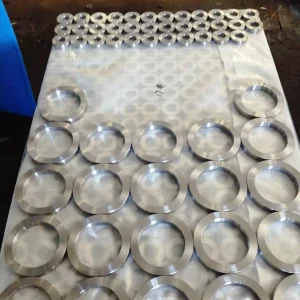
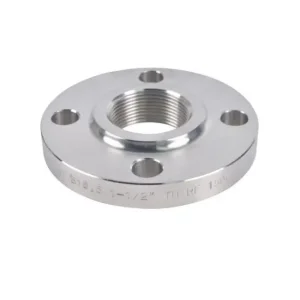
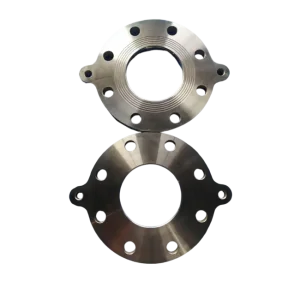
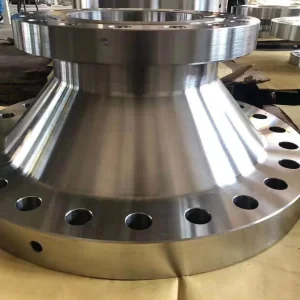
Strategic analysis of global supply chains, Total Cost of Ownership (TCO), and field installation efficiency in heavy processing industries.
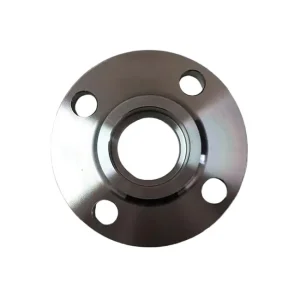
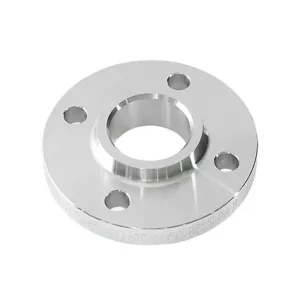
In global piping procurement, the Carbon Steel Slip-On (SO) Flange (ANSI B16.5 / EN 1092-1 Type 12) represents the optimal cross-section between material economy, handling convenience, and joint reliability. Unlike Weld Neck (WN) flanges that require precise bevel preparation and butt-welding alignment, Slip-On flanges slide directly over the pipe end. Welding is executed via double fillet welds—one internally and one externally—reducing beveling labor costs by up to 35% on large-diameter utility runs.
Procurement directors for major EPC projects in North America, Europe, and the Middle East prioritize Chinese forging clusters—specifically Dingxiang in Shanxi Province—due to fully integrated raw material supply chains, automated ring-rolling capability, and localized heat treatment infrastructure.
Field assembly mechanics heavily favor carbon steel slip-on configurations for low-to-medium pressure utility headers (Class 150 to Class 600, PN6 to PN40). The internal clearance allows pipeline alignment crews to easily adjust bolt hole orientation prior to final tacking. This drastically mitigates thermal expansion misalignment and structural pre-stress in complex modular skids.
When manufactured from high-yield carbon steel billets such as ASTM A105 or low-temperature ASTM A350 LF2, these components yield exceptional mechanical ductility, absorbing cyclic vibration from pumps, compressors, and pressure-reducing stations.
In-depth technical matrix and manufacturing specifications for industrial forged carbon steel flanges.
Shanxi Yuxin Casting & Forging Co., Ltd. enforces strict grain refinement techniques during closed-die drop forging and hydraulic ring rolling. Forging ratios exceeding 3:1 eliminate internal porosity, micro-voids, and dendritic segregation common in cast alternatives, ensuring superior fatigue limits under severe thermal pressure cycles.
| Dimensional Standard | Pressure Rating / Class | Material Grade & Specification | Facing Type & Surface Finish | Applicable Pipeline Applications |
|---|---|---|---|---|
| ASME / ANSI B16.5 | Class 150, 300, 600, 900, 1500 | ASTM A105, A350 LF2 (Cl. 1/2), A694 F42-F70 | RF (Raised Face), FF (Flat Face), RTJ (Type 34) | Oil & Gas Upstream, Refineries, Fuel Skids |
| EN 1092-1 (Type 12 SO) | PN 6, PN 10, PN 16, PN 25, PN 40 | S235JR, P250GH, P280GH, P355NH | Form B1 (Standard Raised Face), Form B2 | European Petrochemical, Power Generation, District Heating |
| DIN Standards (DIN 2576 / 2527) | ND 6, ND 10, ND 16, ND 25, ND 40 | RSt37-2, C22.8, St45.8 | Smooth / Serrated Flange Facing (125-250 Ra) | Chemical Processing, Municipal Water Mains |
| JIS B2220 | 5K, 10K, 16K, 20K, 30K | SS400, SFVC, SF440A | RF, Large/Small Male-Female, Tongue & Groove | Shipbuilding, Heavy Equipment Hydraulics, Asia-Pacific Utilities |
Standard forged carbon steel for elevated-temperature service. Formulated with balanced carbon (max 0.35%), manganese (0.60-1.05%), and silicon, delivering a minimum yield strength of 250 MPa (36 ksi) and tensile strength of 485 MPa (70 ksi).
Normalized carbon steel targeted for sub-zero operating environments. Guaranteed Charpy V-Notch impact toughness down to -46°C (-50°F), mandatory for Arctic pipelines, LNG transfer terminals, and gas fractionating towers.
Quenched and tempered micro-alloyed carbon steels matching high-strength API 5L line pipe (X52 through X70). Designed to absorb massive hoop stress in long-distance natural gas transmission trunklines.
Tailored engineering flange configurations engineered for harsh operating environments globally.
Used extensively in low-pressure steam utility mains, cooling water circuits, and hydrocarbon storage farm interconnecting lines. Slip-on flanges eliminate complex field beveling, accelerating refinery shutdown turnarounds.
Integrated into ship ballast systems, fuel oil transfer manifolds, and bilge piping. Coupled with electro-galvanized or epoxy coatings to resist marine atmospheric corrosion and saltwater splash zone degradation.
Specified for high-volume municipal water distribution networks, district cooling headers, and fossil-fuel power plant feedwater bypass piping. Provides robust joint integrity with minimal long-term bolt relaxation.
Transforming passive forged mechanical joints into intelligent monitoring systems for Industry 4.0 infrastructure.
To combat hydrogen embrittlement and severe chemical atmospheric corrosion, Shanxi Yuxin has pioneered multi-layer coating technology. Our production lines feature 3PE (Three-Layer Polyethylene), Fusion-Bonded Epoxy (FBE), and Thermal Spray Aluminum (TSA) applications, extending service life in offshore and sour gas service past 30 years without maintenance.
Every slip-on flange produced can be custom laser-etched with high-density 2D Matrix Data QR codes and integrated RFID tags. Field engineers can instantly scan the flange face to pull up original heat numbers, chemical mill test certificates, ultrasonic NDT test sheets, and bolt torque tightening profiles via cloud infrastructure.
Rigorous testing protocols ensuring zero-defect delivery across global EPC distribution chains.
100% Ultrasonic Testing (UT) per ASTM A388 to detect internal voids, laminations, and micro-cracks. Magnetic Particle Inspection (MPI) and Liquid Penetrant Testing (PT) applied to critical sealing faces and hubs.
Full material certification shipped with every consignment. Covers heat analysis, mechanical tensile/yield test, impact energy (Joule ratings), Brinell hardness testing, and third-party inspection (SGS, TÜV, BV, DNV witness reports).
Certified to ISO 9001:2015 Quality Management Systems, PED 2014/68/EU Pressure Equipment Directive Annex I, AD 2000-Merkblatt W0, and NACE MR0175 / ISO 15156 sour service compliance.
Expert engineering answers addressing common questions regarding Carbon Steel Slip-On Flanges.
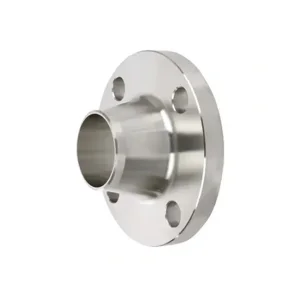
A Slip-On flange slides over the pipe end and is attached using two fillet welds—one on the exterior hub and one on the inside bore. In contrast, a Weld Neck flange has a long tapered hub that is butt-welded directly to the pipe. Weld Neck flanges offer superior fatigue resistance and stress distribution, making them preferred for extreme high-pressure (Class 900+) or severe thermal cycling applications. However, Slip-On flanges are far more economical, easier to align in the field, and ideal for low-to-medium pressure utility pipelines (Class 150 to Class 600).
ASME B31.3 Process Piping Code specifies double fillet welding for Slip-On flanges to prevent joint crevice corrosion and ensure structural rigidity under internal pressure thrusts. The internal fillet weld seals the gap between the pipe outside diameter (OD) and flange bore, preventing fluid media from penetrating the crevice and inducing localized crevice corrosion or stress corrosion cracking. The external weld bears the mechanical tensile and bending loads of the piping system.
You should specify ASTM A350 LF2 whenever the operating ambient or fluid temperature drops below -29°C (-20°F). ASTM A105 is standard carbon steel designed for ambient and higher-temperature service (-29°C to 425°C). ASTM A350 LF2 undergoes mandatory normalizing heat treatment and Charpy V-Notch impact testing to guarantee notch toughness down to -46°C (-50°F), making it essential for cold climate environments, low-temperature gas processing, and cryogenic storage facilities.
Shanxi Yuxin manufactures forged carbon steel flanges conforming to ASME B16.5 (sizes 1/2" to 24"), ASME B16.47 Series A & B (sizes 26" to 60"), EN 1092-1 Type 01/11/12 (DN10 to DN2000), DIN 2576/2527/2633, JIS B2220, and GOST standards. We support pressure classes ranging from Class 150 to Class 2500 and PN6 to PN400. Custom non-standard flanges up to 3,000 mm diameter can also be forged based on customer engineering drawings.
Our standard Raised Face (RF) flanges come with a serrated concentric or spiral phonographic finish with a surface roughness of Ra 3.2 µm to 6.3 µm (125 to 250 micro-inches AARH), compliant with ASME B16.5. This finish bites into spiral wound or soft gaskets to create a mechanical seal. We also manufacture smooth mirror finishes (Ra < 1.6 µm) for metallic ring joint gaskets, and specialized tongue-and-groove or male-and-female configurations.
All finished flanges undergo automated surface cleaning followed by the application of anti-rust coatings. Options include black rust-preventive paint, yellow anti-rust varnish, transparent rust-inhibiting oil, hot-dip galvanizing, or electro-zinc plating. Flange faces are protected with plastic caps or end protectors, wrapped in Volatile Corrosion Inhibitor (VCI) film, and packed into fumigation-free seaworthy plywood cases or steel-framed pallets.
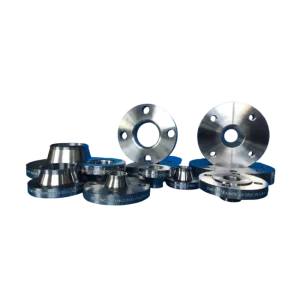
Explore our extended catalog of certified China slip-on flanges, stub ends, socket welds, threaded, and reducer flanges for global procurement.
Shanxi Yuxin Casting & Forging Co., Ltd. brings 33+ years of precision forging experience, supplying ISO 9001 and PED-certified carbon steel slip-on flanges to over 40 countries. Contact our engineering desk today for instant quotations, drawing reviews, and complete EN 10204 3.1 documentation packages.
