Explore our primary inventory of heavy-duty, CNC-machined carbon steel and alloy flanges engineered strictly to ASME B16.5, ASME B16.47, and EN 1092-1 specifications.
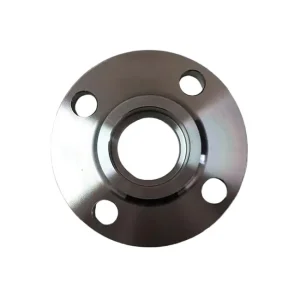
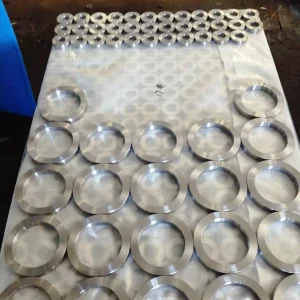
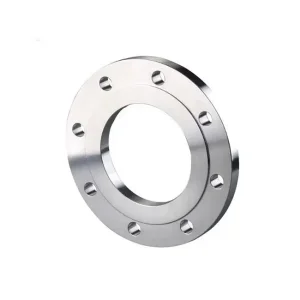
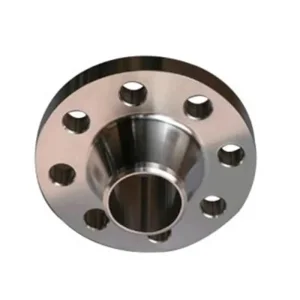
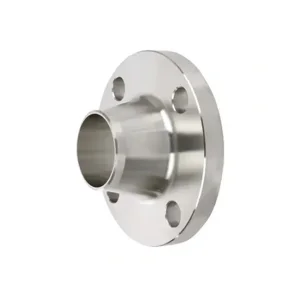
In high-consequence fluid conveying systems—ranging from offshore petroleum platforms to nuclear cooling loops—the structural integrity of mechanical flange connections dictates absolute operational safety. Carbon Steel Weld Neck (WN) Flanges stand out as the definitive standard for severe service due to their high-tapered hub design, which facilitates a smooth distribution of mechanical stress into the adjoining pipe wall.
Unlike Slip-On or Socket Weld geometry, the long-tapered hub of a Weld Neck flange provides an engineered thickness transition. This gradual change in cross-sectional area minimizes stress concentrations under bending moments, thermal expansion cycles, and internal pressure surges. When butt-welded to a pipe (matching wall schedules from Sch 40 up to XXS), the joint behaves as a continuous pressure vessel segment rather than a localized mechanical weakness.
Superior manufacturing requires closed-die or ring-rolling forging. Unlike cheap flame-cut plate flanges which exhibit directional anisotropy and micro-lamellar defects, forged carbon steel flanges align the metallic grain structure along the radial contour of the flange ring and hub. This continuous grain flow yields drastically superior impact toughness (Charpy V-notch performance down to -46°C for ASTM A350 LF2) and eliminates hydrogen-induced cracking risks.
Situated in the heart of Shanxi Province—China's primary forging industrial cluster—our manufacturing infrastructure leverages the world’s most complete supply chain integration for raw carbon steel billets, intelligent forging equipment, and automated CNC machining cells.
Direct strategic partnerships with top-tier steel mills (such as Baosteel, Shougang, and Taiyuan Iron & Steel) ensure prime vacuum-degassed carbon steel raw material (ASTM A105, Q235B, 20#, A350 LF2) with zero scrap inclusion and ultra-clean chemistry control (S < 0.010%, P < 0.015%).
Our state-of-the-art Industry 4.0 machining lines feature high-rigidity CNC vertical lathes and multi-axis drilling centers. Sealing face tolerances (Raised Face, RTJ Grooves, Male-Female) are strictly executed to within ±0.05 mm, with standard surface finishes controlled between AARH 125–250 μin.
Heat treatment is the key determinant of mechanical reliability. Every batch undergoes computer-monitored normalizing, quenching, and tempering cycles with continuous thermocouple temperature logging, ensuring uniform grain refinement, stress relief, and optimal yield strengths.
As global energy sectors transition toward decarbonization, green hydrogen transport, and extreme subsea exploration, carbon steel weld neck flange designs are evolving to meet unprecedented technical demands.
Hydrogen embrittlement represents a primary challenge for high-pressure gas transport networks. Future carbon steel weld neck flange formulations focus on controlling ultra-low carbon equivalents ($CE_{NW} \le 0.40\%$) and incorporating micro-alloying elements (Vanadium, Niobium, Titanium) to fine-tune grain boundaries.
Our R&D roadmap includes advanced gaseous hydrogen testing ($H_2$ autoclave exposure under 20 MPa) to certify zero crack propagation in HAZ (Heat Affected Zone) regions following butt-welding.
Modern industrial plants demand real-time bolt load verification and flange face gap monitoring to eliminate volatile organic compound (VOC) fugitive emissions. Industry 4.0 weld neck flanges are now being manufactured with recessed pockets for piezoelectric sensor embedment.
These digital flanges communicate joint stress, temperature variations, and gasket relaxation rates wirelessly to plant control networks, enabling predictive maintenance prior to catastrophic joint loss.
Engineered to withstand extreme combinations of pressure, severe dynamic loads, and corrosive media, our Carbon Steel Weld Neck Flanges serve as standard engineering components across global infrastructure.
Class 600 to Class 2500 high-pressure weld neck flanges manufactured from ASTM A350 LF2 / ASTM A694 F52-F70 are widely deployed in offshore wellheads, gas compression units, and cross-country crude pipelines, meeting sour service demands (NACE MR0175/ISO 15156).
Designed for thermal cracking units, hydrotreaters, and catalytic reformers where operating temperatures fluctuate between -29°C and 425°C. ASTM A105N flanges provide exceptional resistance against creep deformation and cyclic thermal fatigue.
High-energy piping lines in super-critical steam plants require heavy wall weld neck flanges (Sch 80 to Sch 160). Our precise bevel machining (per ASME B16.25) guarantees full-penetration butt weld compatibility, eliminating flow turbulence.
For EPC contractors and international stockists, component acquisition costs represent only a fraction of total life-cycle expenditure. Unplanned downtime caused by non-compliant flange connections can lead to catastrophic losses.
| Evaluation Parameter | Standard Market Supplier | Our Manufacturing Benchmark (YUXIN) | Impact on Procurement TCO |
|---|---|---|---|
| Steel Billet Origin | Mixed scrap recycled billets | 100% Vacuum Degassed Prime Steel Mills | Eliminates micro-inclusions and internal void defects during NDT. |
| Traceability | Batch-level paper certificates | Heat-Number Hard Stamped & Digital EN 10204 3.1/3.2 | Full audit transparency for third-party inspect (TÜV, SGS, DNV). |
| Dimensional Tolerance | Standard ASME B16.5 limits | Tightened In-House Limits (±0.5mm Hub Bevel) | Reduces field fit-up time and fit-up weld misalignment by 40%. |
| Surface Protection | Thin black paint spray | Phosphated, Yellow Varnish, or Hot-Dip Galvanized | Prevents rust during 6+ months of transoceanic transit & open yard storage. |
Our engineering team provides cross-border technical compliance verification, matching flange specifications to international piping codes across North America, Europe, Asia, and the Middle East.
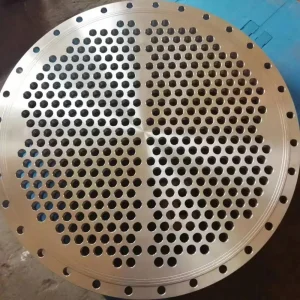
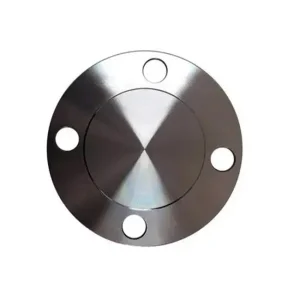
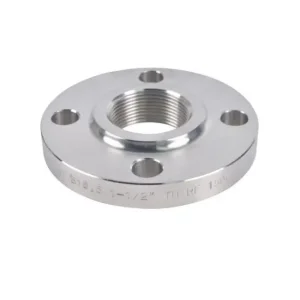
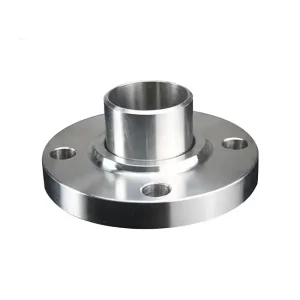
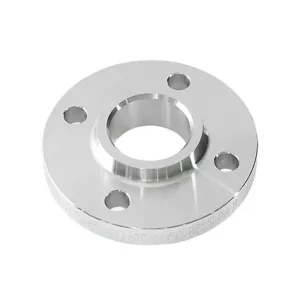
Explore our expanded product selection available for global OEM export, including blind, threaded, slip-on, lap joint, and custom tube sheet solutions.
In-depth answers to key technical, logistical, and metallurgical queries encountered during global piping component specification.
