Manufactured under ISO 9001:2015 and PED 2014/68/EU standards in Dingxiang, Shanxi — China's premier forging industrial cluster. Explored by top-tier EPC contractors, chemical plants, and energy infrastructure developers worldwide.
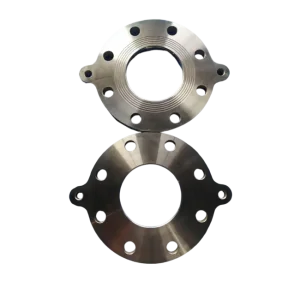
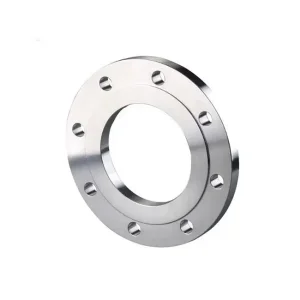
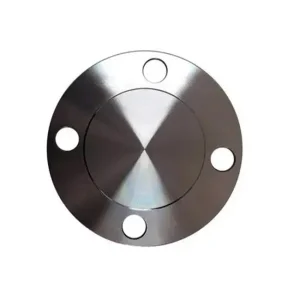
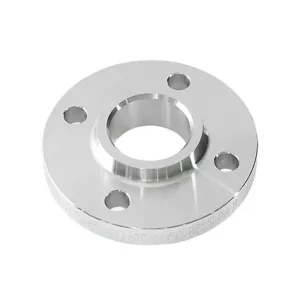
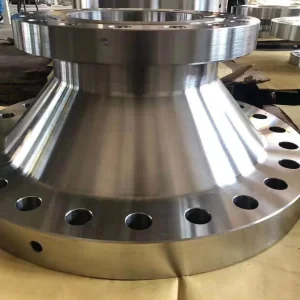
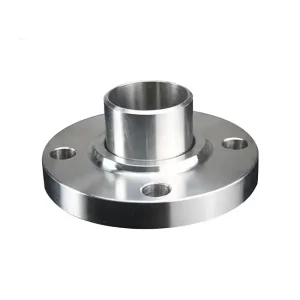
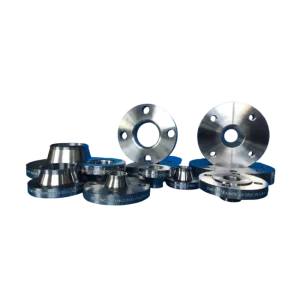
Carbon steel forged flanges and piping components serve as critical pressure boundary connectors across global processing, transmission, and energy networks. Their mechanical stability directly impacts system safety under extreme cyclic loads and harsh thermal gradients.
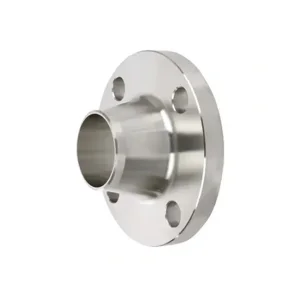
High-pressure natural gas and crude transmission lines demand heavy-wall Weld Neck (WN) and Ring Type Joint (RTJ) flanges engineered to withstand bending moments and soil displacement. Utilizing high-yield forged grades such as ASTM A694 F52, F60, and F65, our components are chemically tailored for NACE MR0175/ISO 15156 HIC and SSCC resistance, mitigating hydrogen-induced stress corrosion in sour gas fields.
Continuous refining operations run at elevated temperatures and intense pressure cycles. ASME B16.5 Class 300 to Class 2500 forged ASTM A105N and low-alloy ASTM A182 F11/F22 flanges ensure leak-free seal retention across distillation towers, hydrocrackers, and catalytic reformers. Precision face finish serrations (125–250 µin AARH) ensure maximum spiral-wound gasket seating stress control.
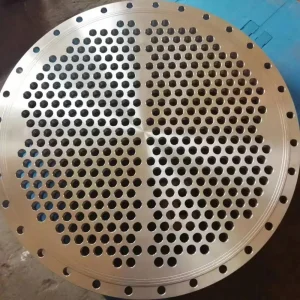
Supercritical power generation units require robust thermal fatigue resistance. Heavy-section custom forged tube sheets, high-hub Weld Neck flanges, and customized expansion joint flanges absorb differential thermal movement between shell-and-tube heat exchanger bundles, maintaining zero fluid cross-contamination under severe thermal shocking.
Understanding the economic and structural advantages of sourcing carbon steel fittings and flanges from Shanxi, China—the epicenter of global industrial steel forging capability.
Dingxiang County in Shanxi Province is recognized globally as the premier manufacturing hub for forged steel flanges. The region integrates the entire industrial value chain—from local high-purity iron ore smelting, vacuum degassing steel mills, hydraulic forging press installations, to advanced CNC machining shops. This concentrated industrial density provides unparalleled cost-efficiency, reduced lead times, and unified quality standards.
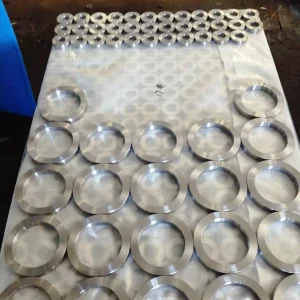
Furthermore, modern Chinese forging manufacturers have shifted from traditional manual forging to high-precision hydraulic ring rolling machines equipped with laser-assisted dimensional control, minimizing material allowance and maximizing internal grain alignment along circumferential stress paths.
| Evaluation Metric | Direct China Factory (YUXIN) | European / US Stockists |
|---|---|---|
| Cost Structure | Direct factory tier pricing (30-45% savings) | High distributor markup & storage overhead |
| Customization Feasibility | Full non-standard forging to custom DWG | Limited to off-the-shelf standard dimensions |
| Material Traceability | Original Heat No. from ladle to machining | Secondary re-marking certificate risk |
| Production Scalability | Bulk tonnage (10,000+ tons/yr) for mega EPCs | Constrained by warehouse inventory stock |
| Quality Assurance | In-house NDT (UT, MT, PT, Hardness, Impact) | Third-party audit dependence |
Carbon steel flange performance is governed by strict chemical composition limits, controlled forging ratios, precise heat-treatment cycles, and comprehensive non-destructive testing.
The universal carbon steel grade for ambient and higher-temperature service in pressure systems. Normalized heat treatment (A105N) eliminates residual forging stresses, refines grain structure to ASTM Grain Size 6 or finer, and guarantees Charpy V-Notch impact toughness down to -29°C.
Low-temperature carbon steel specifically forged for sub-zero pipeline networks, LNG terminals, and cold-climate refineries. Fully normalized or quenched-and-tempered to guarantee high impact strength (>20 J) at -46°C (-50°F).
High-yield carbon steel forgings engineered for high-pressure gas transmission pipelines matching API 5L line pipe. Offers exceptional yield strength up to 70,000 PSI (485 MPa) with minimal weight penalty.
| Standard Body | Specification | Nominal Size Range | Pressure Class / Nominal Pressure | Facing Types |
|---|---|---|---|---|
| ASME / ANSI | ASME B16.5 | 1/2" to 24" (DN15 - DN600) | Class 150, 300, 600, 900, 1500, 2500 | RF, FF, RTJ, T&G, M&F |
| ASME Large Dia | ASME B16.47 (Series A & B) | 26" to 60" (DN650 - DN1500) | Class 75, 150, 300, 600, 900 | Raised Face (RF), Ring Type Joint (RTJ) |
| EN / European | EN 1092-1 | DN10 to DN3000 | PN 2.5, PN 6, PN 10, PN 16, PN 25, PN 40, PN 100 | Type A (Flat), Type B1/B2 (Raised), Type C/D |
| DIN German | DIN 2527, 2573, 2633, 2635 | DN10 to DN2000 | PN 6 to PN 100 | Form C, Form D, Form E, Form F |
| JIS Japanese | JIS B2220 | 10A to 1500A | 5K, 10K, 16K, 20K, 30K | FF, RF, Male-Female |
Detailed examination of real-world operational challenges where YUXIN carbon steel flanges provide superior leak prevention and structural durability.
Operating Stress: Wave action, hydrodynamic bending, saltwater marine exposure, internal line pressures up to 5,000 PSI.
Technical Solution: Custom forged ASTM A350 LF2 Class 2 Weld Neck RTJ flanges paired with specialized heavy zinc-nickel or epoxy anti-corrosion exterior coatings. The Ring Type Joint design incorporates a metallic ring gasket compressed into a precision-machined groove, creating a metal-to-metal primary seal capable of resisting extreme pressure pulses without gasket blowout.
Operating Stress: Rapid thermal cycling between ambient and 450°C, differential expansion between carbon steel shell and stainless tubes.
Technical Solution: Precision CNC machined heavy-thickness tube sheets and forged expansion joint flanges manufactured from normalized ASTM A105. Deep drilling on 3D multi-spindle CNC equipment ensures tube hole alignment pitch tolerances within ±0.05 mm, preventing tube shearing and gasket blowout under intense thermal expansion.
Operating Stress: Micro-molecular hydrogen permeation, severe risk of hydrogen embrittlement and micro-cracking under stress.
Technical Solution: Ultra-low sulfur (<0.005%) vacuum-degassed carbon steel ASTM A694 F60 forgings subjected to 100% Ultrasonic Testing (UT) per ASTM A388 and post-weld heat treatment (PWHT). Low carbon equivalent (CEQ ≤ 0.42%) ensures maximum weldability in remote field trench conditions.
Operating Stress: Tight project budgets, fast installation lead times, soil moisture corrosion resistance.
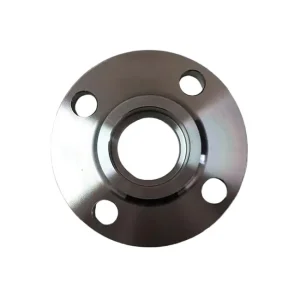
Technical Solution: Hot-dip galvanized EN 1092-1 Type 01 Plain Plate Flanges and ASME B16.5 Slip-On (SO) flanges. Slip-on design allows fast double-fillet welding without precise pipe end beveling, reducing site installation overhead by 35%.
The future of Chinese carbon steel flange manufacturing lies in real-time quality control, automated robotics, and zero-carbon metallurgical processing.
Integration of optical laser scanners directly into hydraulic ring rolling mills. Real-time feedback loops dynamically adjust radial and axial roll forces during deformation, eliminating ovality and guaranteeing uniform wall thickness across large-diameter flanges up to 3,000 mm.
Replacing sample manual inspection with 6-axis robotic ultrasonic and magnetic particle scanning arms. Every single forged flange undergoes automated volumetric flaw detection to eliminate internal voids, inclusions, and forging laps prior to final machining.
Transitioning gas-fired billet heating furnaces to green-hydrogen hybrid systems. This initiative reduces carbon intensity per ton of forged steel by up to 40%, aligning with European Union CBAM (Carbon Border Adjustment Mechanism) environmental compliance.
Export-ready inventory and custom forging solutions engineered for nuclear, chemical, pressure vessel, and offshore pipeline applications.
Expert technical answers covering metallurgical selection, inspection standards, pressure ratings, and global delivery documentation.
