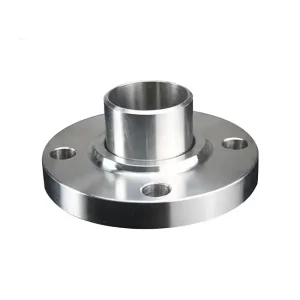
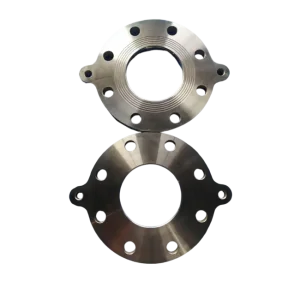
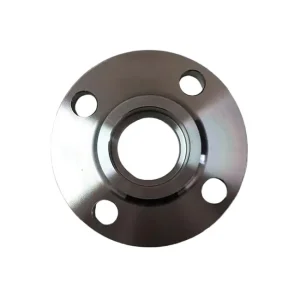
Engineered for high-pressure, temperature-critical, and corrosive piping applications across global markets.
Analyzing the pivotal role of Chinese carbon steel forging hubs in satisfying global infrastructure and energy isolation demands.
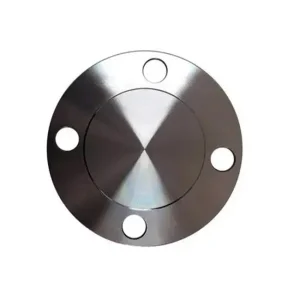
As mega-scale oil & gas transportation, petrochemical refining, and green hydrogen storage projects accelerate globally, the demand for high-integrity pressure containment components has scaled exponentially. Blind flanges serve as critical pressure barriers during pipeline maintenance, system expansions, and hydrostatic pressure testing.
Failure of a terminal isolation joint can result in catastrophic pressure loss and environmental disasters. Global EPC contractors prioritize suppliers capable of delivering uniform mechanical properties across high-pressure classes (Class 150 to Class 2500).
China accounts for over 45% of the world's total forged industrial flange output. At the center of this capacity is Dingxiang County in Shanxi Province, recognized as the "Hometown of Forging in China."
By leveraging an integrated supply ecosystem—from localized raw billet procurement to advanced closed-die forging, heat treatment, and precision CNC machining—Chinese manufacturers offer unmatched scale, structural uniformity, and cost-to-performance ratios for global supply chains.
Procurement strategies have shifted from localized sourcing to strategic global partnerships. Chinese carbon steel blind flange suppliers provide international engineering firms with resilient lead times, rigorous compliance with ASME B16.5 and EN 1092-1 standards, and full material traceability.
By maintaining vast stockpiles of forged carbon steel billets (ASTM A105, A350 LF2), factories guarantee rapid production turnarounds even during global supply disruptions.
A frequent procurement pitfall is substituting forged carbon steel blind flanges with flame-cut or plate-machined alternatives. Forged blind flanges (undergoing a minimum 3.5:1 forging reduction ratio) possess a continuous metallurgical grain flow aligned with pressure boundaries. Plate flanges often exhibit internal laminar defects and directional weakness, making them susceptible to stress-corrosion cracking under cyclic pressure loading.
Deconstructing chemical compositions, heat treatment regimes, and pressure-temperature boundaries of forged carbon steel grades.
Carbon steel blind flanges manufactured in China strictly adhere to international material designations. The most widely requested grades include ASTM A105 (for ambient and high-temperature service), ASTM A350 LF2 (for low-temperature cryogenic service), and ASTM A694 (high-yield grades for cross-country pipelines).
| Material Standard | Grade Designation | Carbon (C) % | Manganese (Mn) % | Tensile Strength (MPa) | Yield Strength (Min MPa) | Primary Application Temperature |
|---|---|---|---|---|---|---|
| ASTM A105 | Standard Carbon Steel | ≤ 0.35 | 0.60 – 1.05 | ≥ 485 | ≥ 250 | -29°C to 425°C (-20°F to 800°F) |
| ASTM A350 | LF2 Class 1 (Low Temp) | ≤ 0.30 | 0.60 – 1.35 | 485 – 655 | ≥ 250 | -46°C to 345°C (-50°F to 650°F) |
| ASTM A694 | F52 / F65 (High Yield) | ≤ 0.26 | 1.00 – 1.65 | ≥ 450 / ≥ 535 | ≥ 360 / ≥ 450 | High-Pressure Transmission Lines |
| EN 1092-1 | P250GH (1.0460) | 0.18 – 0.23 | 0.40 – 1.00 | 410 – 540 | ≥ 250 | European Pressure Vessel Standard |
| GB/T 9124 | Q235B / 20# Steel | 0.14 – 0.22 | 0.30 – 0.65 | 375 – 500 | ≥ 235 | General Utility & Low Pressure Pipelines |
To ensure uniform mechanical properties, forged carbon steel blind flanges undergo controlled heat treatment protocols based on wall thickness and application severity:
The efficiency of a blind flange seal depends heavily on its contact surface machining:
Quantifying the industrial footprint of certified Shanxi forging facilities.
Deploying heavy-duty carbon steel blind flanges across harsh industrial environments.
Manufactured to ASTM A105N or A350 LF2 with NACE MR0175 / ISO 15156 compliance. Resists Hydrogen-Induced Cracking (HIC) and Sulfide Stress Cracking (SSC) in high-H2S offshore environments.
Engineered for cyclic thermal shock up to 425°C. High-yield A694 F52/F65 blind flanges isolate reactor vessel bypass lines during high-pressure catalyst regeneration cycles.
Forged ASTM A350 LF2 Class 1 blind flanges tested with Charpy V-Notch impacts at -46°C prevent brittle fracture in liquefied natural gas regasification terminals.
Economical Q235B / 20# carbon steel EN 1092-1 Type 05 blind flanges designed for municipal water distribution networks, fire isolation manifolds, and HVAC piping systems.
Verifying structural soundness and full compliance with European and American pressure vessel directives.
To eliminate subsurface defects, Chinese tier-1 suppliers mandate 100% NDT inspection for critical blind flange orders:
High-quality China flange exports are backed by comprehensive global accreditations, simplifying regulatory approval for international project engineers:
How China's leading forging enterprises are combining AI, automation, and sustainable metallurgy.
Integrating finite element analysis (FEA) and AI-driven thermal simulation software during the die design phase. This optimizes metal deformation flow, eliminating grain shear faults and reducing raw material waste by 18%.
Transitioning from traditional coal gas heating to medium-frequency electric induction furnaces. This change drastically cuts carbon emissions, eliminates surface decarb layers on steel billets, and yields cleaner forging blanks.
Laser-engraving unique QR codes onto flange outer rims. Field operators can scan the code with a mobile device to instantly display chemical composition, UT inspection reports, and origin heat numbers from any jobsite worldwide.
Addressing core engineering, purchasing, and logistics queries for international buyers.
Complete your project procurement with our full suite of certified steel flange configurations.