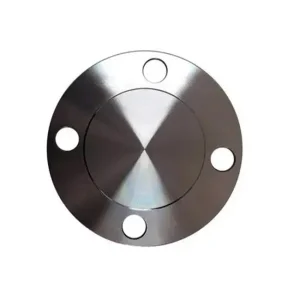
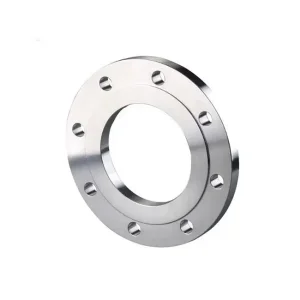
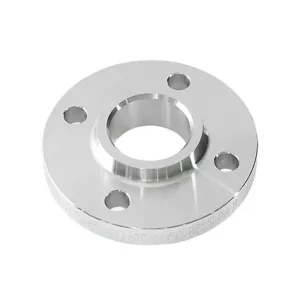
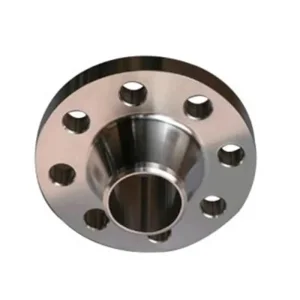
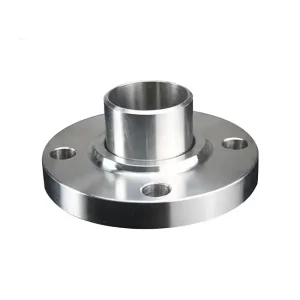
Precision-machined forged steel flanges complying with ASME, ASTM, and ANSI international dimensional standards.
A comprehensive analysis of ASME B16.5 and ASME B16.47 specifications, pressure ratings, and tolerance management in modern process piping.
In modern industrial process engineering, the term ASME Flange Size represents a standardized mechanical protocol governing pressure containment, bolt-circle geometry, hub dimensions, and joint tightness across global piping networks. Developed by the American Society of Mechanical Engineers (ASME), standards such as ASME B16.5 (covering nominal pipe sizes NPS ½ through NPS 24) and ASME B16.47 (covering large-diameter flanges from NPS 26 through NPS 60) establish the engineering baseline for oil, gas, petrochemical, power generation, and heavy manufacturing infrastructure.
Technical Consensus: Flange sizing is not merely a matter of outer diameter (OD) and inner bore (ID); it is an integrated pressure-vessel design equation. Standardized dimensions guarantee that a Class 300 Weld Neck flange manufactured in Dingxiang, Shanxi will mate flawlessly with a valve body forged in Houston or an offshore header installed in the North Sea.
Specifiers and procurement engineers must distinguish between small-to-medium pressure connections and large-diameter containment systems:
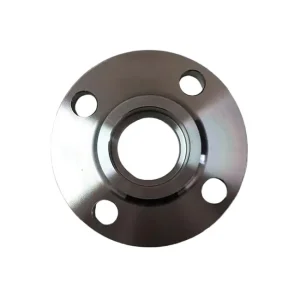
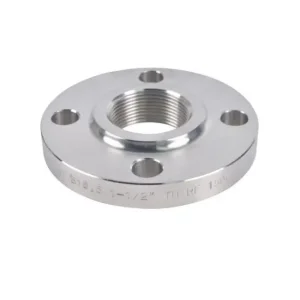
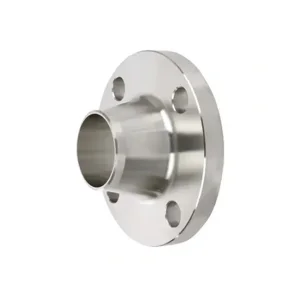
Encompasses NPS ½ to NPS 24 in pressure rating classes 150, 300, 400, 600, 900, 1500, and 2500. Covers forged Weld Neck, Slip-On, Blind, Threaded, Socket Weld, and Lap Joint configurations. Bolt hole circles and hub tapers are precisely calibrated for standard schedule pipes (Sch 40, Sch 80, Sch 160, XXS).
Derived from the historical MSS SP-44 standard. Designed for heavy-duty pipeline applications requiring larger bolt diameters and heavier flange weights. Preferred in cross-country natural gas transmission lines and high-stress refinery headers where structural rigidity against bending moments is mandatory.
Derived from API 605 specifications. Features a more compact bolt circle with smaller, more numerous bolts compared to Series A. Designed primarily for compact piping, low-pressure/large-diameter process equipment, and chemical vessel nozzles where space and overall weight optimization are critical.
| ASME Standard | Nominal Pipe Size (NPS) | Pressure Class Range | Primary Flange Facing Types | Typical Wall Thickness Alignment |
|---|---|---|---|---|
| ASME B16.5 | ½" to 24" (DN15 – DN600) | Class 150, 300, 400, 600, 900, 1500, 2500 | Raised Face (RF), Flat Face (FF), Ring Type Joint (RTJ) | Sch 10S, Sch 40/STD, Sch 80/XH, Sch 160, XXS |
| ASME B16.47 Series A | 26" to 60" (DN650 – DN1500) | Class 75, 150, 300, 400, 600, 900 | Raised Face (RF), Ring Type Joint (RTJ) | Specified by nominal pipe wall thickness (e.g., 0.375" to 1.250") |
| ASME B16.47 Series B | 26" to 60" (DN650 – DN1500) | Class 75, 150, 300, 400, 600 | Raised Face (RF), Flat Face (FF) | Compact design profile optimized for lighter vessel walls |
| ASME B16.36 | 1" to 24" (DN25 – DN600) | Class 300 to Class 2500 | Orifice Flange Raised Face / RTJ with Tapped Jack Screws | Matched to differential pressure flow meter orifice plates |
Market forces driving global flange procurement: LNG expansion, subsea infrastructure, and industrial decarbonization.
The global industrial flange ecosystem is currently experiencing a structural realignment driven by energy transition initiatives, natural gas infrastructure build-outs, and the modernization of chemical refining assets across North America, Europe, the Middle East, and the Asia-Pacific region. As energy producers shift toward Liquefied Natural Gas (LNG), subsea carbon capture, and high-pressure hydrogen transport, the demand for high-integrity ASME size flanges has accelerated.
Driven by Gulf Coast LNG export projects and shale gas gathering systems, demand in North America emphasizes ASTM A105 carbon steel weld neck flanges and ASTM A350 LF2 low-temperature carbon steel components capable of retaining impact toughness down to -45°C (-50°F).
European buyers demand strict compliance with the Pressure Equipment Directive (PED 2014/68/EU) and AD 2000-Merkblatt W0 certifications. Sourcing centers on dual-certified stainless steel grades such as ASTM A182 F304/304L and F316/316L with complete heat-lot traceability per EN 10204 3.1/3.2.
National oil companies across the GCC region require high-pressure ASME B16.5 Class 900, 1500, and 2500 RTJ (Ring Type Joint) flanges manufactured from alloy steels (ASTM A182 F11, F22, F91) and Duplex/Super Duplex stainless steels (F51/S31803, F53/S32750) engineered to withstand NACE MR0175/ISO 15156 sour gas environments.
Why the Dingxiang Industrial Hub in Shanxi, China commands global leadership in forged flange production.
China's dominance in the global forged flange supply chain is centered in Dingxiang County, Shanxi Province—officially recognized worldwide as the "Hometown of Forging in China." The concentration of raw material stockpiles, automated ring-rolling mills, specialized heat-treatment plants, and high-precision CNC machine shops creates an unparalleled industrial synergy.
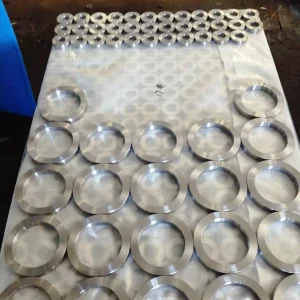
Chinese forged flange plants operate heavy-duty 10,000-ton hydraulic forging presses and automated CNC radial-axial ring rolling mills. This setup ensures continuous grain flow along the flange contour, maximizing mechanical yield strength and impact resistance compared to cast or plate-cut alternatives.
Proximity to China’s primary steel production hubs allows flange manufacturers in Shanxi to procure prime-certified forging billets (A105, Q235B, 20#, 16Mn, Stainless steel blooms) at direct mill pricing. Combined with high-speed multi-axis CNC lathes, unit production costs are optimized without sacrificing material density.
Leading Chinese exporters maintain comprehensive quality systems audited by TÜV Rheinland, Lloyd's Register, and Bureau Veritas. Every flange batch undergoes non-destructive testing (NDT), including Ultrasonic Testing (UT) for internal voids, Magnetic Particle Inspection (MPI), and Positive Material Identification (PMI) spectral analysis.
Supply Chain Security: By standardizing export logistics, implementing anti-rust passivation treatments (yellow varnish, black rust-inhibitive oil, or transparent coat), and utilizing fumigation-free ISPM-15 compliant plywood crates, Chinese manufacturers ensure zero damage during long-distance ocean freight.
Where ASME size flanges serve as mission-critical containment barriers across severe-service industries.
In high-temperature hydrocracking and desulfurization units, ASME B16.5 Class 600 and Class 900 Weld Neck flanges with Raised Face (RF) or RTJ serrations maintain zero-leakage performance under extreme thermal cycling and hydrogen attack.
Offshore topside modules require compact ASME B16.47 Series A RTJ ring flanges forged from ASTM A182 F51 Duplex steel to resist chloride stress corrosion cracking while accommodating dynamic hull deflection and high wave loads.
Supercritical power plants rely on ASME B16.5 Class 1500 and Class 2500 heavy-wall weld neck flanges forged from ASTM A182 F91/F92 alloy steels, engineered for creep resistance under high-pressure steam headers above 560°C.
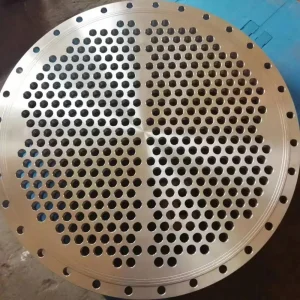
Custom-engineered ASME dimensions serve shell-and-tube heat exchangers, where thick forged disks are CNC precision-drilled into tube sheets and baffled ring flanges designed per TEMA and ASME Section VIII rules.
Next-generation forging technologies, green metallurgy, and smart monitoring flange systems.
The manufacturing of ASME size flanges is advancing beyond traditional hot forging and manual machining. Driven by Industry 4.0 standards, stringency in fugitive emission monitoring, and clean energy transition demands, several key trends are reshaping the sector:
Integration of Piezoelectric and fiber-optic strain sensors into high-pressure ASME RTJ ring flanges. This enables real-time wireless monitoring of bolt load relaxation, gasket stress degradation, and micro-leakage in hazardous pipelines.
Transitioning from coal-gas heating furnaces to electric induction heating systems powered by solar and wind energy in Shanxi industrial zones, dramatically lowering the embedded carbon footprint of exported steel forgings.
Development of ultra-low impurity carbon steel forgings optimized to resist Hydrogen Embrittlement (HE). Special heat-treatment protocols ensure tight grain refinement for high-pressure pure hydrogen storage and transport lines.
Essential verification steps for EPC engineers and global procurement managers sourcing from China.
To eliminate procurement risks and ensure seamless installation on international project sites, enterprise buyers should follow a structured vendor evaluation and material verification protocol:
Ensure that all shipments are accompanied by EN 10204 3.1 or 3.2 inspection certificates detailing the exact melt heat number, chemical composition (C, Mn, Si, P, S, Cr, Ni, Mo), tensile strength, yield strength, elongation, and Charpy V-notch impact values.
Verify that Raised Face (RF) serrations conform to ASME B16.5 standards (125 to 250 micro-inches AARH stock finish with spiral or concentric serrations). Inspect bolt-hole straddle, pitch circle diameter (PCD), and thickness tolerances.
Require supplier confirmation of rust-preventive coatings suitable for sea transit: clear varnish, black paint, or rust-inhibiting oil. End-face plastic bevel protectors and heavy-duty sealed wooden boxes must be standard practice.
Direct technical guidance on ASME flange sizing, material selections, and procurement parameters.
Factory-direct supply for ISO-certified, precision-machined, and non-standard custom forged flange components.