Exceeding ASME B16.5, EN 1092-1, and ISO standards with fully certified mill test traceability (EN 10204 3.1/3.2).
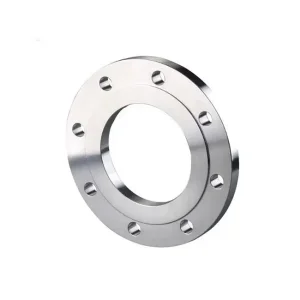
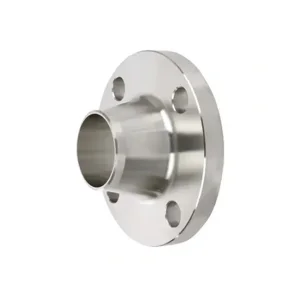
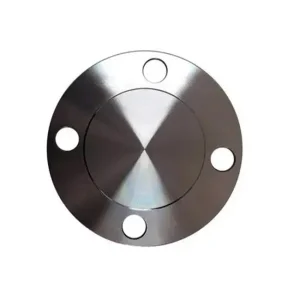
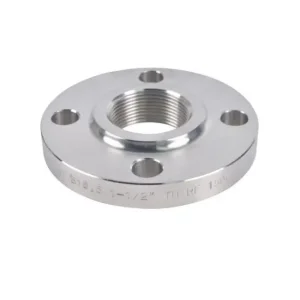
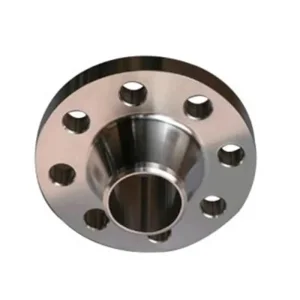
Analyzing the shift from traditional malleable cast iron floor flanges to heavy-duty forged carbon and stainless steel floor flanges in structural piping, industrial anchoring, and process engineering.
In modern industrial construction, a steel floor flange serves as the crucial structural interface connecting vertical pipe columns, conduit networks, and heavy machinery support legs to concrete floors, metal decking, or structural steel beams. Unlike pressure-vessel flanges that prioritize fluid sealing, floor flanges must resist bending moments, high shear stresses, dynamic vibrational loads, and vertical pull-out forces.
As global industrial standards mandate higher seismic thresholds and structural safety margins, top-tier EPC contractors are abandoning brittle cast iron fittings in favor of forged steel floor flanges manufactured from high-yield carbon steel (such as ASTM A105 or Q235B) and austenitic stainless steels (ASTM A182 F304/F316L).
A common structural failure mode in commercial facilities is flange neck snapping caused by physical impact or thermal shock on cheap gray cast iron fittings. Forged steel floor flanges exhibit superior ductility, higher impact toughness (Charpy V-notch values exceeding 27J at -20°C), and exceptional tensile performance.
When evaluated under ultimate limit state (ULS) structural calculations, forged carbon steel floor flanges provide up to 3.5x higher tensile loading capability compared to standard malleable iron alternatives, ensuring compliance with OSHA perimeter guardrail guidelines and ASME B31 structural pipe attachment codes.
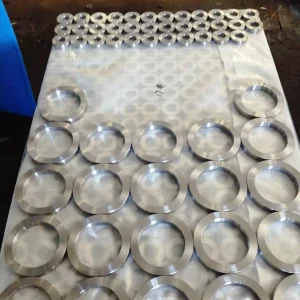
As a primary hub for global steel forging, Dingxiang in Shanxi Province, China, supplies over 70% of the world’s industrial forged flanges. Shanxi Yuxin Casting & Forging Co., Ltd. (established 1992) integrates raw material heating, closed-die forging, normalizing heat treatment, precision CNC threading, and automated surface finishing inside a unified manufacturing facility.
By offering complete material traceability via EN 10204 3.1 and 3.2 certifications, international buyers gain direct factory access to customized steel floor flange components with zero intermediary margin stacking.
Engineering parameters, chemical composition thresholds, thread profiles, and mechanical performance metrics for industrial steel floor flanges.
Steel floor flanges are manufactured in carbon steel, stainless steel, and alloy grades depending on environmental exposure, mechanical stress, and aesthetic criteria:
The vertical hub of a steel floor flange features female pipe threads designed to mate seamlessly with standard schedule 40 and schedule 80 steel pipes:
| Material Standard | Yield Strength (MPa) | Tensile Strength (MPa) | Elongation (%) | Hardness (HBW) | Primary Industrial Application |
|---|---|---|---|---|---|
| ASTM A105 Forged Carbon Steel | ≥ 250 | 485 - 655 | ≥ 22% | 137 - 187 HBW | Heavy-duty machinery bases, industrial guardrails, building columns |
| ASTM A182 F304L Stainless Steel | ≥ 170 | 485 - 620 | ≥ 30% | ≤ 201 HBW | Food & pharmaceutical cleanroom framing, architectural railings |
| ASTM A182 F316L Stainless Steel | ≥ 205 | 515 - 690 | ≥ 30% | ≤ 217 HBW | Offshore oil rigs, chemical plant flooring, marine dock structural supports |
| Q235B / S235JR Structural Carbon Steel | ≥ 235 | 370 - 500 | ≥ 26% | 104 - 140 HBW | Standard industrial pipe racks, commercial handrails, utility framing |
| Malleable Iron Grade 32510 (Comparison) | ≥ 220 | ≥ 340 | ≥ 10% | 110 - 156 HBW | Light-duty interior furniture, non-structural retail display racks |
How Shanxi Yuxin ensures zero internal voids, precise bolt-circle alignment, and flawless thread geometry in every production run.
Prime round steel bars undergo spectrographic chemical verification before automated band-saw cutting. Billets are heated in medium-frequency induction furnaces to 1,150°C - 1,200°C with digital optical pyrometer temperature monitoring.
Red-hot steel billets are struck in heavy-duty forging presses. Closed-die forging aligns the internal metallic grain flow along the flange contour, eliminating internal gas porosity and micro-shrinkage inherent in casting.
Forged blanks are placed in continuous normalizing furnaces at 890°C - 920°C followed by controlled air cooling. This process refines crystalline grain structure, relieves internal stress, and optimizes machineability.
Flange hubs are machined on high-precision multi-axis CNC lathes. Thread lead error and pitch diameter are held within tight 0.02 mm tolerances, ensuring seamless hand-tight engagement followed by wrench make-up.
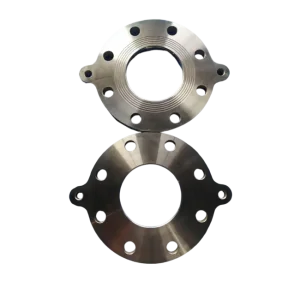
Multi-spindle CNC drilling centers produce identical 3-hole or 4-hole mounting patterns. Countersunk or flat-faced anchor bolt holes guarantee uniform load distribution on concrete expansion anchors or masonry bolts.
Batch testing includes Magnetic Particle Inspection (MPI) for surface cracks, Ultrasonic Testing (UT) for internal flaws, thread gauge verification, and EN 10204 3.1 Mill Test Certificate issuance with complete heat traceability.
From North American commercial building frameworks to European petrochemical refinery walkways and Middle Eastern offshore structures.
In the United States and Canada, steel floor flanges are widely specified under ASTM A105 and ASME B16.5 standards for commercial structural framing, rooftop HVAC pipe support stands, modular pipe racks, and safety railing systems. Compliance with OSHA standard 1910.29 (Fall Protection Systems) requires stanchion floor bases to withstand a minimum concentrated load of 200 lbs (890 N) applied topward or outward.
Our 4-hole heavy-duty forged steel floor flanges provide a safety factor exceeding 4:1 under static load testing, satisfying rigid municipal structural engineering codes across North American metro areas.
Across European industrial hubs in Germany, the Netherlands, and Scandinavia, floor flange attachments in chemical plants, food processing plants, and marine vessels must meet Pressure Equipment Directive (PED 2014/68/EU) and EN 1092-1 material guidelines. High humidity and corrosive marine atmospheres mandate the use of ASTM A182 F316L stainless steel floor flanges or electro-polished 304L fittings.
Shanxi Yuxin delivers custom PED-compliant floor flanges with TÜV certification, guaranteeing seamless integration into European EPC project tenders.
In rapidly expanding APAC infrastructure projects—such as high-speed rail maintenance depots, semiconductor cleanrooms, and automated logistics centers—steel floor flanges provide rigid anchoring for utility lines, compressed air manifolds, and cable tray uprights.
High dynamic vibration caused by heavy machinery requires floor flanges with fine-grained forged microstructures that resist fatigue micro-cracking over millions of vibration cycles.
Middle Eastern oil refineries, gas processing plants, and seawater desalination complexes operate under extreme ambient temperatures (up to 55°C surface temp) and saline environment stress. Steel floor flanges deployed in sour gas (H2S) service environments are produced in strict accordance with NACE MR0175/ISO 15156 hardness limits (≤ 22 HRC).
Heavy galvanization or specialized epoxy coating ensures decades of service without corrosion-induced structural failure.
Streamlined cross-border procurement for global stocking distributors, OEMs, and EPC engineering firms.
All export shipments are classified under international Harmonized System codes (HS Code 7307.91 for forged steel flanges and 7307.99 for specialized structural fittings). Complete documentation packages include Certificates of Origin (Form A, Form E, CO) for preferential tariff treatment.
Flange thread surfaces are treated with rust-inhibiting oil or dry protective wax, covered with polyethylene end-caps, and packed into ISPM-15 compliant fumigation-free solid plywood crates or heavy-duty steel-banded euro-pallets to eliminate transit corrosion during 40-day ocean voyages.
Beyond standard NPT floor flanges, our CAD/CAM engineering team assists buyers in developing custom flange dimensions, non-standard bolt hole circles, thick base plates, counter-bored anchor recesses, and private-label laser marking (Logo, Heat No., Size, Grade).
Next-generation innovations shaping the future of industrial structural connections and high-strength forged components.
Integration of computer vision and infrared thermography during closed-die forging to dynamically inspect billet grain formation and surface defect generation in real time, achieving zero-defect production consistency.
Transitioning heating furnaces to green hydrogen-electric hybrid induction systems, reducing carbon emissions per ton of steel forged by up to 60% to meet EU Carbon Border Adjustment Mechanism (CBAM) targets.
Development of self-healing ceramic micro-coatings applied over galvanized steel floor flanges, extending salt-spray corrosion resistance to over 3,000 hours under ASTM B117 salt fog exposure.
Addressing essential engineering, procurement, and specification inquiries regarding industrial steel floor flanges.
Discover our comprehensive range of custom forged products engineered for heavy industrial deployment.