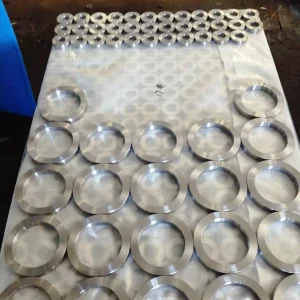
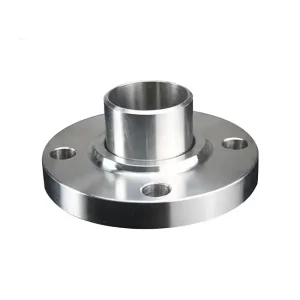
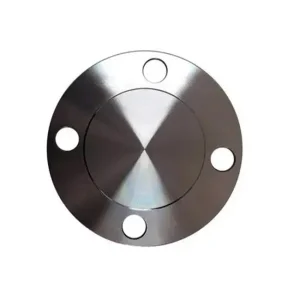
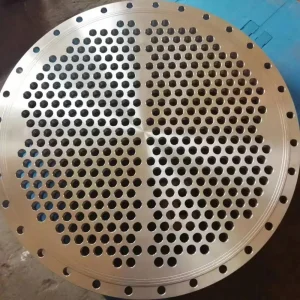
Explore our ISO 9001 & PED 2014/68/EU certified product line manufactured directly at Shanxi YUXIN's advanced forging facility.
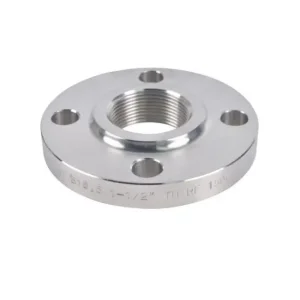
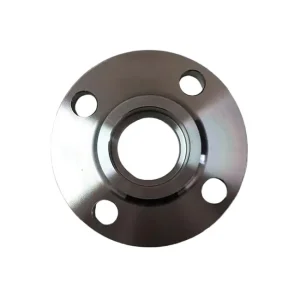
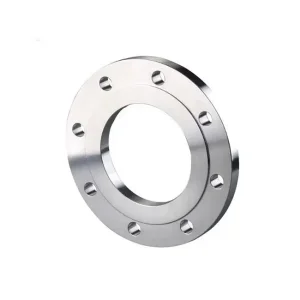
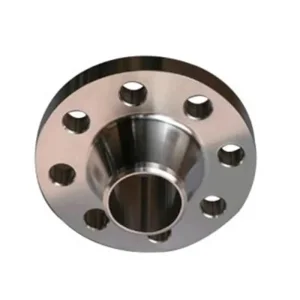
Analyzing capital expenditure efficiency, mechanical versatility, and supply chain resilience in modern piping systems.
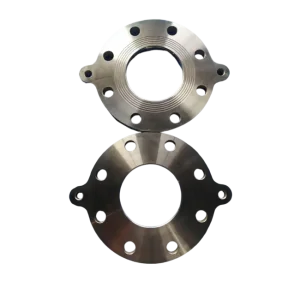
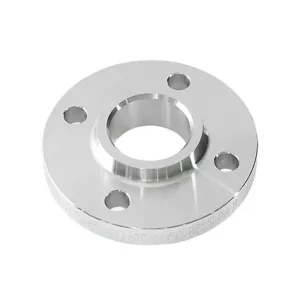
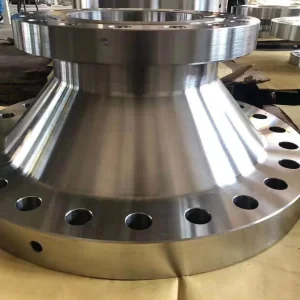
In large-scale industrial piping installations—ranging from seawater desalination plants to chemical processing facilities—using solid integral stainless steel flanges throughout entire pipeline runs incurs massive material costs. Stainless steel backing flanges (also categorized as lap joint backing flanges or loose plate flanges) provide an exceptional economic solution.
By coupling an austenitic stainless steel stub end (which contacts the corrosive process fluid) with a forged stainless steel or epoxy-coated backing flange, procurement managers reduce overall alloy tonnage while maintaining total corrosion resistance across the fluid boundary. Shanxi YUXIN's high-capacity forging lines deliver precision-machined backing flanges that maximize load transfer efficiency while significantly driving down total installed material expenditures.
Rigid, fixed-welded flanges demand exact bolt-hole rotational alignment during shop pre-fabrication. Any angular deviation during field fit-up causes catastrophic stresses or requires labor-intensive re-welding. Stainless steel backing flanges rotate freely around the pipe hub prior to bolt tightening.
This 360-degree rotational freedom simplifies bolt-hole alignment in confined offshore module spaces, subterranean utility vaults, and retrofitted chemical plants. Construction contractors report up to a 40% reduction in field installation hours when deploying YUXIN's precision loose backing flange assemblies compared to standard weld neck configurations.
In-depth structural analysis of backing flange mechanics, material microstructures, and dimensional standards.
Technical Information Gain: Unlike standard slip-on flanges, a backing flange does not contain fluid directly; it acts as a structural pressure-retaining clamp over a pipe stub end or lap ring. Consequently, calculating bending moments, bolt torque retention, and shoulder contact pressure is vital to preventing gasket creep and joint blowout under thermal cycling.
Low-carbon variants (UNS S30403 and UNS S31603) manufactured per ASTM A182/A182M standards. Chromium-nickel-molybdenum composition prevents intergranular precipitation during thermal cycles, ensuring high toughness down to cryogenic liquid gas temperatures (-196°C).
Combining equal phase proportions of ferrite and austenite, forged Duplex backing flanges deliver twice the yield strength of standard 316L. Excellent resistance to chloride stress corrosion cracking (SCC) makes them ideal for marine scrubber systems and brine pipelines.
Formulated with high molybdenum (6%+) and nitrogen additions, engineered for ultra-aggressive environments such as flue-gas desulfurization (FGD) units and phosphoric acid production where PREN (Pitting Resistance Equivalent Number) exceeds 42.
| Dimensional Standard | Type / Code | Nominal Size Range | Pressure Rating / Class | Flange Facing Options |
|---|---|---|---|---|
| ASME B16.5 | Lap Joint Flange | ½" to 24" (DN15 - DN600) | Class 150, 300, 600, 900, 1500 | Flat Face (FF) / Raised Face (RF) radii matched to Stub End |
| ASME B16.47 Series A/B | Large Diameter Flange | 26" to 60" (DN650 - DN1500) | Class 75, 150, 300, 600 | Custom Machined Hub Backing Rings |
| EN 1092-1 | Type 02 (Loose Plate) | DN10 to DN2000 | PN6, PN10, PN16, PN25, PN40 | Used with Type 32, 33, 35, 36 or 37 Collars & Weld-on Ends |
| DIN Standards | DIN 2641 / DIN 2642 | DN10 to DN1200 | PN6, PN10 | Plain loose flange plate for copper/stainless pipe sets |
| JIS B2220 | Loose Type (LOH/LOP) | 10A to 600A | 5K, 10K, 16K, 20K | Machined seating face conforming to JIS stub contours |
Custom backing flange implementations designed for severe pressure, aggressive chemicals, and strict hygiene protocols.
In hydroprocessing units and sour gas collection headers, thermal expansion and high vibration strain flanged joints. YUXIN's ASTM A182 F316L forged backing flanges absorb cyclic mechanical fatigue while keeping the weld joint accessible for full radiography non-destructive testing (NDT).
Ballast water management systems and offshore platform piping require rapid assembly in tight hull compartments. Our EN 1092-1 Type 02 backing flanges paired with cupronickel or stainless steel stub ends resist marine splash zone corrosion while enabling rapid bolt installation.
Hygienic process lines require minimal dead-leg space and polished internal bore roughness. Using lap joint backing flanges allows stainless steel thin-wall tubing to be sanitary welded internally, while the backing ring provides robust structural clamping without media contact.
Pioneering closed-die forging, automated CNC profiling, and finite element stress verification.
Cast backing rings frequently harbor microscopic porosity, slag inclusions, and non-uniform microstructures that fail under high bolt torque loading. Shanxi YUXIN utilizes high-tonnage hydraulic forging presses and radial ring rolling mills.
Our closed-die forging process aligns the grain flow parallel to the circumferential mechanical stress vectors of the flange ring. This refined grain flow yields superior impact energy toughness, elevated yield strength, and total structural stability under high operating pressures.
To eliminate stress concentrations along the internal radius of the backing flange where it seats against the stub end shoulder, YUXIN engineers deploy 3D Finite Element Analysis (FEA).
By optimizing the back-face chamfer and bolt-circle fillet radii, bolt load distribution is converted into uniform axial compression across the gasket face. Every forged batch undergoes automated ultrasonic testing (UT) and positive material identification (PMI) before dispatch.
A quantitative comparison demonstrating financial gains when specifying loose backing flange systems.
| Evaluation Parameter | Solid Weld Neck Flange (316L) | Lap Joint Backing Flange System (YUXIN) | Project Advantage / Saving Impact |
|---|---|---|---|
| Raw Material Cost | High (100% High-Alloy Weight) | Optimized (Alloy Stub End + Coated/SS Backing Ring) | 25% - 45% Material Savings |
| Welding & Fit-up Labor | Demands exact angular bevel alignment | 360° free rotation simplifies bolt alignment | 30% Faster Field Installation |
| System Maintenance | Requires cutting pipe to replace damaged flange | Unbolt backing ring without cutting pipe body | Minimized Turnaround Downtime |
| Inspection Requirements | Complex volumetric joint examination | Simpler stub end butt weld inspection | Streamlined NDT Approval |
Shanxi YUXIN Casting & Forging Co., Ltd. operates under rigorous international quality frameworks.
Audited quality management governing raw billet inspection, heating profiles, precise machining tolerances, and final packing integrity.
Full Pressure Equipment Directive compliance certified by TÜV Rheinland for supply into European Union process piping systems.
German pressure vessel material certification validating grain structures, yield strengths, and impact test energy limits down to sub-zero temperatures.
Every shipment is accompanied by Mill Test Certificates stating exact chemical heat analysis, mechanical stress figures, and NDT inspection results.
Detailed engineering responses addressing common procurement, design, and installation inquiries.
While both flange types slide over the pipe, their mechanical sealing mechanisms are fundamentally different:
A Slip-On Flange is welded directly to the pipe at both the internal bore face and external hub back. It directly contacts the process fluid inside the line and must match the corrosion rating of the pipe material.
A Backing Flange (often called a Loose Flange or Lap Joint Backing Ring) is never welded directly to the pipe. Instead, it slides over the pipe and seats against the back shoulder of a Stub End or Weld Ring Collar that is butt-welded to the pipe. The backing flange remains external to the process fluid. This enables the use of lower-cost carbon steel backing rings over stainless steel stub ends, or allows 360-degree rotational freedom during field assembly.
Yes. Pairing a hot-dip galvanized or epoxy-coated carbon steel (e.g., ASTM A105 or Q235B) backing flange with a stainless steel (e.g., ASTM A403 WP316L) stub end is a standard industry practice for non-corrosive external environments. However, in aggressive marine or acidic atmospheric settings, galvanic corrosion can occur at the contact interface between the carbon steel flange and stainless stub end shoulder.
For high-corrosion or offshore environments, specifying a fully forged ASTM A182 F304L or F316L Stainless Steel Backing Flange is strongly recommended to eliminate bimetallic corrosion cells and ensure a 30+ year maintenance-free operational life.
Stainless steel backing flanges are standardized globally under two major pressure vessel and piping framework categories:
1. ASME / ANSI Systems: Governed by ASME B16.5 for sizes ½" through 24" (Class 150 to Class 2500) under the designation "Lap Joint Flanges", designed to mate with MSS SP-43 or ASME B16.9 stub ends.
2. EN / DIN Systems: Governed by EN 1092-1 Type 02 (Loose plate flange with weld-on collar or lapped pipe end) for pressure ratings PN6 through PN40, or historical DIN 2641 / DIN 2642 standards.
The internal radius (fillet chamfer) of a backing flange is a critical quality dimension. If the flange radius is too small or improperly chamfered, it will ride up on the matching radius of the stub end shoulder, causing severe bending moments, uneven bolt loading, and eventual joint leakage.
Shanxi YUXIN utilizes high-precision CNC lathes programmed with exact radius profiles matching ASME B16.5 and EN 1092-1 specifications. Every single flange undergo 100% go/no-go radius gauge inspections before final packing.
Every shipment leaving Shanxi YUXIN's plant includes an EN 10204 3.1 Mill Test Certificate detailing:
- Billet Heat Number and Chemical Composition (Spectrometer Verified)
- Mechanical Properties (Tensile Strength, Yield Strength, Elongation, Hardness)
- Heat Treatment Profile Records (Solution Annealing for Stainless Steel)
- Ultrasonic Non-Destructive Testing (UT) & PMI Reports
- Dimensional Inspection Sheets & Hydrostatic Pressure Compatibility Reports
Explore our extended catalog of high-pressure components engineered for global OEM and refinery procurement.