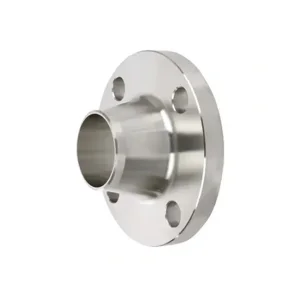
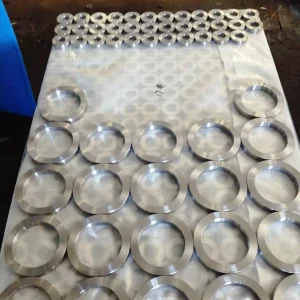
High-precision forged piping components, certified to ASME B16.5, DIN, and EN 1092-1 standards for critical infrastructure.
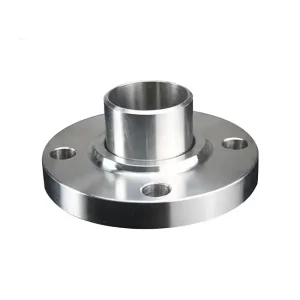
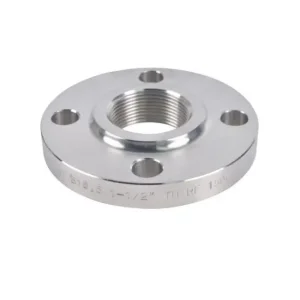
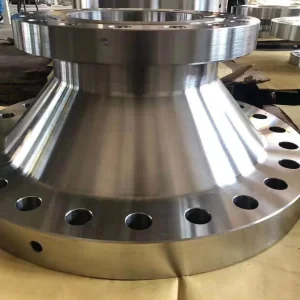
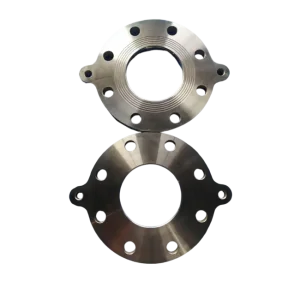
An in-depth metallurgical and mechanical analysis of Slip-On Raised Face (SORF) and Blind (BLRF) piping interfaces in high-stress fluid conveyance systems.
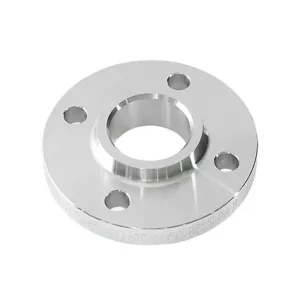
The Slip-On Raised Face (SORF) Flange is one of the most widely utilized pressure vessel and piping connectors across the petrochemical, energy, and process manufacturing sectors. Designed to slide over the outer diameter of the pipe, the SORF flange features an internal diameter slightly larger than the pipe's exterior, facilitating rapid alignment prior to welding.
Engineered for double-fillet welding—one applied on the internal bore corner and another on the exterior hub base—SORF components distribute mechanical shear stress across both structural joints. The raised face (RF) geometry concentrates bolt loading directly onto a localized gasket seating area, optimizing joint tightness in low-to-medium pressure applications (Class 150 to Class 1500).
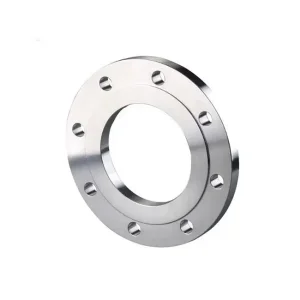
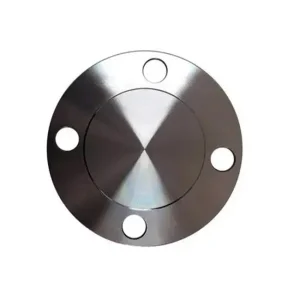
Unlike bored flanges, a Blind Flange (BLRF) is manufactured without a center bore, serving as a solid structural closure for pipe ends, pressure vessel nozzles, and valve terminations. Subjected to internal hydrostatic pressure and bending moments, blind flanges undergo substantial hoop and radial stress concentration near the bolt circle.
When combined with SORF systems during maintenance cycles or hydro-testing procedures, premium forged blind flanges act as reliable line isolation barriers. Their design must comply strictly with ASME B16.5 thickness calculations to prevent face deflection under elevated operating temperatures and pulsating hydrodynamic loads.
| Standard Designation | Flange Types Covered | Pressure Classes / Ratings | Primary Material Grades | Facing Styles |
|---|---|---|---|---|
| ASME B16.5 | SORF, Blind, Weld Neck, Threaded | Class 150, 300, 600, 900, 1500, 2500 | ASTM A105, A182 F304/F316L, A350 LF2 | RF (Raised Face), RTJ, FF (Flat Face) |
| EN 1092-1 | Type 01 (Plate), Type 05 (Blind), Type 11 (Hubbed) | PN 6, PN 10, PN 16, PN 25, PN 40, PN 100 | P250GH, S235JR, 1.4404, 1.4301 | Type A (Flat), Type B1/B2 (Raised Face) |
| DIN Standards | DIN 2576 (SO), DIN 2527 (Blind) | ND 6 to ND 100 | RSt37-2, C22.8, Stainless 316Ti | Form C, Form D, Form N Grooved |
| JIS B2220 | SOP (Slip-On Plate), BL (Blind) | 5K, 10K, 16K, 20K, 30K | SS400, SFVC, SUS304, SUS316 | Smooth Raised Face, Male & Female |
Unlocking unparalleled cost-efficiency, raw material integration, and certified quality through China's premier heavy forging cluster.
Dingxiang County in Shanxi Province is globally recognized as the “Hometown of Forging.” Hosting over 70% of China’s total forged flange export production, the region combines centralized raw material stockyards, state-of-the-art ring rolling mills, and specialized heat treatment facilities within a compact industrial radius.
This geographic concentration lowers localized logistics costs, guarantees rapid billet acquisition from top-tier steel mills (such as Baosteel and TISCO), and accelerates turn-around times for standard and non-standard custom flanges.
Modern Chinese flange manufacturing has evolved from manual open-die forging to automated hydraulic pressing and CNC radial-axial ring rolling. Forging ratios exceeding 3:1 refine the steel's grain structure, eliminating internal voids, micro-segregation, and porosity.
This results in enhanced impact toughness, elevated yield strength, and superior fatigue resistance under high hydrostatic test pressures—ensuring 100% compliance with international safety codes.
Leading factories operate under audited Quality Management Systems including ISO 9001, PED 2014/68/EU, AD 2000-W0, and marine classification approvals (ABS, DNV, BV, LR). Every production batch undergoes comprehensive non-destructive testing (NDT).
Surfaces are verified via Ultrasonic Testing (UT), Magnetic Particle Inspection (MPI), and Liquid Penetrant Testing (PT). Detailed MTC documentation per EN 10204 3.1 accompanies every export container.
Engineered flanged connections designed to withstand corrosive chemicals, extreme cryogenic temps, and offshore subsea environments.
In high-pressure hydrocracking and catalytic reforming units, SORF and Blind flanges must resist hydrogen attack (HIC) and sulfide stress cracking (SSC). Utilizing normalized ASTM A105N and sour-service compliant NACE MR0175/ISO 15156 alloys ensures structural longevity without risk of catastrophic brittle fracture.
Offshore topside structures and subsea manifold systems demand maximum corrosion resistance against saline ambient conditions and aggressive crude flowlines. Super Duplex stainless steel (UNS S32750 / S32760) and Nickel Alloy cladding (Inconel 625) blind flanges provide exceptional pitting resistance equivalent numbers (PREN > 40).
As global energy infrastructure pivots toward green hydrogen conveyance and CCUS (Carbon Capture, Utilization, and Storage), flanged joints face tiny molecular leakage risks. Precision-machined SORF flanges with customized smooth facing finishes (AARH 63-125) and specialized elastomeric/metallic gaskets eliminate fugitive emissions.
Navigating total cost of ownership (TCO), supplier audits, and seaworthy logistics for EPC contractors and stockists.
When procuring bulk flange consignments from international factories, strategic procurement directors must audit key manufacturing metrics:
Preventing flange face scratches, serration damage, and atmospheric corrosion during ocean transport requires export-grade packing protocols:
Technological innovations shaping smart forging, green steel adoption, and automated quality control.
Electric induction heating furnaces powered by renewable energy grids are replacing coal-fired heating. China’s push toward carbon-neutral industrial zones ensures global buyers can meet Scope 3 ESG emissions targets.
Integration of multi-axis CNC turning centers with automated coordinate measuring machines (CMM) guarantees sub-millimeter flange face serration pitch, bolt hole spacing, and zero-defect flange geometry.
Laser Cladding and 3D wire-arc additive manufacturing (WAAM) allow factories to deposit high-cost Corrosion Resistant Alloys (CRA) like Inconel 625 specifically onto carbon steel flange contact faces, cutting material costs by 40%.
Expert answers to common engineering, standards, and procurement inquiries regarding SORF and Blind Flanges.
A Slip-On Raised Face (SORF) flange slides over the pipe end and is attached using two fillet welds (one internal, one external). A Weld Neck (WN) flange features a long tapered hub that is butt-welded directly to the pipe. WN flanges are preferred for extreme high-pressure or cyclic thermal stress conditions, while SORF flanges offer lower material/installation costs and easier alignment in low-to-medium pressure pipelines.
The Raised Face (RF) concentrates the total bolt clamping force onto a smaller gasket area, creating a tighter seal under elevated pressures. Flat Face (FF) flanges are primarily used when mating with brittle cast-iron equipment or low-pressure valves to prevent flange bending or cracking when bolts are torqued.
Standard ASTM A105 carbon steel is suitable for temperatures down to -29°C (-20°F). For lower temperature applications down to -46°C (-50°F), engineers should specify normalized ASTM A105N or low-temperature carbon steel grade ASTM A350 LF2 Class 1 with mandatory Charpy V-Notch impact testing.
An EN 10204 3.1 Mill Test Certificate (MTC) is issued by the manufacturer's independent QA inspector. It validates chemical composition (ladle analysis), mechanical property test results (tensile, yield, elongation, hardness), heat treatment batch parameters, and NDT examination results tied directly to the stamped heat number on the flange.
Per ASME B16.5, standard raised face serrations require a concentric or spiral serrated finish with a roughness of 125 to 250 microinches AARH (3.2 to 6.3 micrometers Ra). For smooth finish requirements (e.g., using PTFE or metallic spiral wound gaskets), smooth finishes of 63 to 125 AARH can be CNC-machined on demand.
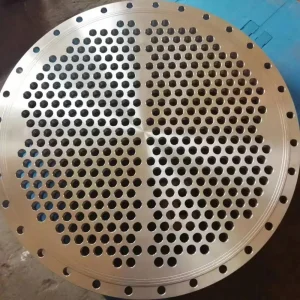
Explore our extended range of certified forged fittings, rings, tube sheets, and custom pipe connection components.