Explore our certified high-pressure forged flanges manufactured to ASME B16.5, DIN, and EN 1092-1 dimensional specifications.
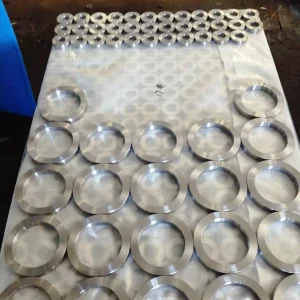
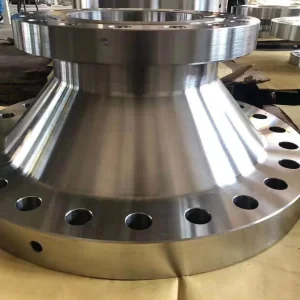
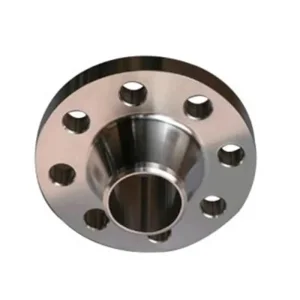
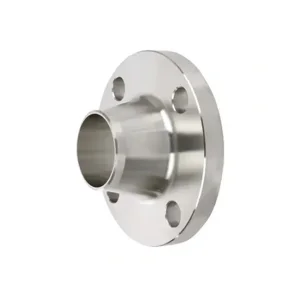
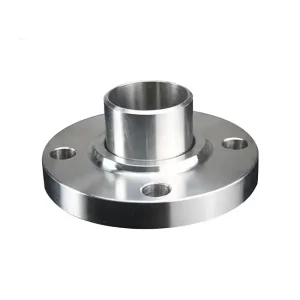
Evaluating mechanical stress tolerances, thermal expansion mitigation, and metallurgic consistency in modern piping infrastructure.
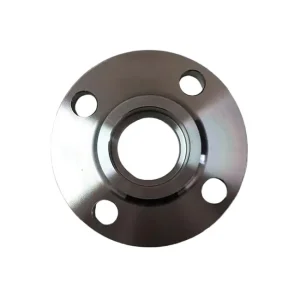
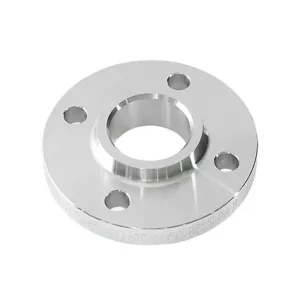
In high-pressure, small-bore piping networks, selecting the optimal pipe flange is a critical engineering decision that directly impacts operational safety, fluid dynamics, and long-term joint fatigue life. Socket Welding Flanges (SWF), standardized under ASME B16.5 and ASME B16.11, present a highly specialized connection mechanism engineered specifically for high-pressure applications in nominal pipe sizes (NPS) typically ranging from 1/2" to 4" (DN15 to DN100).
Unlike Slip-On (SO) flanges that require double fillet welds or Weld Neck (WN) flanges that necessitate full-penetration butt welding with precise end-bevel alignment, a Socket Welding Flange features a counterbored socket tailored to receive the pipe end. The mechanical attachment is completed via a single fillet weld on the outer hub of the flange. This engineering design significantly streamlines installation while offering smooth interior fluid flow mechanics compared to threaded connections.
Quantifying static load capacity, fatigue limits, and installation labor efficiencies across industrial flange configurations.
| Engineering Metric | Socket Welding Flange (SWF) | Weld Neck Flange (WNF) | Slip-On Flange (SOF) |
|---|---|---|---|
| Primary Size Range | Small-Bore: ½" to 4" (DN15 – DN100) | Universal: ½" to 120" (DN15 – DN3000) | Medium/Large: ½" to 60" (DN15 – DN1500) |
| Pressure Rating Scope | Class 150 to Class 1500 / 2500 | Class 150 to Class 2500+ | Class 150 to Class 300 (Limited 600) |
| Welding Requirement | Single External Fillet Weld | Full Penetration Butt Weld | Double Fillet Weld (Internal & External) |
| Fatigue Resistance Strength | 1.5x of Slip-On; Moderate-High | 1.0x Baseline (Highest Fatigue Life) | 1.0x Baseline (Lower Fatigue Life) |
| Internal Fluid Turbulence | Low (When 1/16" expansion gap is smooth) | Zero (Smooth continuous bore match) | Moderate (Internal gap causes eddying) |
| Critical Design Feature | 1.6mm (1/16") Bottom Expansion Gap | Tapered Hub transfers stress to pipe | Pipe penetrates flange face |
According to ASME B31.3 Process Piping Code, when inserting pipe into a Socket Welding Flange, a minimum clearance gap of 1.6 mm (1/16 in.) must be maintained between the end of the pipe and the bottom of the socket prior to welding. This gap prevents residual thermal expansion stress from cracking the fillet weld root during thermal cycling and high-temperature service conditions.
The machined socket bore aligns the pipe automatically, eliminating alignment clamps. The single outer fillet weld distributes mechanical bending stress away from the pipe-to-flange junction.
For toxic, flammable, or high-pressure chemical dosing lines, SWFs eliminate the risk of spiral leakage paths associated with threaded NPT flange connections.
Contractors significantly reduce field assembly times because no edge beveling or intricate butt-weld tacking is needed, reducing total installed labor cost (TCO).
Leveraging world-class raw billet sourcing, closed-die forging technology, and vertically integrated heat-treatment facilities.
When sourcing industrial piping components globally, global EPC contractors and stockists turn to Dingxiang County in Shanxi Province, China—recognized globally as the official "Hometown of Forging in China." As an established manufacturing leader in this specialized industrial cluster, our plant integrates every link of the forging value chain under one operational roof.
Quality begins at the chemical level. We source prime carbon steel (ASTM A105), low-temperature carbon steel (ASTM A350 LF2), stainless steel (ASTM A182 F304/F316L), and high-yield duplex alloys (F51/F53/F55) exclusively from top-tier steel mills with vacuum degassing (VD) and ladle refining furnace (LRF) processing. This eliminates non-metallic inclusions and ensures flawless grain orientation during hot working.
Our facility utilizes high-tonnage hydraulic forging presses combined with automated radial-axial ring rolling machines. This mechanical working achieves high forging ratios (greater than 4:1), breaking down cast dendritic structures and aligning grain flow precisely with the contours of the flange hub and socket wall. The result is superior impact toughness, high tensile yield strength, and maximum burst-pressure margins.
Every batch of Socket Welding Flanges undergoes precise, computer-monitored heat-treatment protocols:
Where failure is not an option: Socket Welding Flanges in mission-critical fluid distribution infrastructure.
Installed extensively in high-pressure hydraulic control skids, chemical injection lines, and gas lift manifolds operating under extreme marine atmospheric corrosion (C5-M) and high vibrational loads.
Utilized in small-bore hydrocarbon sample loops, steam tracing lines, and caustic chemical feeds where threaded joints risk severe fugitive emissions or crevice corrosion failures.
Engineered to withstand cyclic thermal shocks in high-pressure boiler feed pump lines, blowdown systems, and turbine auxiliary steam networks matching ASME B31.1 code requirements.
Fabricated from ultra-low carbon stainless steel (316L) with mechanically polished or electropolished surface finishes (Ra < 0.4 µm) to prevent bacterial stagnation in cleanrooms.
Ensuring complete chemical traceability, non-destructive validation, and international regulatory approval for seamless procurement.
Buying critical pressure equipment components requires rigorous risk mitigation. Every flange leaving our production floor is backed by a fully traceable EN 10204 Type 3.1 Inspection Certificate (with Type 3.2 third-party witness available via TÜV, SGS, DNV, or Lloyd's Register on request).
How digital traceability, hydrogen transport readiness, and automated orbital welding are redefining high-pressure connections.
As global energy shifts toward clean hydrogen, flange sealing faces are engineered with sub-micron surface finishes and specialized metallic ring gaskets to prevent atomic hydrogen permeation and fugitive emissions.
Next-generation Socket Welding Flanges are precision machined with controlled hub outer diameter tolerances to seamlessly interface with automated field orbital welding bug systems, increasing weld speed by 300%.
Eliminating counterfeit materials through direct laser-etched QR code passports on each flange rim, providing instantaneous digital access to raw billet heat numbers, mechanical test lab charts, and NDE photos.
Detailed answers addressing design limits, material standards, surface facing, and order logistics.
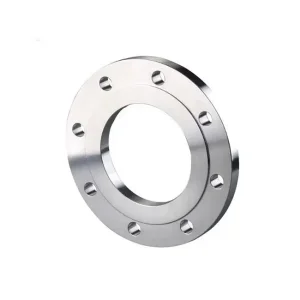
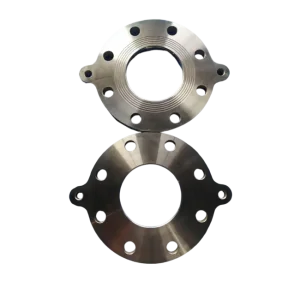
Explore our export-ready inventory of blind, threaded, tube sheet, and socket weld flange solutions.
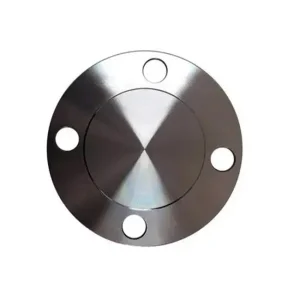
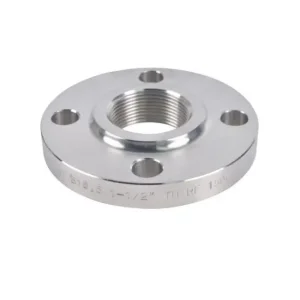
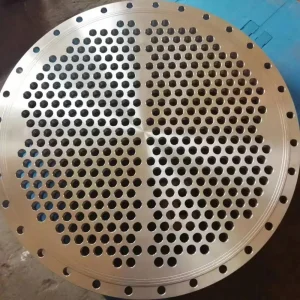
Connect directly with our engineering sales desk in Dingxiang, Shanxi. Receive itemized RFQ response, MTC samples, and CAD verification within 24 hours.
