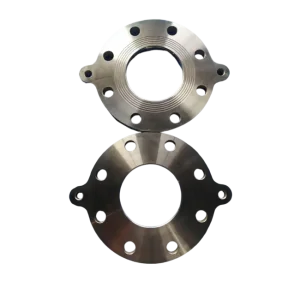
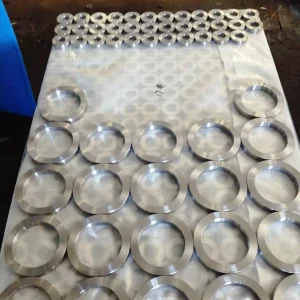
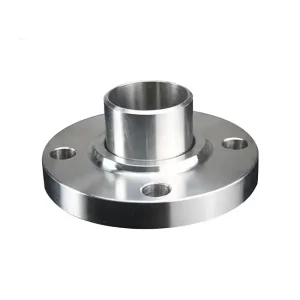
Explore high-precision forged flanges manufactured in full compliance with international standards.
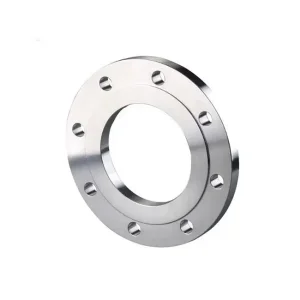
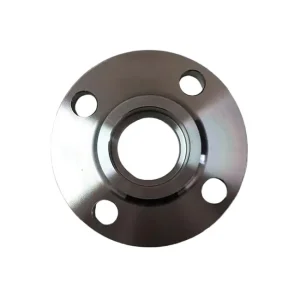
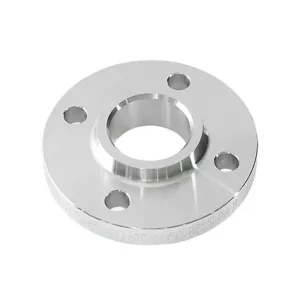
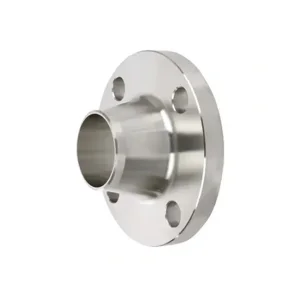
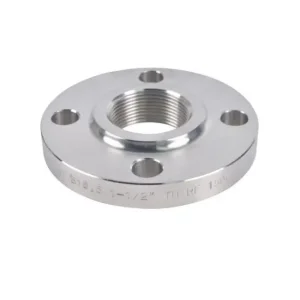
Socket Weld Flanges (SWF) represent a critical connection technology for high-pressure, small-bore piping systems across global processing industries. Engineered with a recessed counterbore, socket weld flanges facilitate high-integrity fluid containment while minimizing installation complexity compared to full-penetration butt-weld joints.
Understanding structural differences, stress distribution patterns, and fabrication economics across industrial flange types.
The socket weld flange features a female socket bore designed to accept nominal pipe outer diameters (NPS 1/2" to 4"). Welding is performed on the outer perimeter using single-pass or multi-pass fillet welds. This reduces internal turbulence while providing exceptional mechanical resistance to shear loads.
While SWFs offer superior fatigue resistance compared to threaded joints, the 1.6 mm bottom gap creates a potential crevice where corrosive fluids can accumulate. For severe sour service or highly aggressive acids, full penetration Weld Neck (WN) flanges are preferred over socket configurations.
Socket welding eliminates the need for complex pipe end beveling required by Weld Neck connections. Fit-up is fast, alignment is self-guided by the counterbore, and tack welding requires minimal jigging—slashing field installation labor costs by up to 35%.
| Flange Type | Nominal Size Range | Pressure Class Rating | Welding Connection Method | Fatigue Life Expectancy | Relative Fabrication Cost |
|---|---|---|---|---|---|
| Socket Weld Flange (SW) | 1/2" to 4" (DN15 - DN100) | Class 150 to 1500 (PN20 - PN250) | External Fillet Weld | High (1.5x of Slip-On) | Moderate |
| Weld Neck Flange (WN) | 1/2" to 120" (DN15 - DN3000) | Class 150 to 2500 (PN20 - PN400) | Full Penetration Butt Weld | Very High (Standard Baseline) | High (Requires Beveling) |
| Slip-On Flange (SO) | 1/2" to 60" (DN15 - DN1500) | Class 150 to 1500 (PN20 - PN250) | Internal & External Fillet Welds | Moderate (1.0x Baseline) | Low |
| Threaded Flange (TH) | 1/2" to 4" (DN15 - DN100) | Class 150 to 2500 (PN20 - PN400) | NPT / BSPT Threaded Seal | Low (Vulnerable to Vibration) | Low (No Welding Needed) |
Macroeconomic drivers, regional regulatory demands, and strategic purchasing behaviors shaping the socket flange industry worldwide.
Engineering, Procurement, and Construction (EPC) firms along with global stocking distributors have moved beyond basic pricing metrics. Key purchasing decision factors now include:
Why China's primary forging cluster provides world-class quality, scale economics, and rapid global fulfillment.
Direct supply partnerships with tier-1 steel mills (Baosteel, TISCO) ensure that forged socket blanks originate from vacuum-degassed, refined steel billets—eliminating internal porosity, inclusions, and hydrogen-induced flaking.
Utilizing high-tonnage hydraulic forging presses and automated ring-rolling equipment, Shanxi YUXIN achieves superior grain-flow alignment along flange contours, increasing tensile yield strength and impact toughness.
Fully automated computer-controlled heat treatment furnaces perform Normalizing, Solution Annealing, and Tempering. 100% Non-Destructive Testing (Ultrasonic Testing, Magnetic Particle Inspection) guarantees 0% field failure rates.
Spectral chemical verification of incoming steel raw material.
Controlled heating to optimal plastic deformation temperature.
High-pressure closed-die drop forging to form continuous grain lines.
Normalizing or solution annealing to relieve internal mechanical stress.
High-speed lathe precision turning of socket counterbores & faces.
CNC bolt hole placement and deep heat-number hard stamping.
Yellow varnish, rust-preventive oil, or zinc plating & sea packaging.
Engineered deployment of Socket Weld Flanges across high-risk, high-pressure operating environments.
On offshore drilling platforms and FPSO (Floating Production Storage and Offloading) vessels, space is at a premium. Socket Weld Flanges in NPS 1/2 to NPS 2 (Class 600 & 1500) provide compact, leak-proof connections for hydraulic control lines, chemical injection skids, and wellhead sampling manifolds where joint rigidity under heavy wave vibration is mandatory.
High-pressure steam auxiliary lines in thermal and nuclear power plants demand thermal shock resilience. Manufactured from high-temperature alloy steel (ASTM A182 F11 / F22), socket flanges installed with a precise 1.6 mm bottom expansion gap prevent destructive thermal binding and flange face distortion during rapid boiler startup cycles.
In fine chemical manufacturing, small-bore lines convey volatile solvents, organic acids, and monomers. Stainless steel socket weld flanges (ASTM A182 F316L / 317L) ensure smooth internal bore transitions, minimizing fluid shear and localized stagnation while standing up to clean-in-place (CIP) steam purging routines.
For liquid nitrogen (LN2) and LNG distribution lines operating down to -196°C, low-temperature carbon steel (ASTM A350 LF2 Class 1) and austenitic stainless steels are specified. Socket weld joints undergo Charpy V-notch impact testing to verify ductility and prevent brittle fracture failure mode under cryogenic thermal stress.
Emerging engineering innovations reshaping socket flange production, quality control, and field integration.
Integration of direct 2D DataMatrix code laser engraving on flange rims. Scanning the code via smartphone grants instant access to heat chemical reports, mill test certificates, dimensional inspection logs, and installation torque guidelines.
Transition from classic varnish coatings toward fluoropolymer (PTFE), Zinc-Nickel alloy electroplating, and Thermal Spray Aluminum (TSA). These advanced surface engineering solutions extend maintenance-free coastal shelf life beyond 25 years.
As the global energy sector shifts toward green hydrogen pipelines, specialized ultra-low-carbon steel forgings tested for hydrogen embrittlement micro-cracking under extreme pressure are becoming the new benchmark for next-generation socket weld flanges.
Key parameters engineering procurement buyers must define when submitting Requests for Quotations (RFQs).
To ensure compliance with third-party audit agencies (SGS, BV, TÜV, DNV), ensure your supplier commits to providing:
In-depth technical answers regarding socket flange welding, installation rules, material grades, and export logistics.
Complete pipeline flange solutions engineered for extreme pressure, thermal, and chemical environments.