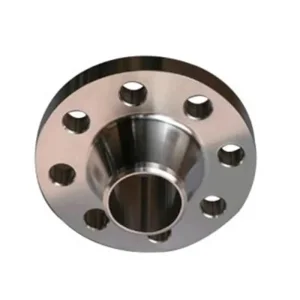
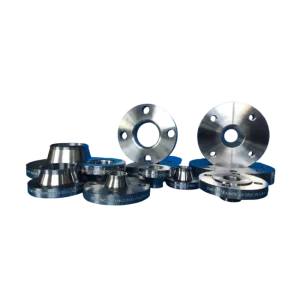
Direct mill dispatch with full EN 10204 3.1 certification, custom metallurgy, and international standard compliance.
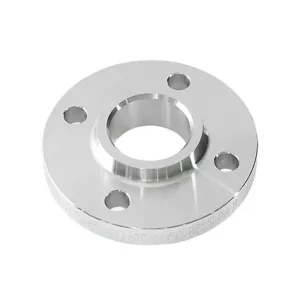
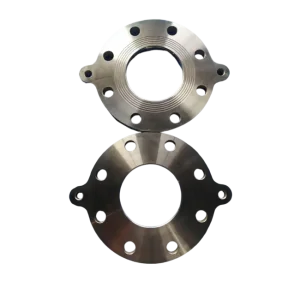
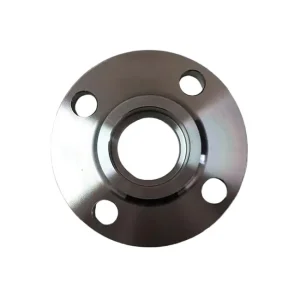
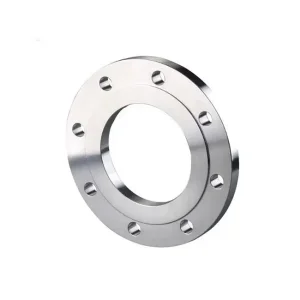
In modern fluid conveyance, municipal distribution, petrochemical refining, and heavy machinery, selecting the optimal piping connection is critical for operational longevity and risk mitigation. Slip-On Flanges (SO Flanges) remain one of the most widely adopted structural components across engineering specifications worldwide. Characterized by their pipe-penetrating bore design where the pipe slips inside the flange hub before double fillet welding (internal and external), SO flanges balance procurement cost efficiency with robust mechanical performance.
While Weld Neck (WN) flanges feature a tapered hub designed for high-stress fatigue applications, high-quality forged Slip-On Flanges offer significant advantages in low-to-medium pressure operations (Class 150 to Class 600, PN6 to PN40). The primary structural benefit of an SO flange lies in its installation flexibility: alignment tolerances are easier to maintain because cut pipe lengths do not require hyper-precise beveling prior to fit-up. Additionally, calculated stress concentration at the weld joint is mitigated through standardized dual-fillet welding protocols governed by ASME B31.3 process piping standards.
Modern manufacturing shifts away from legacy casting toward closed-die and ring-rolling forging. At Shanxi Yuxin Casting & Forging Co., Ltd., continuous grain refinement during high-pressure hot forging ensures superior mechanical density, eliminating micro-porosity and internal voids that frequently cause failure in low-cost cast alternatives.
Integration of spectroscopic chemical analysis and automated optical pyrometry ensures every steel billet (from ASTM A105 to A182 F316L) maintains exact chemical composition boundaries. Heat treatment parameters (normalizing, tempering, and solution annealing) are regulated via digital control loops to guarantee impact toughness at low operating temperatures.
Global EPC buyers increasingly demand specialized surface protection. Recent trends demonstrate widespread adoption of high-durability yellow/black rust-preventative coatings, electro-galvanizing, hot-dip galvanizing, and advanced epoxy resin barriers engineered for extreme offshore and marine environments.
When global procurement directors, pipeline design engineers, and stockists search for the "Best Slip-On Flanges Supplier & Suppliers", user intent analysis indicates three critical evaluation criteria beyond baseline unit pricing: Dimensional Accuracy & Tolerances, Uncompromised Material Traceability, and Reliable Lead-Time Logistics.
While SO flanges reduce initial material purchasing costs by 20%–30% compared to heavy Weld Neck variants, improper dimensional tolerances can lead to costly field alignment errors during installation. Choosing an audited manufacturer ensures precise bolt-hole alignment, flat sealing faces, and uniform hub thickness, thereby reducing field labor costs.
Quality failures in critical piping often trace back to sub-standard raw material or falsified Mill Test Certificates (MTC). Authentic EN 10204 3.1 certification detailing heat number matching, tensile strength, yield points, and charpy impact testing provides essential risk mitigation for procurement auditors.
Factory-direct supply capacity, combined with flexible minimum order quantities (MOQ) and extensive stock reserves of standard carbon steel blanks, empowers distributors to fulfill tight EPC project schedules without inventory overstock risk.
Forged Slip-On Flanges are engineered to serve diverse operating environments. Shanxi Yuxin Casting & Forging Co., Ltd. customizes forging processes, metallurgical formulations, and non-destructive testing regimes tailored to specific industry demands:
| Target Sector | Typical Material Grades | Pressure Class / Standard | Critical Engineering Requirement |
|---|---|---|---|
| Oil & Gas Midstream | ASTM A105 / A350 LF2 (Low Temp) | ASME B16.5 Class 150 / 300 / 600 | NACE MR0175 sour service compliance, HIC testing, fine grain structures. |
| Chemical Processing | ASTM A182 F304L / F316L / F51 Duplex | EN 1092-1 Type 12 (PN10 - PN40) | Intergranular corrosion resistance, chemical passivated surface finish. |
| Municipal Water & HVAC | Carbon Steel Q235B / P250GH / C22.8 | DIN 2576 / EN 1092-1 Type 01 & 12 | Economic volume forging, anti-rust varnishing, hot-dip galvanizing options. |
| Marine & Offshore Shipbuilding | A182 F316L, Copper-Nickel Alloys | JIS B2220 / BS 4504 | Marine classification certification (ABS, DNV, BV), high chloride pitting resistance. |
| Power Generation & Heat Exchangers | A182 F11 / F22 Alloy Steel, Custom Billet | ASME B16.47 Series A/B Large Diameter | Elevated temperature creep strength, 100% Ultrasonic Testing (UT) per ASTM A388. |
Located in Dingxiang County, Shanxi Province — world-renowned as China's premier flange forging industrial cluster — Shanxi Yuxin Casting & Forging Co., Ltd. combines regional forging heritage established in 1992 with rigorous modern quality management systems. Our factory operates under strict international compliance protocols:
Fully certified under ISO 9001 Quality Management System, TUV-audited processes, Pressure Equipment Directive (PED 2014/68/EU), and AD 2000-Merkblatt W0 / TRD 100 guidelines. Every export consignment is eligible for third-party inspection (SGS, Bureau Veritas, TUV, DNV).
In-house mechanical and metallurgical testing facilities perform Positive Material Identification (PMI), Ultrasonic Flaw Detection (UT), Magnetic Particle Inspection (MT), Brinell/Rockwell Hardness Testing, and Charpy V-Notch Impact Testing at cryogenic temperatures.
Export-ready packaging features heavy-duty fumigated wooden cases, sturdy iron pallets, plastic cap protections for flange raised faces (RF) or ring-type joints (RTJ), and VCI anti-corrosion barrier wrapping tailored for sea freight across global trade routes.
As global energy transitions drive demands for hydrogen conveyance, carbon capture utilization (CCUS), and ultra-clean chemical synthesis, flange forging technology must evolve. Shanxi Yuxin's R&D roadmap focuses on three key advancement areas:
Developing specialized low-alloy carbon steels and optimized austenitic stainless steels with controlled nickel and chromium equivalent ratios designed to resist high-pressure hydrogen permeation.
Incorporating precision-machined recess channels within heavy-duty custom flanges for embedding fiber-optic pressure and acoustic temperature sensors, facilitating real-time IoT pipeline structural monitoring.
Transitioning heating furnaces to clean natural gas and electric induction systems, significantly lowering the embodied carbon footprint per ton of forged steel to meet strict EU Carbon Border Adjustment Mechanism (CBAM) requirements.