Direct factory supply of precision-machined raised neck flanges, weld necks, ring type joints, and special forged pipeline fittings manufactured in compliance with international pressure vessel directives.
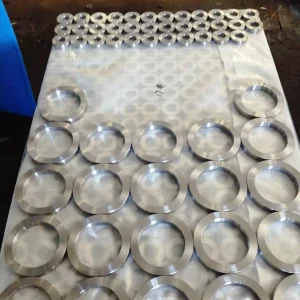
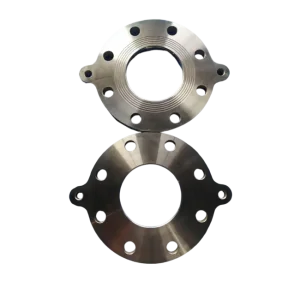
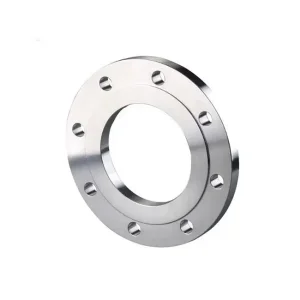
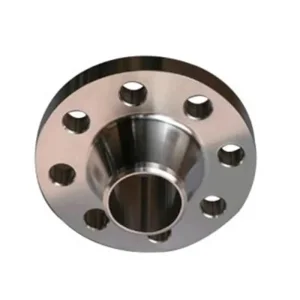
Understanding the structural dynamics, stress transfer mechanisms, and metallurgical requirements of high-hub welding neck flanges in severe process environments.
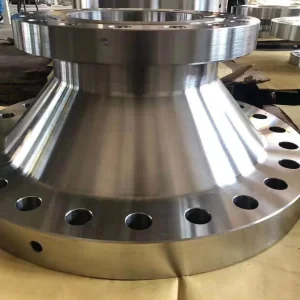
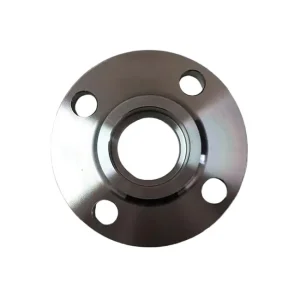
In global industrial piping, a Raised Neck Flange—most commonly specified as a Raised Face Weld Neck (RFWN) Flange or High-Hub Weld Neck Flange (EN 1092-1 Type 11)—is a forged pipe fitting featuring a long, tapered neck (hub) that transitions smoothly into the matching wall thickness of a pipe. The "Raised Neck" terminology combines two distinct structural benefits: the extended hub neck that distributes structural stress into the pipe wall, and the raised face (RF) gasket seating platform elevated 1.6mm (1/16") or 6.4mm (1/4") above the bolting circle.
Unlike flat plate or slip-on flanges that create sharp stress concentrations at the pipe junction, the tapered neck of a Raised Neck Flange provides a gradual thickness transition. Under severe internal pressure, thermal expansion cycles, and external bending moments (such as seismic or subsea wave forces), hoop stress is safely dissipated along the neck. This design prevents localized plastic deformation at the circumferential butt weld, making it the industry mandatory standard for Class 300 to Class 2500 pressure systems.
When selecting a reliable Raised Neck Flange supplier, process plant operators and EPC contractors must evaluate metallurgical composition alongside geometric tolerances. Standard production at Shanxi Yuxin Casting & Forging Co., Ltd. spans carbon steel grades such as ASTM A105 and ASTM A350 LF2 (for low-temperature service down to -46°C), high-yield low-alloy steels like ASTM A182 F11/F22/F91, and austenitic stainless steels including ASTM A182 F304/F304L and F316/F316L. For ultra-corrosive sour gas environments, our facility regularly forges duplex and super-duplex alloys (UNS S31803 / F51 and UNS S32750 / F53) alongside nickel-base alloys like Inconel 625.
The raised face platform itself plays a critical role in flange sealing mechanics. By concentrating the total bolt clamp load onto a smaller raised surface area, the effective gasket seating stress is significantly multiplied. Standard raised faces feature concentric or continuous spiral phonographic serrations with a controlled surface roughness of 125 to 250 micro-inches AARH (Ra 3.2 to 6.3 µm), designed to bite into soft metal, graphite, or PTFE fillers inside spiral-wound gaskets (SWG) to achieve zero fugitive emission performance.
An engineering comparative matrix highlighting mechanical performance, NDT radiographability, fatigue resistance, and total cost of ownership across major pipe flange configurations.
| Flange Type | Pressure Capability | Fatigue Life Expectancy | Volumetric NDT Inspectability | Installation Labor Cost | Primary Industrial Use Case |
|---|---|---|---|---|---|
| Raised Neck (Weld Neck RFWN) | Class 150 up to Class 2500 (PN6 - PN400) | Maximum (1.0x Base Benchmark) | 100% Radiographic (RT) & Ultrasonic (UT) full weld volume scan | Moderate (Requires precision bevel alignment & butt-welding) | Critical high-pressure, thermal-cycling oil/gas & power piping |
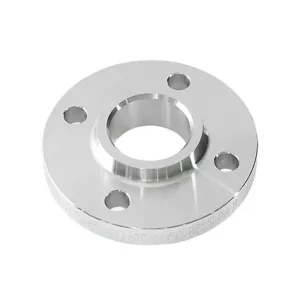
| Slip-On Flange (SO) | Class 150 to Class 1500 (PN6 - PN100) | Low to Moderate (approx. 0.3x of Weld Neck) | Limited to Surface NDT (Fillet weld PT/MT only) | Lower (Easy slip-fit alignment, double fillet weld) | Low-pressure utility lines, HVAC, cooling water networks |
| Socket Weld Flange (SW) | Class 150 to Class 1500 (Small bore ½" to 4") | Moderate (Crevice corrosion risk at socket gap) | Surface NDT (Fillet weld PT/MT); RT difficult due to gap | Low (Single fillet weld, no pipe beveling needed) | Small-bore high-pressure chemical instrument & drain lines |
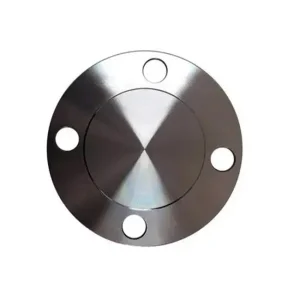
| Blind Flange (BL) | Class 150 to Class 2500 (PN6 - PN400) | High (Subject to high center plate deflection stress) | 100% Ultrasonic forging billet check | Low (Bolted connection to mating flange) | Pipeline end closures, pressure vessel access hatches, tie-in points |
| Ring Type Joint Flange (RTJ) | Class 600 to Class 2500+ (High Integrity) | Maximum (Metallic ring gasket in machined groove) | 100% Radiographic & Ultrasonic weld check | High (Requires calibrated bolt tensioners & ring alignment) | Subsea Christmas trees, high-pressure sour gas wellheads (>10,000 PSI) |
Because a Raised Neck Flange connects to the pipe via a full-penetration V-bevel butt weld, quality managers can perform 100% X-ray / Gamma-ray radiography (RT) or phased-array ultrasonic testing (PAUT) across the entire joint volume to verify zero porosity or crack defects.
In refinery hydrocrackers and steam headers subjected to rapid temperature changes, the hub neck acts as a thermal buffer. It prevents rapid differential expansion between the heavy flange ring and thin pipe wall, eliminating bolt torque loss and flange leakage.
Pipeline thermal growth generates high bending forces. The engineered taper of the raised neck boosts the section modulus at the flange base, resisting flange rotation (cupping) and maintaining uniform gasket seating stress under extreme piping loads.
Leveraging the raw material scale, skilled metallurgy, and vertical forging infrastructure of Dingxiang County—China's world-famous hometown of industrial forging.
Founded in 1992, Shanxi Yuxin Casting & Forging Co., Ltd. operates out of the Zhuangli Industrial Zone in Dingxiang County, Shanxi Province. Dingxiang represents the largest forged flange manufacturing cluster in Asia, benefiting from direct supply integration with top-tier steel producers such as Taiyuan Iron & Steel (TISCO) and Baosteel. This localized ecosystem gives YUXIN immediate access to prime carbon, low-alloy, and stainless steel billets with full metallurgical pedigree.
Our 10,000-ton annual output facility eliminates intermediary trading markups, giving global EPCs and stockists direct factory pricing without sacrificing engineering compliance. Every raised neck flange undergoes closed-die hydraulic forging or automated ring rolling, ensuring an unbroken grain flow pattern that follows the contour of the flange hub for maximum tensile strength and impact toughness.
Ensuring flawless approval by inspection authorities across North America, Europe, the Middle East, and Asia-Pacific through international certification frameworks.
Fully compliant with ASME B16.5 (NPS ½" to 24") and ASME B16.47 Series A & B (NPS 26" to 60") across Pressure Classes 150, 300, 600, 900, 1500, and 2500. Support for Canadian Registration Number (CRN) technical documentation across all provinces.
Certified per EN 1092-1 Type 11 (Welding Neck Flanges) for PN6 through PN400. Fully audited quality system compliant with European Pressure Equipment Directive PED 2014/68/EU Annex I and German pressure vessel code AD 2000-Merkblatt W0 / TRD 100.
For oilfield and refinery service containing wet H2S, our raised neck flanges meet NACE MR0175 / ISO 15156 and NACE MR0103. Specialized testing available for Hydrogen Induced Cracking (HIC) and Sulfide Stress Corrosion Cracking (SSCC) per Saudi Aramco & ADNOC vendor specs.
Every single shipment leaves our factory accompanied by an EN 10204 3.1 Inspection Certificate detailing exact ladle chemical analysis, mechanical tension test results, hardness values, heat treatment charts, and NDT reports. Independent 3rd-party inspection (EN 10204 3.2) witnessed by TÜV Rheinland, Lloyd's Register, Bureau Veritas, or SGS is available upon client request.
Where high-hub raised neck flanges provide mission-critical sealing security under severe operational stress.
Subsea oil production exposes flanges to violent wave motion, high external hydrostatic pressure, and corrosive seawater. YUXIN raised neck RTJ flanges in F51 duplex steel provide zero-maintenance structural connection for offshore manifold skids and FPSO topsides.
Operating at temperatures up to 550°C under 150+ bar of partial hydrogen pressure, refinery desulfurization units require heavy-wall chrome-moly alloy raised neck flanges (ASTM A182 F11/F22) engineered to prevent high-temperature hydrogen attack (HTHA).
Transporting liquefied natural gas at -196°C causes extreme thermal contraction. Our ASTM A350 LF2 Class 2 and A182 F316L raised neck flanges pass rigorous liquid nitrogen impact testing to eliminate brittle fracture risks in LNG storage terminals.
Main steam pipe loops in power stations experience severe cyclic vibration and water hammer. High-hub weld necks absorb shock loadings and provide seamless integration with boiler pressure vessels per ASME Boiler & Pressure Vessel Code (BPVC).
As hydrogen clean energy networks expand globally, flange connections demand zero-micro-leakage tightness. Micro-finished raised faces paired with optimized bolt pre-load torque ensure hydrogen molecules cannot permeate the flanged joint.
Shell-and-tube heat exchanger inlet nozzles demand custom extended-length raised neck flanges (Long Weld Necks - LWN). YUXIN manufactures heavy-barrel LWN flanges machined directly from solid forged bars without longitudinal welds.
How automation, corrosion-resistant cladding, digital twins, and green metallurgy are reshaping the global piping component market.
Industrial IoT is entering piping networks. YUXIN offers optional embeddable RFID tags and laser-etched matrix codes on flange rims, enabling plant maintenance crews to instantly scan and access original Mill Test Certificates, material grades, and bolt torque histories in the field.
To reduce project capital expenditure without compromising corrosion resistance, the industry is shifting toward carbon steel A105 raised neck flanges overlay-clad with a 3mm layer of Inconel 625 or 316L on the raised face and inner bore using automated hot-wire TIG welding.
Aligning with European carbon border adjustment mechanisms (CBAM), YUXIN is integrating energy-efficient electric induction billet heaters powered by Shanxi clean energy micro-grids, reducing the embodied carbon footprint per ton of forged steel by up to 28%.
Essential technical verification criteria for piping engineers, procurement managers, and QA/QC inspectors during supplier evaluation.
When submitting a Request for Quotation (RFQ) for raised neck flanges, ensure your technical package specifies the following parameters to prevent engineering hold delays:
Sourcing low-cost flanges from unverified traders often leads to hidden project expenses far exceeding the initial price discount:
Direct expert answers to common technical queries regarding Raised Neck Flange specifications, manufacturing tolerances, and order logistics.
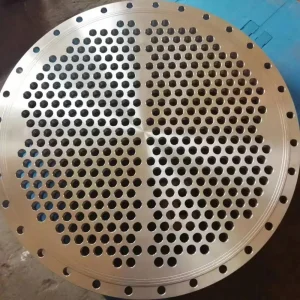
Explore our secondary catalogue of CNC-machined blind flanges, slip-on plate flanges, tube sheets, and specialized pipe connection solutions.
Eliminate agent markups, accelerate technical submittal approvals, and secure certified high-hub raised neck flanges direct from China's premier forging cluster. Contact our engineering team for immediate RFQ analysis.
