ISO & PED Certified Flanges Engineered for Extreme Pressure (Class 150 to Class 2500 / PN6 to PN400)
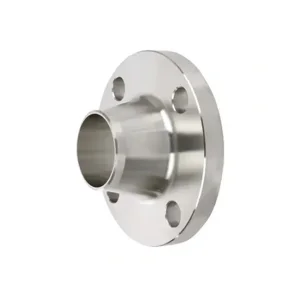
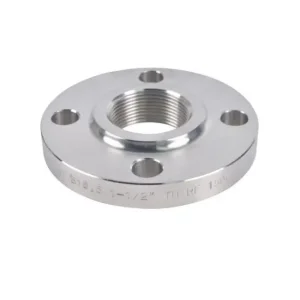
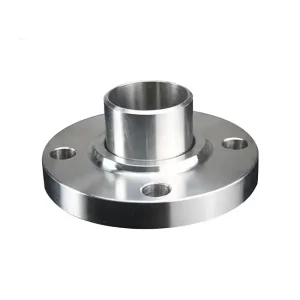
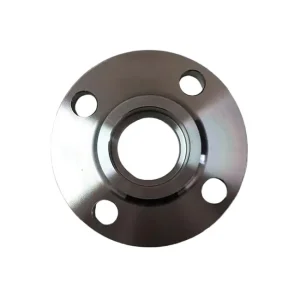
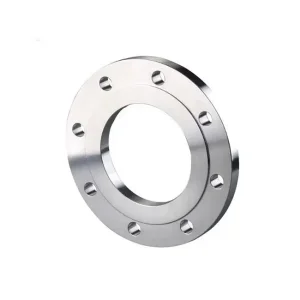
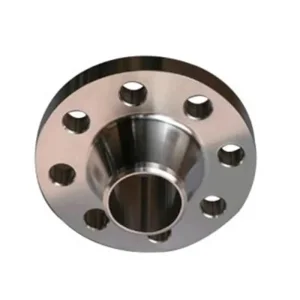
In high-integrity fluid conveyance systems across petrochemical, deepwater oil & gas, nuclear power, and green hydrogen infrastructure, the term "Pound Rating" (denoted as LB, #, or Class) represents the fundamental pressure-temperature rating standard established by the American Society of Mechanical Engineers (ASME B16.5 and ASME B16.47). Understanding pound ratings requires looking beyond nominal static pressure values. A flange rated as 150# or 2500# does not simply hold 150 psi or 2500 psi; rather, it adheres to a non-linear pressure-temperature envelope where allowable working stress decreases drastically as ambient operating temperatures rise.
This industrial whitepaper serves as an authoritative guide for Procurement Directors, EPC Piping Engineers, and Global Supply Chain Officers. Grounded in 33 years of metallurgical manufacturing experience at Shanxi Yuxin Casting & Forging Co., Ltd. (located in Dingxiang County, Shanxi—the world-renowned "Hometown of Forging in China"), this document explores critical selection criteria, structural failure modes, global procurement demands, and the supply chain resilience powered by China Industry 4.0 automation.
A standard ASME B16.5 Class 300 Carbon Steel (ASTM A105) flange supports up to 740 psig (51.0 bar) at -29°C to 38°C (-20°F to 100°F). However, if operating conditions escalate to 400°C (750°F), the maximum allowable working pressure drops to 375 psig (25.9 bar). Choosing the correct pound rating supplier requires detailed metallurgical proofing, full grain-alignment verification, and certified hydrostatic/nondestructive testing.
Navigating global procurement requires mapping ASME Pound Ratings (#) to European Standard (EN 1092-1) PN (Pression Nominale) classes. We supply dual-certified forgings bridging Class 150 to PN16, Class 300 to PN40, and Class 600 to PN100.
Every forging produced at YUXIN is tracked from the initial ladle heat number. Mill Test Certificates (MTC) according to EN 10204 3.1 and 3.2 cover full chemical spectroscopy, mechanical tensile strength, impact testing, and grain refinement records.
Unlike flame-cut plate or cast alternatives, our closed-die and ring-rolling technology aligns steel micro-grains parallel to high-stress flange contours. This eliminates internal voids and maximizes fatigue strength under thermal cycling.
Selecting the ideal pound rating requires analyzing operational pressure, media corrosivity, bolt-load limits, and joint fatigue. Below is an engineering overview of standard pound classes manufactured under rigorous quality controls:
| ASME Pressure Class | Equivalent EN PN Class | Nominal Working Pressure (at 38°C / A105) | Primary Joint Facing Types | Typical High-Intent Application |
|---|---|---|---|---|
| Class 150# | PN 16 / PN 20 | 285 psig (19.6 bar) | Raised Face (RF), Flat Face (FF) | Municipal Water, Low-Pressure Steam, HVAC Systems |
| Class 300# | PN 40 / PN 50 | 740 psig (51.0 bar) | RF, Tongue & Groove, Male/Female | Refinery Process Piping, Chemical Processing Units |
| Class 600# | PN 100 | 1,480 psig (102.1 bar) | RF, Ring Type Joint (RTJ) | High-Pressure Natural Gas Transmission, Boiler Feedwater |
| Class 900# | PN 150 | 2,220 psig (153.1 bar) | Ring Type Joint (RTJ), RF | Offshore Gas Compression, Deepwater Wellheads |
| Class 1500# | PN 250 | 3,705 psig (255.5 bar) | Ring Type Joint (RTJ) | Severe Hydro-cracking, High-Pressure Chemical Injection |
| Class 2500# | PN 420 | 6,170 psig (425.4 bar) | RTJ Heavy Machined Hub | Subsea Xmas Trees, Ultra-Supercritical Power Generation |
Market Trends Shaping Heavy Forging Demand Across North America, Europe, the Middle East, and Asia-Pacific
The global market for industrial pressure components is undergoing a structural shift driven by four macro forces: 1) Energy Transition Infrastructure (LNG export terminals and hydrogen blending), 2) Deepwater Exploration Recovery, 3) Stringent Environmental Regulations against fugitive emissions (LDAR compliance), and 4) Supply Chain De-Risking.
Modern EPC contractors demand flange face finishes with exact micro-inch roughness (AARH 125–250 spiral serration) to maintain gasket sealing integrity under thermal cycling, directly mitigating methane and toxic compound leakage.
Growth in Liquefied Natural Gas (LNG) at -196°C and ultra-supercritical steam at 620°C requires advanced materials like ASTM A350 LF2 Class 1/2, ASTM A182 F316L, and chrome-moly alloys (F11, F22, F91) tested for impact toughness.
Global operators require multi-norm compliance (ASME B16.5, DIN 2501, EN 1092-1, JIS B2220, GOST 12821). Supplying dual-stamped products streamlines inventory management for international stockists.
Industrial buyers often face a compromise between competitive cost, fast turnaround, and zero-defect quality assurance. As a premier manufacturer based in Shanxi, China, Shanxi Yuxin Casting & Forging Co., Ltd. resolves this trade-off by combining raw material regional density with smart Industry 4.0 manufacturing.
Located in Dingxiang County, our facility benefits from an integrated industrial ecosystem that concentrates raw billet sourcing, die casting, ring rolling, heat treatment, precise CNC machining, and lab inspection within a 25-kilometer radius. This cluster reduces production lead times by up to 35% compared to fragmented supply chains.
Our plant operates hydraulic forging presses paired with CNC radial-axial ring-rolling mills. This automated setup ensures uniform deformation ratios, optimized grain alignment, and close dimensional tolerances before final machining.
Computer-monitored normalizing, annealing, quenching, and tempering furnaces guarantee consistent mechanical properties (tensile strength, yield strength, elongation, and Charpy V-notch impact performance) across every production batch.
Our quality control program includes 100% PMI (Positive Material Identification) testing, ultrasonic flaw detection (UT), magnetic particle inspection (MT), liquid penetrant testing (PT), and 3D CMM coordinate inspection.
Tailored Pressure Flange Engineering for Demanding Service Environments
Requirement: ASME B16.5 Class 900# to Class 2500# Weld Neck and Blind Flanges with NACE MR0175/ISO 15156 sour service compliance.
Solution: High-alloy forged steel resistant to sulfide stress cracking (SSC) and hydrogen-induced cracking (HIC).
Requirement: High-temperature chrome-moly flanges (ASTM A182 F11/F22) rated Class 300# to Class 600#.
Solution: Fine-grained forgings that resist hydrogen attack and thermal creep during continuous high-temperature operation.
Requirement: Compact slip-on and lap joint flanges (EN 1092-1 Type 01/02 and JIS 5K/10K/16K).
Solution: Lightweight carbon steel and dual-grade stainless steel (304/304L, 316/316L) certified by major classification societies.
Clear, Authoritative Answers to Key Technical and Procurement Inquiries
Direct Factory Sourcing for High-Pressure Industrial Flanges & Special Components