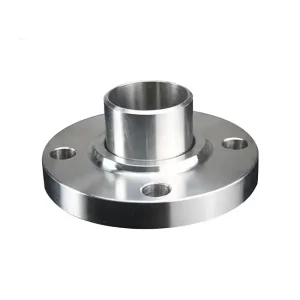
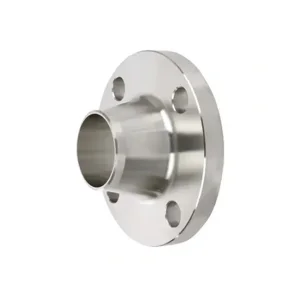
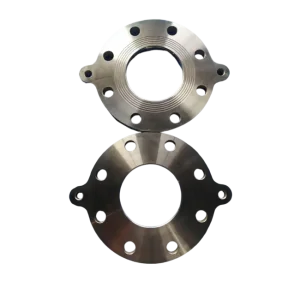
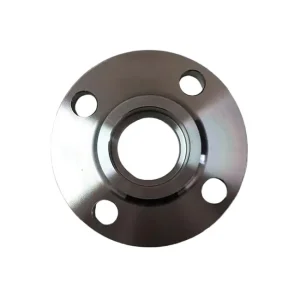
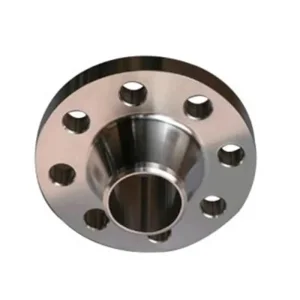
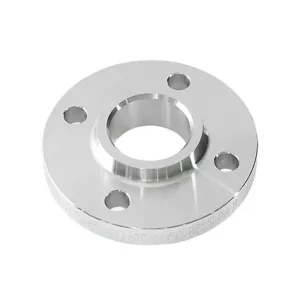
Explore our primary range of precision-manufactured carbon steel, stainless steel, and alloy forged flanges designed for mission-critical applications.
In modern industrial fluid handling, municipal water networks, petrochemical refining, deepwater offshore exploration, and energy generation, the pipe flange plate (frequently referred to as a plate flange, flat flange, or plain slip-on flange) serves as an essential mechanical fastener connecting pipes, valves, pumps, and pressure vessels. As global industrialization accelerates toward higher pressure thresholds and aggressive fluid environments, selecting the best pipe flange plate manufacturer & supplier becomes a mission-critical purchasing decision for EPC (Engineering, Procurement, and Construction) contractors, project managers, and global stocking distributors.
The international flange market has evolved dramatically from simple standardized commodity procurement to high-precision, material-traceable, and custom-engineered manufacturing. Modern pipeline integrity relies on zero-leakage flange connections capable of enduring severe thermal cycling, seismic stress, corrosive sour gas ($H_2S$) exposure, and mechanical bending moments. A high-quality flange plate must provide uniform bolt-load distribution, accurate gasket seat compression, and flawless micro-geometric face alignment.
Driven by global LNG transport expansion, chemical plant modernizations, and green hydrogen infrastructure, the global industrial flange market exceeds $6 Billion annually. High-reliability flange plates form over 35% of total piping connection volume due to their economic efficiency and installation versatility.
In high-pressure systems, flange joint failures trigger unscheduled downtime costing upwards of $100,000 per hour, while presenting catastrophic environmental and safety hazards. Strict compliance with ASME B16.5, EN 1092-1, and PED 2014/68/EU is non-negotiable.
Global buyers now mandate complete raw-material chemical analysis and mechanical testing certificates (EN 10204 3.1/3.2). True factory manufacturers guarantee heat-number stamping directly on the forged rim for auditability.
Selecting the appropriate pipe flange plate involves aligning dimensional standards, pressure classes, facing geometries, and alloy chemistry with exact operating parameters. Shanxi Yuxin Casting & Forging Co., Ltd. produces pipe flange plates manufactured to international dimensional and material frameworks:
| Standard Framework | Common Flange Plate Types | Nominal Size Range | Pressure Class / PN Rating | Facing Types |
|---|---|---|---|---|
| ASME / ANSI B16.5 | Slip-On (SO), Plate, Blind, Lap Joint | 1/2" to 24" (DN15 - DN600) | Class 150, 300, 400, 600, 900, 1500, 2500 | RF (Raised Face), FF (Flat Face), RTJ |
| ASME B16.47 (Ser. A & B) | Large Diameter Weld Neck, Blind, Plate | 26" to 60" (DN650 - DN1500) | Class 75, 150, 300, 400, 600, 900 | Raised Face (RF), Ring Type Joint (RTJ) |
| EN 1092-1 (European) | Type 01 (Plate), Type 02 (Loose), Type 11 (WN) | DN10 to DN3000 | PN2.5, PN6, PN10, PN16, PN25, PN40, PN63, PN100 | Type A (Flat), Type B1/B2 (Raised), Type C/D |
| DIN Standards | DIN 2573, 2576, 2501, 2502, 2527 (Blind) | DN10 to DN2000 | PN6, PN10, PN16, PN25, PN40 | Form C, Form D, Form N (Groove) |
| JIS B2220 (Japanese) | SOP (Slip-On Plate), SOH, BL (Blind) | 10A to 1500A | 5K, 10K, 16K, 20K, 30K | FF (Flat Face), RF (Raised Face) |
The service life of a pipe flange plate depends directly on selecting steel grades engineered for specific operational hazards:
ASTM A105 / A105N: Standard forged carbon steel for ambient and high-temperature service.
ASTM A350 LF2 (Class 1/2): Low-temperature carbon steel with guaranteed Charpy V-notch impact toughness down to -46°C.
Q235B / S235JR: Structural carbon steel optimized for non-critical, low-pressure utility lines.
ASTM A182 F304 / F304L: Austenitic stainless steel featuring exceptional resistance to atmospheric and mild chemical corrosion.
ASTM A182 F316 / F316L: Molybdenum-bearing stainless steel for superior pitting resistance in chloride and marine environments.
Dual Certified 304/304L & 316/316L: Low-carbon variants preventing intergranular carbide precipitation during welding.
Duplex F51 (UNS S31803 / S2205): Combines austenitic and ferritic structures for high yield strength and stress-corrosion cracking resistance.
Super Duplex F53 / F55 (S32750 / S32760): Designed for hyper-corrosive off-shore oilfield sour environments.
Alloy Steel A182 F11 / F22 / F91: Chromium-molybdenum alloys for high-temp power generation.
Global buyers consistently partner with Chinese flange manufacturers not merely for cost competitiveness, but for unprecedented scale, technological integration, and rapid production throughput. Located in Dingxiang County, Shanxi Province—internationally recognized as the official “Hometown of Forging in China”—Shanxi Yuxin Casting & Forging Co., Ltd. leverages a world-class industrial eco-system.
From raw billet cutting and high-speed hydraulic forging to heat treatment, CNC turning, bolt-hole drilling, and marking—100% of manufacturing processes occur inside our unified facility. This eliminates middleman markups and transit delays.
Unlike cut plate flanges machined directly from static steel plates, our closed-die and ring-rolling forging techniques refine the internal grain flow, significantly boosting yield strength, fatigue resistance, and pressure tolerance.
By leveraging local steel mill partnerships (such as TISCO for stainless steel billets), localized supply chains, and highly automated production lines, we reduce overall landed product costs by 25% to 40% without compromising QA protocols.
Pipe flange plates are specified across diverse operational environments. Understanding localized stress dynamics ensures long-term operational success:
Wellhead manifolds, Christmas trees, and high-pressure flowlines require RTJ (Ring Type Joint) heavy plate flanges forged from ASTM A350 LF2 or Duplex F51. Designed to maintain zero leakage under severe vibration and sour gas ($H_2S$) conditions compliant with NACE MR0175/ISO 15156.
Fluid transmission lines conveying thermal fluids, acids, and volatile hydrocarbons utilize ASME B16.5 Slip-On and Plate Flanges with raised faces (RF) machined to 125-250 AARH serrated concentric finishes, guaranteeing uniform spiral-wound gasket seating.
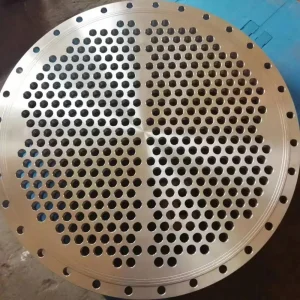
High-pressure boilers, steam headers, and shell-and-tube exchangers utilize custom CNC-drilled tube sheets and heavy forged expansion joint flanges designed to withstand extreme thermal expansion cycles and transient thermal shocks.
Seawater cooling systems, ballast piping, and fuel lines utilize galvanized EN 1092-1 Type 01 plate flanges and stainless steel 316L lap joint assemblies to prevent marine bio-fouling and galvanic corrosion.
Large-diameter AWWA and BS 4504 plate flanges (up to 120 inches / DN3000) equipped with epoxy coating provide long-term maintenance-free operation for municipal water distribution headers.
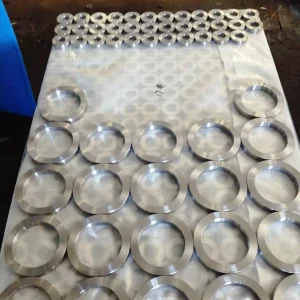
OEM skid manufacturers incorporate custom drawing-based forged rings and reduced plate flanges to achieve ultra-compact, high-rigidity structural mounting points for pumps and compressors.
For global procurement specialists, verifying supplier capability extends far beyond comparing price quotes. To safeguard supply chains against non-conforming steel, off-spec dimensions, and project delays, buyers must evaluate potential manufacturers against five core auditing pillars:
| Evaluation Pillar | Mandatory Supplier Criteria | Verification Method / Certificate | Shanxi Yuxin Compliance Standard |
|---|---|---|---|
| 1. Quality Management | Certified QMS covering forging, heat treatment, and machining. | ISO 9001:2015, TÜV CERT, PED 2014/68/EU | Audited by TÜV Rheinland / AD 2000-W0 certified. |
| 2. Chemical & Mechanical Integrity | 100% heat number traceability back to raw steel ladle analysis. | EN 10204 3.1 Standard / 3.2 Third-Party Witness | Full original MTC provided with every shipment. |
| 3. Non-Destructive Testing (NDT) | In-house inspection capabilities for internal flaws & surface cracks. | UT (Ultrasonic), MT (Magnetic Particle), PT (Dye Penetrant) | Level II certified inspectors on staff for 100% testing. |
| 4. Dimensional Precision | Strict bolt circle (PBC), pitch diameter, and flange thickness tolerances. | CMM / 3D Laser Arm Inspection Reports | CNC Machining tolerances held within ±0.1 mm. |
| 5. Export Packaging Safety | Rust prevention coatings, edge protectors, seaworthy crates. | ISPM 15 Fumigation-Free Plywood Packaging | VCI plastic wrap, anti-rust oil, heavy wooden boxes. |
As the industrial engineering domain adapts to decarbonization mandates and digital transformation, flange plate manufacturing is experiencing technological breakthroughs:
Modern buyers demand digital product passports. Laser-etching unique QR codes onto the rim of every flange plate allows field engineers to instantly scan and download original heat treatment logs, chemical compositions, and MTCs directly on-site.
With hydrogen emerging as a clean energy vector, flange plates must be manufactured using ultra-clean, vacuum-degassed forging billets. Advanced micro-alloying eliminates hydrogen embrittlement risks in high-pressure hydrogen transport lines.
Sustainability mandates encourage manufacturers to utilize electric arc furnaces (EAF) powered by renewable energy, reducing the embodied carbon footprint of forged pipe flanges supplied to global projects.
In-depth technical answers curated by our senior metallurgical and export engineering team.
A Pipe Flange Plate (or Slip-On Plate Flange) is a flat ring-shaped disc that slips over the outside diameter of a pipe and is secured via fillet welds on both the inside and outside of the flange hub. In contrast, a Weld Neck Flange features a long tapered hub that is butt-welded directly to the pipe end. Weld neck flanges transfer mechanical stress into the pipe wall itself, making them ideal for high-pressure, thermal-shock, and cyclic loading applications. Flange plates, however, offer lower material cost, easier fit-up, and reduced fabrication time in low-to-medium pressure installations.
The primary global standards include ASME/ANSI B16.5 (for North America and international oil & gas up to 24"), ASME B16.47 Series A & B (for large-diameter pipelines 26" to 60"), EN 1092-1 Type 01 (European metric standard), DIN 2576 / DIN 2501 (German industrial standard), and JIS B2220 (Japanese standard). Each specification defines exact bolt circle diameters, bolt hole counts, inner/outer diameters, and pressure-temperature ratings.
Forged flange plates are produced by heating steel billets and plastically deforming them under heavy hydraulic presses or ring-rolling mills. This process aligns the continuous internal grain flow along the contour of the flange ring, eliminating internal voids, porosity, and micro-cracks. Cut plate flanges (machined directly from flat rolled steel plates) can suffer from lamination defects and lower transverse tensile strength. Forged flanges deliver superior fatigue resistance and higher burst pressure parameters.
For pressure-retaining equipment, always request an EN 10204 3.1 Material Test Certificate (MTC) directly from the manufacturer. This certificate details the exact melt heat number, chemical ladle analysis, mechanical test results (yield strength, tensile strength, elongation), impact test energy values (Charpy V-notch), heat treatment history, and NDT inspection verification. For critical offshore or nuclear contracts, an EN 10204 3.2 certificate witnessed by an independent third party (such as Lloyd's Register, DNV, or TÜV) can be arranged.
All finished pipe flange plates undergo thorough surface cleaning before receiving protective coatings according to customer specifications. Options include transparent rust-preventive varnish, yellow anti-rust lacquer, black enamel paint, cold electro-galvanizing, or hot-dip galvanizing (HDG). Sealing faces are protected with plastic caps, wrapped in Volatile Corrosion Inhibitor (VCI) film, and securely packed into heavy ISPM 15 compliant fumigation-free wooden crates.
Yes. Beyond standard catalog items, our engineering team specializes in custom forging and CNC machining based on customer DWG/PDF drawings or CAD models. We produce custom large-diameter rings, heavy tube sheets, blind flange plates with tapped outlets, and specialized expansion joint flanges up to 3,000 mm (120 inches) in diameter.
Select from our extended portfolio of certified forged flanges, socket weld connections, tube sheets, and custom industrial components.