Engineered to strict international standards (ASME, EN, DIN, JIS) with complete heat number traceability and EN 10204 3.1 certification.
Understanding positive mechanical line isolation in continuous process industries, petrochemical plants, offshore oil platforms, and energy infrastructure.
In modern process piping design, positive line isolation is a safety-critical imperative governed by international environmental, health, and safety regulations (including OSHA Lockout/Tagout 29 CFR 1910.147 and the European Pressure Equipment Directive 2014/68/EU). While inline isolation valves (such as gate, ball, or double block and bleed valves) are designed to interrupt fluid flow during normal operation, mechanical valve seats are subject to wear, thermal expansion stress, scale build-up, and chemical corrosion over extended duty cycles. Consequently, relying strictly on a closed valve during major overhaul maintenance, catalyst replacement, or vessel entry introduces catastrophic risks of fugitive emissions, toxic exposure, or explosive gas ingress.
This risk profile has driven the widespread adoption of Pipe Blinds (also known as line blinds, spectacle blinds, paddle blinds, and spacer rings). Designed in accordance with standards such as ASME B16.48, API 590, and EN 1092-1, pipe blinds provide a zero-leakage, 100% verifiable physical barrier between pressurized pipeline segments. As global energy infrastructure shifts toward higher operating pressures, cryogenic liquefied natural gas (LNG) transport, hydrogen blending, and aggressive subsea processing, the demand for precision-forged pipe blinds engineered with absolute metallurgical integrity has grown exponentially.
As a premier Chinese forged flange manufacturer located in Dingxiang, Shanxi — the globally recognized “Hometown of Forging in China” — Shanxi Yuxin Casting & Forging Co., Ltd. (est. 1992) stands at the forefront of this industrial sector. With over three decades of specialized metallurgical mastery, Yuxin bridges the gap between high-volume manufacturing cost-efficiencies and rigorous Western quality standards, supplying tier-1 energy conglomerates and stockists across the Americas, Europe, the Middle East, and Asia-Pacific.
Distinguishing Spectacle Blinds, Spade/Paddle Blinds, and Paddle Spacers in pipeline design.
Spectacle blinds consist of a solid disc (blind) and a hollow ring (spacer) connected by a central bridge or tie-bar. Named for their resemblance to eye spectacles, these devices remain permanently installed between two pipe flanges. During normal operating conditions, the open spacer end is aligned within the pipe bore to permit unrestricted fluid flow. When line maintenance or complete isolation is required, maintenance technicians unbolt the flange assembly, rotate (pivot) the spectacle blind 180 degrees on its bridge pin, and bolt the solid blind portion into position. This provides a immediate, visual indication of line status (open vs closed) from ground level without removing the hardware entirely from the piping rack.
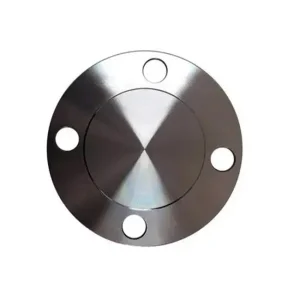
Unlike spectacle blinds, spade blinds (or paddle blinds) consist solely of the solid isolation disc featuring an extended indicator handle (paddle). Spade blinds are selected primarily for large-diameter pipelines (typically NPS 12 / DN300 and above) or installations with severe physical clearance restrictions. Because a full figure-8 spectacle blind in nominal pipe sizes above 14 inches can weigh hundreds of kilograms, swinging such a heavy component requires overhead rigging and creates significant safety hazards for maintenance crews. Spade blinds reduce total component weight by over 50%, allowing safe handling while still presenting a visible indicator tab stamped with pressure rating and size details outside the flange circumference.
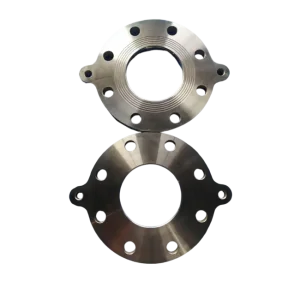
Paddle spacers are the functional counterparts to spade blinds. Featuring a hollow open ring with the exact same thickness and flange-face geometry as the companion spade blind, the paddle spacer is installed during normal fluid operation. Its open bore matches the inner diameter of the adjacent pipe, preventing pressure drops, erosion turbulence, or pocketing of corrosive media. To indicate line continuity, the paddle handle of a spacer is engineered with a distinctive open hole bored through the handle plate, allowing plant inspectors to differentiate an open line spacer from a solid isolation spade at a glance.
Per ASME B31.3 Process Piping Code Section 304.5.3, the minimum required thickness ($t$) of a permanent pipe blind subjected to internal design pressure ($P$) is calculated using the following structural formula:
Where:
This rigorous mathematical evaluation highlights why buying pipe blinds from uncertified suppliers poses severe risks. If a blind disc suffers from micro-porosity, grain coarsening, or dimensional under-thickness, internal hoop stress under thermal surges can lead to elastic deformation, gasket blowout, or total fatigue fracture.
| Parameter / Characteristic | Spectacle Blind (Fig. 8) | Spade Blind (Paddle) | Paddle Spacer (Ring) |
|---|---|---|---|
| Primary Function | Dual-state (Open/Closed isolation) | Positive line closure / isolation | Full-bore fluid conveyance |
| ASME Standard Specification | ASME B16.48 / API 590 | ASME B16.48 / API 590 | ASME B16.48 / API 590 |
| Recommended Size Range | NPS ½" to NPS 24" (DN15–DN600) | NPS 12" to NPS 120" (DN300–DN3000) | NPS 12" to NPS 120" (DN300–DN3000) |
| Flange Facing Profiles | Raised Face (RF), Flat Face (FF), Ring Joint (RTJ) | Raised Face (RF), Flat Face (FF), Ring Joint (RTJ) | Raised Face (RF), Flat Face (FF), Ring Joint (RTJ) |
| Pressure Rating Class | Class 150, 300, 600, 900, 1500, 2500 | Class 150, 300, 600, 900, 1500, 2500 | Class 150, 300, 600, 900, 1500, 2500 |
| Handle / Indicator Marking | Connecting bridge / tie-bar | Solid handle (stamped specs) | Handle with drilled hole indicator |
Matching chemical compositions and physical yield strengths to severe industrial operating environments.
Choosing the correct forged steel chemistry for pipe blinds is critical to preventing stress corrosion cracking (SCC), hydrogen-induced cracking (HIC), and thermal fatigue. Shanxi Yuxin Casting & Forging Co., Ltd. manufactures pipe blinds across a comprehensive suite of carbon, alloy, stainless, and duplex steel specifications.
To eliminate internal residual stresses caused by initial closed-die forging, Yuxin subjects all rough-forged pipe blind blanks to standardized, computer-monitored heat treatment cycles inside automated gas-fired furnaces:
Why sourcing forged pipe blinds from Shanxi Yuxin delivers superior total cost of ownership (TCO) and structural reliability over flame-cut plate alternatives.
A frequent mistake in industrial line blind procurement is substituting forged pipe blinds with cheap plate-cut discs manufactured by CNC oxy-fuel or plasma cutting from standard rolled structural plate. While plate-cut blinds appear visually similar, rolled plate inherently possesses directional lamellar tearing risks, internal slag inclusions, and central centerline segregation.
Forged vs. Plate Cut Performance Advantage: Heavy forged pipe blinds manufactured by Shanxi Yuxin undergo 3:1 minimum forging reduction ratios under hydraulic forging presses. This process homogenizes metal grain structure, aligns directional flow lines along the contours of the flange ring, closes internal microscopic voids, and dramatically increases fatigue strength under cyclic pressure pulsations.
Situated in the Zhuangli Industrial Zone of Dingxiang County, Shanxi Province, Yuxin operates within China’s premier forging ecosystem. Raw material steel ingots from top state-owned mills (such as Baosteel, Taiyuan Iron & Steel) are sourced locally with minimal freight overhead. Energy supply networks, die manufacturing shops, and testing laboratories are concentrated within a 15 km radius, resulting in unmatched production agility and fast turnaround times.
Yuxin maintains over 50 sets of high-precision CNC vertical lathes, automated drilling rigs, and 3D coordinate measuring machines (CMM). Facing serrations (concentric or spiral serrations per ASME B16.5 / B16.48 with Ra 3.2 µm – 6.3 µm smooth finish or 125–250 µin stock finish) are executed with exact tool radius parameters to guarantee perfect gasket sealing under high compression bolt torque.
Yuxin holds full international quality credentials: ISO 9001:2015 audited by TÜV CERT, pressure equipment compliance under PED 2014/68/EU Annex I, AD 2000-Merkblatt W0 / TRD 100, and VdTÜV material certificates. Every single pipe blind order ships with fully transparent EN 10204 3.1 inspection certificates detailing ladle chemical heat analysis, mechanical tensile/yield/elongation testing, and 100% NDT examination results.
How Yuxin pipe blinds solve specialized line isolation challenges across different global geographic and regulatory markets.
In high-pressure sour gas processing plants operated across Saudi Arabia, the UAE, and Qatar, pipeline isolation components face harsh Hydrogen Sulfide ($H_2S$) concentration levels. Yuxin supplies specialized carbon steel (A105 / A350 LF2) and alloy spade blinds treated to meet NACE MR0175 / ISO 15156 hardness constraints (≤22 HRC). Ultrasonic testing per ASME Sec V ensures zero internal delamination, protecting turnaround maintenance personnel from lethal gas leaks.
North American LNG liquefaction trains along the US Gulf Coast require cryogenic line isolation solutions operating down to -196°C (-320°F). Yuxin manufactures austenitic stainless steel (ASTM A182 F316L) spectacle blinds and ring spacers subjected to liquid nitrogen Charpy V-notch impact tests. Exact ASME B16.48 dimensional tolerance adherence guarantees fast drop-in alignment during tight 14-day plant turnaround windows.
Space and weight constraints on floating production storage and offloading (FPSO) vessels in the UK and Norwegian sectors require lightweight spade blinds instead of heavy figure-8 spectacle blinds. Yuxin provides custom-machined Ring Type Joint (RTJ) paddle blinds manufactured from Duplex F51 steel, equipped with integrated lifting eye-bolts and marine-grade anti-corrosion epoxies.
A step-by-step technical guide for EPC procurement managers, piping engineers, and stockists.
When specifying pipe blinds for major capital expenditure (CAPEX) or operational expenditure (OPEX) procurement cycles, engineering teams must evaluate vendors across a comprehensive 5-stage Quality Assurance Framework:
Verify that heat numbers originate from certified steel mills. Ensure carbon equivalent (CE) values do not exceed 0.43% for carbon steels to guarantee field weldability of matching flanges (Formula: $CE = C + Mn/6 + (Cr+Mo+V)/5 + (Ni+Cu)/15$).
Mandate 100% Volumetric Ultrasonic Testing (UT) per ASME Section V Article 4 for all pipe blinds exceeding Class 600 or thickness over 50 mm. Magnetic Particle (MT) or Liquid Penetrant (PT) examination must cover 100% of sealing face areas.
Standard Raised Face (RF) pipe blinds must exhibit concentric or continuous spiral serration grooving with a pitch of 45 to 55 grooves per inch (1.8 to 2.2 grooves/mm) and surface roughness between Ra 3.2 µm and 6.3 µm (125–250 microinches AARH).
Finished pipe blinds must be treated with rust-preventive black varnish, transparent anti-rust oil, or hot-dip galvanizing. Sealing faces require protective plastic caps or hardwood covers before placement in ISPM-15 compliant fumigation-free plywood crates.
Emerging innovations transforming line isolation equipment across green hydrogen, CCUS, and digital plant architectures.
As global industries transition toward net-zero carbon targets and Industry 4.0 automation, the humble pipe blind is undergoing significant technological evolution:
Direct engineering answers from Shanxi Yuxin’s technical export desk.
Explore our extended product catalog of ASTM, ANSI, DIN, and EN standard flange piping components.