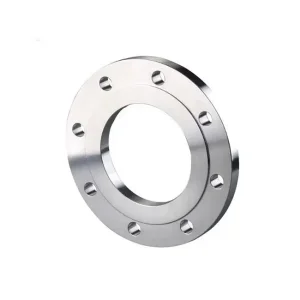
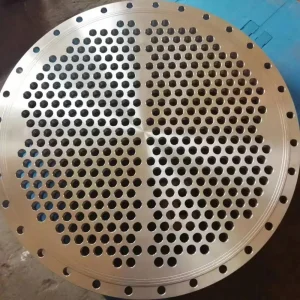
Explore our certified range of ANSI/ASME, EN 1092-1, and DIN standard forged components manufactured for zero-leak reliability in high-stress piping environments.
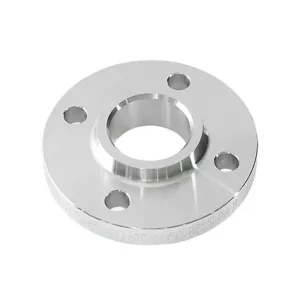
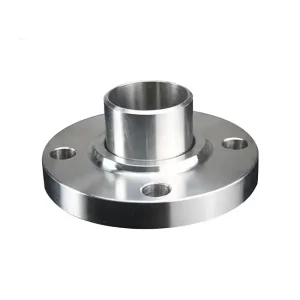
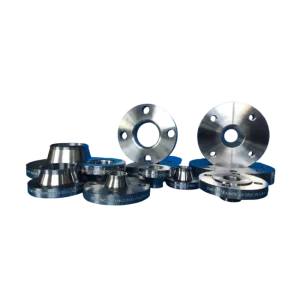
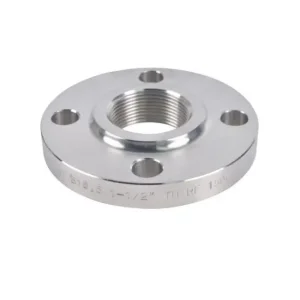
Understanding the two-piece mechanical synergy between backing flanges and stub ends in modern piping operations.
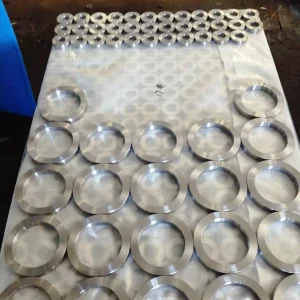
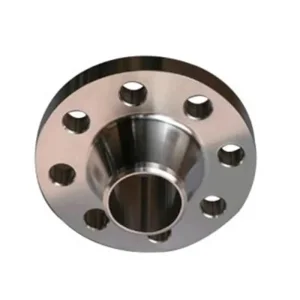
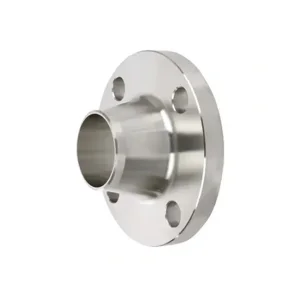
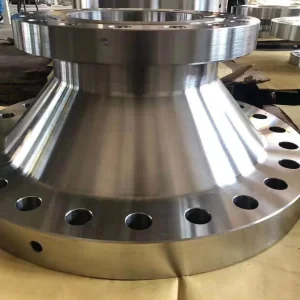
A Lap Joint Pipe Flange (also referred to as a loose flange or LJTF) represents a unique structural design in piping systems. Unlike integral flanges such as Weld Neck (WN) or Slip-On (SO) flanges, a lap joint connection is a functional assembly comprising two distinct elements: a Lap Joint Stub End (which is butt-welded directly to the process pipe) and a Loose Backing Flange (which slides freely over the pipe barrel prior to welding the stub end).
The core advantage of this bi-metallic architecture rests on mechanical stress decoupling. The internal fluid pressure and chemical exposure are born entirely by the stub end face and body, while the external loose backing flange acts exclusively as a mechanical clamping device under bolt tension. This separation provides profound financial and engineering advantages in high-grade alloy pipelines (e.g., Duplex Stainless, Hastelloy, Titanium, and Nickel Alloys).
In highly aggressive corrosive media requiring Titanium Grade 2 or Inconel 625 pipework, specifying an integral weld neck flange demands solid high-alloy forging. In contrast, a Lap Joint configuration permits the use of an Inconel 625 Stub End paired with an economical ASTM A105 Forged Carbon Steel Backing Flange. This reduces material CapEx by up to 68% without compromising structural integrity or system design pressure ratings under ASME B31.3.
| Feature Parameter | Lap Joint Connection (LJ + Stub End) | Standard Weld Neck Flange (WN) | Standard Slip-On Flange (SO) |
|---|---|---|---|
| Fluid Contact Material | Restricted to Stub End only | Entire Flange Body | Entire Flange Body |
| Bolt Hole Alignment | 360° Rotational Freedom for easy alignment | Fixed upon welding to pipe | Fixed upon welding to pipe |
| Weld Joint Profile | Single Butt-Weld at Stub End tail | Single Full-Penetration Butt-Weld | Double Fillet-Weld (Inside/Outside) |
| Cyclic Fatigue Resistance | Moderate to High (Depends on Lap Radius) | Superior (Highest Rating) | Low to Moderate |
| Maintenance Disassembly Speed | Fast (Ideal for frequent flushing) | Standard | Standard |
How global infrastructure projects leverage lap joint technology to optimize operational uptime and maintenance routines.
In municipal reverse-osmosis (RO) desalination plants in the Middle East (e.g., UAE, Saudi Arabia) and coastal facilities, piping carries high-salinity seawater under pressure. Specifying Super Duplex UNS S32750 Stub Ends paired with epoxy-coated carbon steel loose flanges guarantees immunity to pitting corrosion while reducing total flange material CapEx by over 50%.
Chemical processing complexes in North America and Western Europe utilize Lap Joint flanges in lines requiring periodic disassembly for hydro-blasting, chemical cleaning, or lining replacements (e.g., PTFE-lined pipe spools). The 360-degree rotational freedom allows rapid bolt alignment in tight spaces without stress-torsion on pipe spools.
Space and handling weight are critical constraints on FPSO (Floating Production Storage and Offloading) vessels. Lap joint assemblies enable fast field installation where rigid piping manifolds must align under unpredictable vessel deck tolerances. Rotatable backing flanges eliminate bolt-hole misalignment risks during high-seas offshore maintenance work.
Why sourcing forged lap joint flanges directly from Dingxiang, Shanxi offers unrivaled technical and commercial performance.
The global energy and industrial infrastructure market demands extreme component reliability matched with rigid delivery schedules. Located in the heart of Dingxiang County, Shanxi—internationally recognized as the “Hometown of Forging in China”—Shanxi Yuxin Casting & Forging Co., Ltd. operates a fully vertically integrated manufacturing ecosystem.
Direct bulk purchasing of certified round billets from top-tier steel mills (e.g., Baosteel, Taiyuan Iron & Steel) with full heat number verification.
Closed-die hydraulic press forging and ring rolling ensure optimal grain flow alignment along the flange contour, preventing internal voids.
Computer-controlled normalizing, annealing, quenching, and tempering cycles deliver exact microstructural hardness and mechanical toughness.
High-speed CNC lathes and multi-axis drilling centers produce smooth serrated facing (125–250 µin AARH) and precise bolt circle dimensions.
By managing the entire value chain in-house—from raw billet heating to non-destructive testing (UT, MT, PT) and final seaworthy packaging—Yuxin eliminates third-party markups and logistical bottlenecks. This yields a lead-time reduction of 20–35% compared to Western manufacturing hubs, maintaining continuous inventory supply for major international distributors and EPC contractors.
Advancing metallurgical research, green manufacturing, and digital quality integration for 2025 and beyond.
Implementation of DEFORM-3D thermal-mechanical simulation software allows our engineers to model billet grain deformation prior to physical forging. This eliminates micro-tearing in high-alloy lap joint stub ends, ensuring uniform tensile strength across critical stress radii.
To further drive down CapEx for clients operating in sour gas (H2S) environments, Yuxin is deploying robotic laser cladding systems. Low-carbon steel backing flanges and carbon stub ends can now be coated with an ultra-thin 3mm layer of Inconel 625, providing 100% NACE MR0175 compliance at a fraction of solid forged alloy costs.
Aligning with global ESG mandates, our Shanxi facility has integrated natural-gas rapid heating furnaces equipped with heat-recovery systems. Solar energy arrays now supply 25% of overall machining plant electricity, reducing the embodied carbon footprint per ton of exported forged flanges.
Zero-defect protocols audited and validated by world-leading inspection bodies.
To meet the demanding quality guidelines of global EPCs (such as Samsung, CNPC, and Van Leeuwen), Shanxi Yuxin maintains a fully audited Quality Management System adhering to strictly governed international codes:
Every single lap joint flange and stub end produced by Yuxin is steel-stamped with a unique Heat Traceability Code, Nominal Size, Pressure Rating, Material Grade, and Standard. This code maps directly back to the original steel mill ladle analysis stored permanently in our digital quality archive.
Addressing engineering specifications, installation protocols, and purchasing requirements.
While both flanges slide over the pipe, a Slip-On Flange is welded directly to the pipe using two fillet welds (inside and outside) and features a raised or flat sealing face machined into the flange body. A Lap Joint Flange has no sealing face on its body; instead, it features a curved internal corner (radius) that sits against the back of a Lap Joint Stub End. The Stub End itself is butt-welded to the pipe and provides the actual gasket sealing face. The backing flange remains loose and rotatable.
Lap Joint loose backing flanges are dimensionalized under ASME B16.5 for sizes NPS ½” through 24” (Classes 150 to 2500) and ASME B16.47 (Series A & B) for larger sizes (NPS 26” through 60”). The companion Lap Joint Stub Ends are governed by ASME B16.9 (factory-made wrought butt-welding fittings) or MSS SP-43 (for lightweight stainless steel corrosion-resistant fittings).
Type A Stub Ends are specifically machined with an outer lap corner radius designed to fit standard ASME B16.5 Lap Joint Flanges. Type B Stub Ends feature a sharp outer corner designed to mate with standard Slip-On Flanges used as loose backing flanges. Type C Stub Ends are modified flared pipe ends suitable for low-pressure utility lines. For critical industrial applications, Type A Stub Ends paired with dedicated ASME B16.5 Lap Joint Flanges are required.
Yes, this is one of the primary engineering advantages of lap joint systems. Because the loose backing flange never comes into direct contact with the internal process fluid, an economical ASTM A105 carbon steel or Q235B flange can be paired with a stainless steel (e.g., SS304L, SS316L, Duplex 2205) stub end. However, in outdoor marine or humid environments, the carbon steel backing flange should be hot-dip galvanized or epoxy-coated to prevent external galvanic corrosion at the contact interface.
Standard carbon and stainless steel sizes held in our forged blank stock can be precision CNC machined and shipped within 7 to 15 days. Custom forged-to-order flanges, non-standard dimensions (up to Ø3,000 mm), or special high-alloy grades typically require 20 to 35 days depending on heat-treatment requirements. Yuxin accepts flexible Low MOQ orders for trial shipments, project expansions, and distributor inventory replenishment.
All flange sealing faces are thoroughly cleaned, dried, and coated with a heavy layer of rust-preventive varnish or strippable anti-corrosion oil. High-density plastic end-caps are fitted into the bores, and sealing faces are fitted with corrugated protective discs. Flanges are then packed into heavy-duty, fumigation-free ISPM-15 compliant plywood cases or strapped onto reinforced steel skids with waterproof plastic wrapping.
Direct factory access to certified, precision-engineered piping components for global industrial projects.