Explore our ISO 9001 & PED certified product lines manufactured for global pipeline projects.
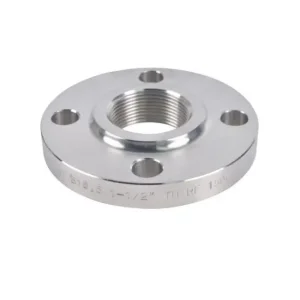
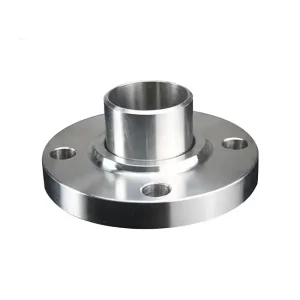
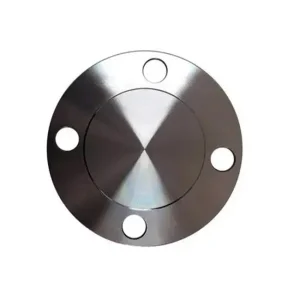
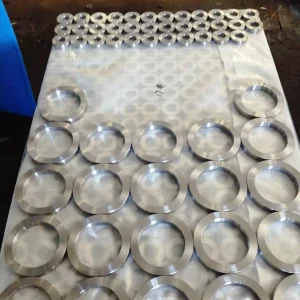
A Comprehensive White Paper on Differential Pressure Flow Metering and Forged Flange Engineering
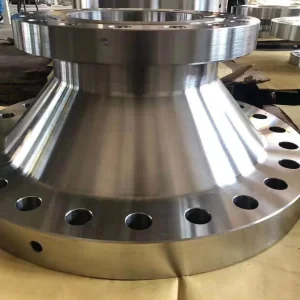
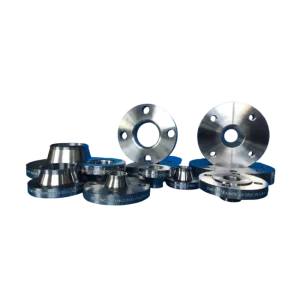
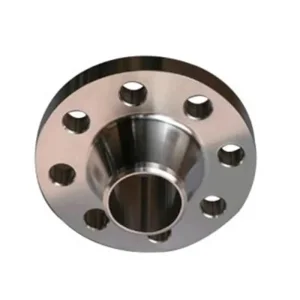
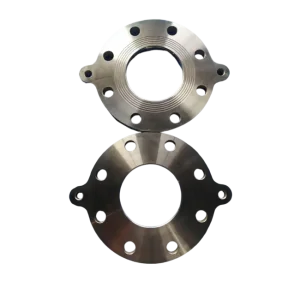
A Flange Tap Orifice Assembly is a specialized differential pressure flow measurement hardware configuration consisting of a paired set of orifice flanges, an orifice plate, jack screws, pressure tapping holes, and precision stud bolts. Unlike standard pipe flanges (such as ASME B16.5 weld necks or slip-ons), orifice flanges manufactured according to ASME B16.36 feature integral pressure tap holes drilled directly through the flange ring.
These pressure taps are located exactly 1 inch (25.4 mm) upstream and 1 inch downstream from the primary restriction face of the orifice plate. This specific geometry eliminates the need to drill tapping holes into the pipe wall, ensuring standardized fluid dynamic measurement, reduced field installation errors, and superior mechanical integrity under high-velocity flow regimes.
The operational efficiency of a flange tap orifice meter relies on Bernoulli's principle and the continuity equation. As fluid passes through the precision-machined orifice bore, fluid velocity increases while static pressure decreases, creating a differential pressure (ΔP) proportional to the square of the volumetric flow rate.
Leading manufacturers must strictly control the Beta Ratio (β = d/D)—the ratio between the orifice bore diameter (d) and internal pipe diameter (D). Standard engineering practice targets β ratios between 0.20 and 0.75. Deviations in flange tap placement by as little as 0.5 mm can introduce measurement uncertainties exceeding 2.5%, highlighting the requirement for CNC precision machining in flange production.
Transitioning from Conventional Flow Hardware to Next-Generation Smart Metering Systems
The global energy sector, chemical processing plants, and industrial automation networks are undergoing a rapid technological shift. Legacy flow measurement techniques are giving way to digital-ready, low-maintenance, and ultra-durable primary flow elements. Understanding these trends is critical for procurement directors and piping lead engineers seeking maximum operational uptime.
In abrasive process streams—such as shale gas fracking fluids, oil sand slurries, and catalyst feeds—standard carbon steel orifice faces suffer from rapid edge degradation. Top-tier manufacturers now apply High-Velocity Oxygen Fuel (HVOF) Tungsten Carbide coatings and Stellite hard-facing to orifice flange sealing faces and bore edges. This extends operational lifespans by up to 400% in erosive environments.
Modern orifice flange manufacturing has expanded beyond simple mechanical forging. Advanced vendors utilize 3D finite element analysis (FEA) and Computational Fluid Dynamics (CFD) modeling to simulate turbulent flow profiles, vortex shedding, and thermal stress distribution across ASME B16.36 assemblies under extreme thermal cycles (-196°C to +650°C).
The integration of IoT differential pressure transmitters directly onto modular flange tap blocks has minimized impulse line lengths. This reduces signal lag, eliminates freeze-up risks in sub-zero climates, and provides real-time digital calibration feedback to central Distributed Control Systems (DCS).
A Rigorous Framework for Specification Engineers, EPC Contractors, and Supply Chain Managers
Procuring flange tap orifice assemblies for high-consequence projects requires strict adherence to international metallurgical standards and quality verification protocols. Substandard forgings can lead to catastrophic pressure vessel containment failures, environmental non-compliance, and millions of dollars in un-planned downtime.
| Material Specification | Standard Pressure Classes | Operational Temperature Range | Primary Industrial Applications |
|---|---|---|---|
| ASTM A105 / A105N (Forged Carbon Steel) | Class 300 to Class 2500 | -29°C to +425°C | Non-corrosive hydrocarbons, refined fuels, utility steam, boiler feed water. |
| ASTM A350 LF2 Class 1/2 (Low Temp Carbon Steel) | Class 300 to Class 2500 | -46°C to +345°C | Low-temperature gas processing, Arctic cross-country pipelines, LPG storage. |
| ASTM A182 F316 / F316L (Austenitic Stainless Steel) | Class 150 to Class 2500 | -196°C to +815°C | Chemical synthesis, offshore marine environments, LNG cryogenic lines, sour gas. |
| ASTM A182 F11 / F22 (Cr-Mo Alloy Steel) | Class 600 to Class 2500 | -29°C to +593°C | Supercritical steam power plants, hydrocracking units, delayed coking plants. |
| Duplex UNS S31803 / S32750 (Super Duplex Steel) | Class 600 to Class 2500 | -50°C to +300°C | Subsea manifolds, aggressive chloride processing, high-pressure desalination. |
When selecting a Best Flange Tap Orifice Manufacturer, EPC buyers must mandate complete traceability under EN 10204 3.1 or 3.2 certificates. Quality control inspection routines must incorporate:
Unlocking Unmatched Cost Efficiency, Manufacturing Scale, and Metallurgical Quality in Dingxiang
Shanxi Province, specifically Dingxiang County, is recognized internationally as the “Hometown of Forging in China.” Represented by industry leaders like Shanxi Yuxin Casting & Forging Co., Ltd. (established in 1992), this region combines three decades of heavy forge craft with modern digital manufacturing technologies.
By establishing integrated production facilities—housing raw steel billet yards, medium-frequency induction heating furnaces, high-tonnage hydraulic forging hammers, automated CNC lathe centers, and in-house heat treatment plants under a single roof—Chinese manufacturers provide a resilient alternative to fragmented global supply chains.
This end-to-end operational integration allows for complete heat-number traceability from molten metal to finished, export-ready flange packaging. It eliminates third-party machining margins, delivering direct factory pricing to global buyers without sacrificing compliance with ASME, EN, DIN, or JIS standards.
Deploying Flange Tap Orifice Hardware Across Diverse Engineering Environments
In Liquefied Natural Gas (LNG) processing facilities operating at temperatures below -161°C, flange tap orifice meters must maintain dimensional stability without embrittlement. Forged ASTM A182 F316L and Stainless Steel 304L flanges with extended jack-screws allow maintenance crews to inspect orifice plates safely without damaging fragile cryogenic insulation jackets.
On Floating Production Storage and Offloading (FPSO) vessels and offshore platforms handling hydrogen sulfide (H2S) gas streams, stress corrosion cracking is a constant risk. Flange tap orifice assemblies are engineered in accordance with NACE MR0175 / ISO 15156 standards, utilizing Inconel 625 cladding or solid Nickel Alloy 825 materials to resist sulfide stress cracking (SSC).
As global energy transitions toward green hydrogen production via water electrolysis, high-pressure gas measurement demands tight seal integrity. Orifice flanges with Ring Type Joint (RTJ) grooves (such as R, RX, or BX series metal gaskets) prevent micro-leakage of small-molecule hydrogen gas under working pressures exceeding 250 bar (Class 1500 / Class 2500).
Expert Answers to Common Engineering, Manufacturing, and Logistics Inquiries
Standard ASME B16.5 flanges are designed strictly to connect pipe sections, valves, or fittings without integral flow measurement ports. ASME B16.36 orifice flanges are modified heavy-hub flanges that feature precise, radially drilled 1/2-inch NPT (or socket weld) pressure tapping holes directly through the flange ring. They also include dedicated jack screws machined into the flange perimeter to force the pipe connection apart during orifice plate replacement or inspection, preventing pipe damage.
The 1-inch (25.4 mm) distance upstream and downstream is standardized by ASME B16.36, ASME MFC-3M, and ISO 5167-2. This positioning ensures that the differential pressure transmitter measures the fluid pressure at predictable boundary layer locations—before the fluid experiences entrance contraction upstream, and at the vena contracta region downstream. Moving the tap location alters the discharge coefficient (&C_d&), leading to inaccurate flow calculations in the plant DCS.
Raised Face (RF) serrated flange faces (with a surface finish of 125–250 μin AARH) are standard for Class 300 and Class 600 pressure ratings in general utility, steam, and hydrocarbon service. For high-pressure applications (Class 900 to Class 2500) or high-temperature/toxic fluid lines, Ring Type Joint (RTJ) facings are recommended. RTJ grooves accommodate metallic octagonal or oval ring gaskets, providing metal-to-metal seals capable of withstanding extreme pressure spikes and thermal shock.
Every shipment from qualified Chinese manufacturers like YUXIN includes a complete EN 10204 3.1 Mill Test Certificate package. This documentation detail covers: heat number chemical analysis, mechanical property test records (tensile, yield, elongation, hardness), heat treatment charts (normalizing/tempering), Ultrasonic/Magnetic Particle test results, dimensional inspection sheets, Certificate of Origin, and export packing lists.
Jack screws are threaded bolts installed into tapped slots on the outer flange rim. When maintenance personnel need to inspect or replace a worn orifice plate, the flange stud bolts are loosened, and the jack screws are turned clockwise against the opposing flange face. This mechanical action forces the flanges apart parallel to the pipe line, allowing maintenance teams to slip out the old plate and insert a new gasket/plate assembly without straining the adjacent piping system.
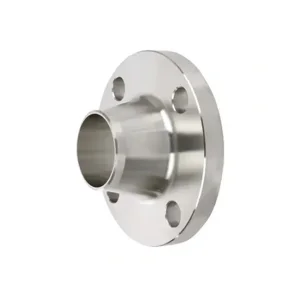
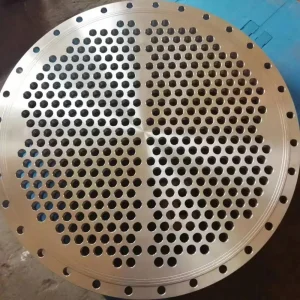
Yes. In addition to standard ANSI, ASME, EN, DIN, and JIS flange series, our engineering team works directly from customer DWG, STEP, or PDF drawings. We produce non-standard orifice rings, heavy-wall weld neck flanges, long weld necks (LWN), and specialized tube sheets up to 3,000 mm in diameter, complete with custom material grades, cladding, and specialized anti-corrosion surface treatments.
Complete your piping system specs with our certified industrial products range.
Work directly with our Shanxi forging engineers. Send your flange schedule, MTO specifications, or custom drawings for an itemized factory quotation within 24 hours.
