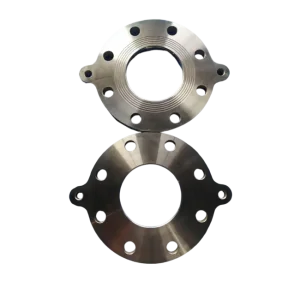
Explore our ISO 9001 & PED 2014/68/EU certified forged flanges engineered for extreme pressures, corrosive media, and international pipeline specifications.
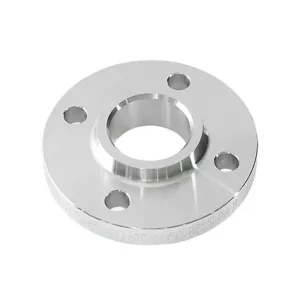
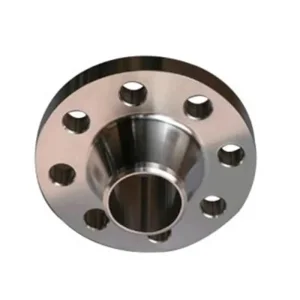
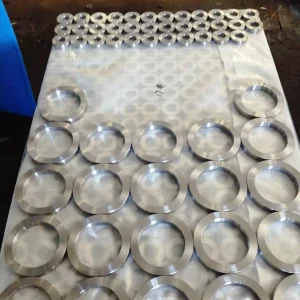
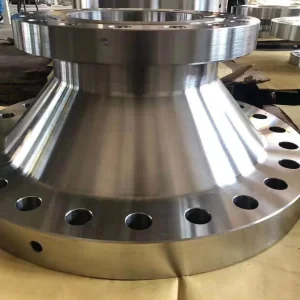
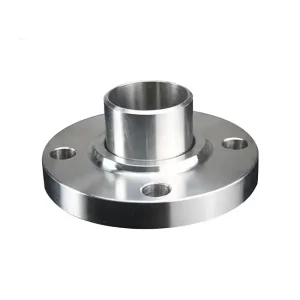
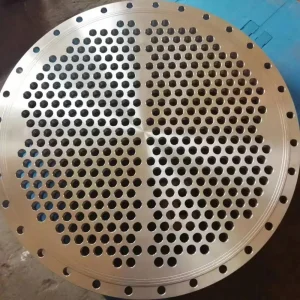
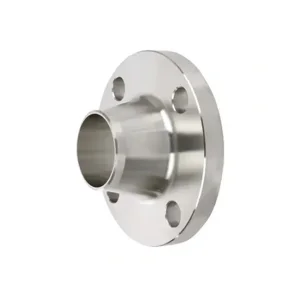
In modern industrial piping infrastructure, the Lap Joint Flange (LJF) and Stub End combination represents one of the most mechanically elegant and financially strategic connection methods. Unlike integral flange types such as Weld Neck (WN) or Slip-On (SO) flanges, a lap joint assembly comprises two separate components: a loose backing flange and a butt-welded stub end.
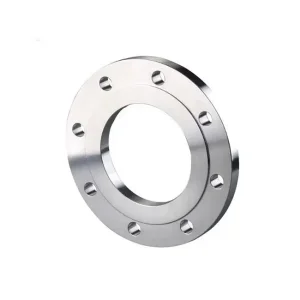
The stub end is directly butt-welded to the process pipe, coming into direct contact with the internal fluid medium. The loose lap joint flange sits behind the stub end collar, rotating freely around the pipe axis. This structural decoupling offers two unparalleled engineering advantages:
Founded in 1992 in Dingxiang County, Shanxi—recognized globally as the “Hometown of Forging in China”—Shanxi Yuxin Casting & Forging Co., Ltd. operates a fully integrated 10,000-ton annual capacity forging facility. We manage the entire metallurgical lifecycle from raw ingot heating to precision CNC machining and hydrostatic verification.
Every lap joint flange and stub end produced by YUXIN complies strictly with ASME B16.5, ASME B16.9, MSS SP-43, and EN 1092-1 Type 02/32 or Type 04/34. Shipped with full EN 10204 3.1 & 3.2 material traceability reports.
As global energy transitions accelerate and industrial plant maintenance shifts toward modular asset management, lap joint flange assemblies are experiencing unprecedented growth.
High-pressure hydrogen pipelines demand zero-microcrack forged fittings. Modern chemical and green hydrogen synthesis facilities utilize lap joint stub end assemblies to allow rapid inspection of gaskets and internal surfaces vulnerable to hydrogen embrittlement.
EPC contractors are rapidly transitioning from traditional stick-built piping to pre-fabricated modular skids. Lap joint stub ends allow field teams to make minor rotational torque and orientation adjustments on site without cutting or re-welding heavy wall pipes.
With nickel, molybdenum, and chromium metal volatility, procuring full solid alloy weld neck flanges increases Capex dramatically. Utilizing carbon steel lap flanges backed by Class 150/300/600 SS316L or Duplex 2205 stub ends reduces total raw material procurement expenditure by up to 45%.
Selecting the correct flange architecture is critical for long-term piping integrity, fatigue strength, and lifecycle budget management.
| Evaluation Parameter | Lap Joint & Stub End Assembly | Weld Neck Flange (WN) | Slip-On Flange (SO) |
|---|---|---|---|
| Primary Joint Connection | Butt-weld stub end to pipe; loose backing flange | Direct butt-weld to pipe wall via tapered hub | Double fillet weld (internal and external) |
| Bolt Hole Alignment Efficiency | Highest: 360-degree free rotation around pipe | Fixed: Requires precise pre-weld alignment | Fixed: Requires pre-weld rotation setup |
| Exotic Alloy Cost Savings | High Savings: Alloy stub end + Carbon Steel flange | None: Entire forged body must be exotic alloy | Low: Requires full alloy body for wetted areas |
| Stress Concentration & Fatigue | Transferred through stub end shoulder; medium to high | Superior: Excellent fatigue and shock resistance | Lower fatigue life under cyclic bending moments |
| Applicable Standards | ASME B16.5, ASME B16.9, MSS SP-43, EN 1092-1 | ASME B16.5, ASME B16.47, EN 1092-1 Type 11 | ASME B16.5, EN 1092-1 Type 12 |
| Frequent Dismantling & Maintenance | Ideal choice: Quick unbolting and replacement | Moderate efficiency; rigid connection | Moderate efficiency; fixed joint |
Global engineering procurement managers face ongoing challenges with lead times, material authenticity, and fluctuating shipping costs. Located in the heart of China’s forging industrial cluster, Shanxi Yuxin Casting & Forging Co., Ltd. leverages a smart factory ecosystem designed to deliver unmatched supply chain reliability.
Automated hydraulic press lines with closed-loop thermal monitoring ensure consistent grain refinement, zero internal porosity, and tight dimensional tolerances (+/- 0.5mm) across large diameter stub ends up to 3,000 mm.
Our quality control unit conducts 100% Ultrasonic Testing (UT), Magnetic Particle Inspection (MPI), Positive Material Identification (PMI), and Hydrostatic Pressure testing for critical energy service contracts.
Proximity to major steel mills allows YUXIN to lock in billet pricing for carbon steel (ASTM A105, Q235B), low-temperature alloy (A350 LF2), stainless steel (F304/F316L), and duplex grades (F51/F53), ensuring lead-time predictability.
Understanding where and why engineers specify lap joint stub end fittings across harsh operating environments.
Seawater reverse osmosis (SWRO) facilities operate under high pressure and aggressive chloride concentrations. Engineers select Super Duplex UNS S32750 Stub Ends paired with epoxy-coated carbon steel loose flanges, mitigating crevice corrosion while cutting joint component costs significantly.
Frequent acid cleaning in paper bleaching and chemical processing requires routine opening of pipeline spools. Lap joint stub ends allow field mechanics to unbolt and slide sections out rapidly without applying mechanical strain to adjacent glass-lined or FRP pipes.
LNG storage terminals experience intense thermal contraction during liquid movement. ASME B16.9 Type A long-pattern stub ends provide a smooth radius transition that accommodates linear axial movement while preserving gasket seal integrity across thermal cycles down to -196°C.
Detailed technical responses curated by YUXIN’s Senior Piping & Forging Engineering Team.
MSS SP-43 covers lightweight stainless steel and nickel alloy stub ends intended for use with light-wall schedule 5S and 10S piping systems in low-pressure applications. ASME B16.9 covers factory-made wrought butt-welding fittings for heavy industrial service across all schedules (Schedule 40, 80, 160, XXS). ASME B16.9 stub ends have longer overall lengths and thicker wall dimensions to match standard pipe pressure ratings.
Type A: Manufactured for use with standard Lap Joint Flanges. The outer corner of the stub end lap has a engineered radius that fits the inside radius of the lap joint flange body.
Type B: Designed for use with standard Slip-On Flanges serving as lap joint flanges.
Type C: Can be manufactured from either pipe or plate; features a square outer corner radius intended for lap flanges or slip-on backing structures.
Yes, this is standard engineering practice for cost optimization. Because the lap flange never comes into contact with the internal fluid medium, galvanic corrosion between the backing flange and stub end is minimal under normal atmospheric conditions. For humid, marine, or offshore installations, engineers specify galvanized, yellow-chromated, or epoxy-coated carbon steel flanges (e.g., ASTM A105) to prevent external galvanic action against the SS316L or Duplex stub end.
YUXIN supplies stub end lap faces with standard serrated concentric or spiral finish (125–250 micro-inches AARH/Ra) per ASME B16.5 requirements. Smooth machining finish (3.2–6.3 µm) or flat face (FF) mirror polishing for special PTFE or metal gaskets is available upon request.
Every shipment from Shanxi Yuxin Casting & Forging Co., Ltd. includes an official EN 10204 3.1 Mill Test Certificate (MTC) details: melt heat number, chemical composition analysis, mechanical yield/tensile strength, elongation, hardness, heat treatment chart, and NDT examination results. Third-party inspection (EN 10204 3.2) by TÜV, SGS, BV, or Lloyd’s Register can be arranged upon project request.
Standard size carbon and stainless steel flanges held as forged blanks ship within 7–15 days after final CNC machining. Custom drawing-based forgings or specialized alloy stub ends require 20–35 days. We accommodate low MOQ trial orders to support project commissioning and distributor inventory replenishment.
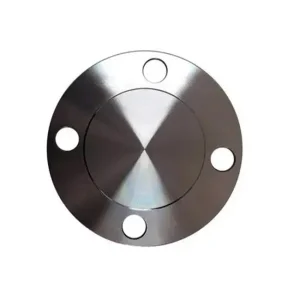
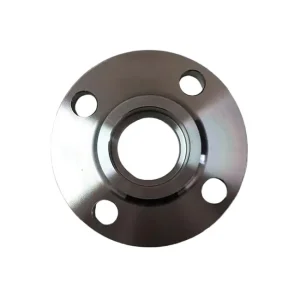
Select from our extended catalog of high-pressure blind flanges, expansion joint flanges, socket weld fittings, and custom machined rings.