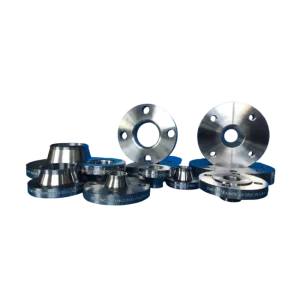
Explore our top-tier certified forged flanges manufactured under rigorous ISO 9001 and PED 2014/68/EU standards. Fully traceable and CNC-machined for critical industrial pipelines.
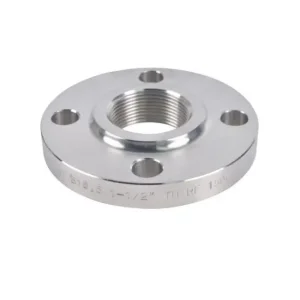
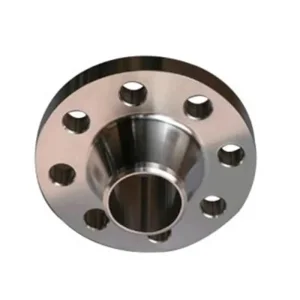
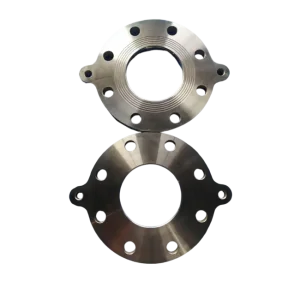
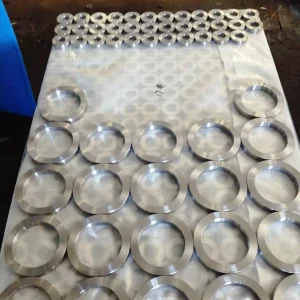
The DIN flange standard (Deutsches Institut für Normung) represents one of the world's most enduring frameworks for mechanical engineering, fluid containment, and industrial piping design. Historically originating in Germany, DIN standards defined the parameters for flange dimensions, pressure ratings, bolt hole patterns, and material selection across continental Europe and international markets heavily influenced by European engineering traditions.
In recent decades, the European Committee for Standardization (CEN) harmonized regional standards into the unified EN 1092-1 specification. However, the designation "DIN Flange" remains deeply embedded in global procurement taxonomy. Modern engineering projects frequently specify legacy DIN standards—such as DIN 2527 for blind flanges, DIN 2573/2576 for flat slip-on flanges, and DIN 2631 to DIN 2638 for welding neck flanges—interchangeably with their EN 1092-1 equivalent types.
Unlike the American ASME/ANSI system based on Class ratings (e.g., Class 150, 300, 600), DIN flanges utilize the Pressure Nominal (PN) system measured in bar at ambient temperature. Standard DIN ratings range from PN6 (6 bar) up to PN400 (400 bar). Understanding the non-linear relationship between operating temperature and allowable stress is critical for preventing joint relaxation in high-temperature boiler lines.
DIN standard specifications strictly govern flange sealing faces. Standard face types—including Form N (Groove), Form F (Tongue), Form C (Raised Face), and Form D (Recess)—ensure leak-free performance under cyclic thermal stress. CNC machining tolerances for raised face height (typically 2mm for PN10-PN40) are held to sub-millimeter accuracy to optimize gasket compression.
To facilitate precise global procurement, piping engineers and supply chain managers must navigate the direct equivalence between historical German DIN callouts and modern EN 1092-1 standard designations. The matrix below outlines the exact structural and functional cross-references:
| Flange Type Description | Legacy DIN Standard | EN 1092-1 Equivalent | Standard Pressure Ratings | Primary Industrial Application |
|---|---|---|---|---|
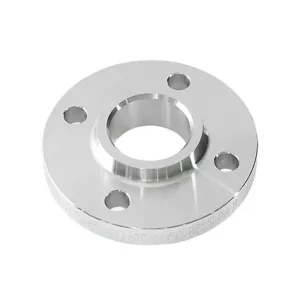
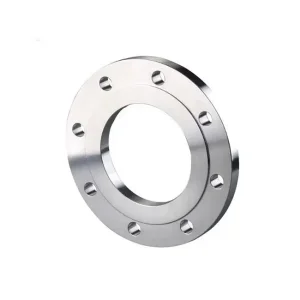
| Plate Flange for Welding | DIN 2573, 2576, 2502, 2503 | Type 01 | PN6 – PN40 | Low-pressure water, utility, HVAC systems |
| Loose Plate Flange (Weld-on Collar) | DIN 2641, 2642, 2655, 2656 | Type 02 / Type 32 | PN10 – PN40 | Corrosive chemical lines, frequent maintenance |
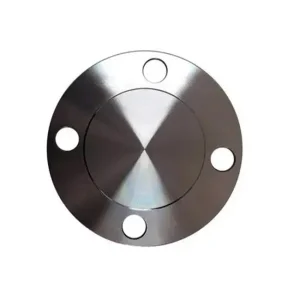
| Blind Flange | DIN 2527 | Type 05 | PN6 – PN100 | Pipeline termination, pressure vessel inspection ports |
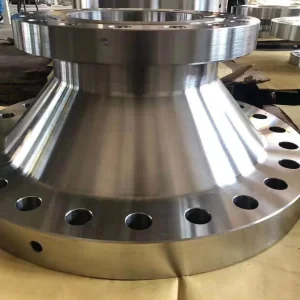
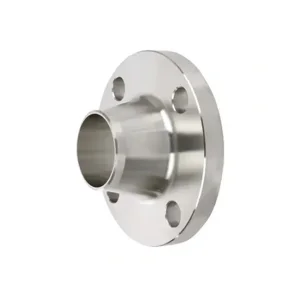
| Welding Neck Flange | DIN 2631 to DIN 2638 | Type 11 | PN6 – PN400 | High-pressure petrochemical, steam, refinery piping |
| Hubbed Slip-On Flange | DIN 28011 (Variant) | Type 12 | PN6 – PN40 | Process plant piping, power station utilities |
| Hubbed Threaded Flange | DIN 2565, 2566, 2567 | Type 13 | PN6 – PN40 | Explosive hazard zones where welding is prohibited |
| Integral Flange | DIN 2501 (Partial) | Type 21 | PN6 – PN100 | Cast or forged valve bodies, pumps, turbines |
Forged DIN standard flanges rely on controlled chemical compositions to guarantee weldability, mechanical strength, and impact energy at extreme sub-zero temperatures. Standard carbon steel grades such as C22.8 / P250GH (1.0460) offer superior high-temperature performance up to 450°C, whereas low-temperature applications mandate P355NH (1.0565) or normalized S235JR (1.0038) for basic plate structures.
In aggressive chemical and marine environments, austenitic stainless steels like 1.4301 (AISI 304) and titanium-stabilized 1.4571 (316Ti) or low-carbon 1.4404 (316L) are mandatory. Precision forging eliminating grain boundary carbide precipitation is vital to pass ASTM A262 Practice E intergranular corrosion resistance tests.
China has evolved into the world's undisputed epicenter for heavy forging, pressure equipment component fabrication, and precision CNC flange machining. Shanxi Province, specifically the industrial hub of Dingxiang, hosts a fully integrated forging industrial cluster recognized globally as the "Hometown of Forging."
Chinese factories operate within immediate physical proximity to major tier-1 steel mills (such as Baosteel, TISCO, and Shougang). Direct procurement of continuous casting billets reduces raw material transport costs and lead times. Integrated melt-to-forge workflows allow for immediate chemical heat verification before ingot slicing.
Leading Chinese export facilities have modernized beyond manual lathes, deploying high-speed automated ring-rolling machines, 5-axis vertical machining centers (VMCs), and multi-spindle automatic drill rigs. This technological integration reduces dimensional tolerances to ±0.1mm while maintaining high production throughput for large-volume OEM orders.
Efficiency in Chinese flange mills does not come at the expense of quality. Direct factory-floor NDT capabilities—including automated Ultrasonic Testing (UT) per EN 10228-3, Magnetic Particle Testing (MT), and Positive Material Identification (PMI) via XRF spectrometers—guarantee that zero-defect products leave the shop floor with EN 10204 3.1 certification.
DIN standard flanges are critical components across diverse, highly demanding global industries. Each operational environment imposes unique physical, chemical, and pressure requirements:
Operating Requirements: Extreme fluid pressures (up to PN400), elevated temperatures, and volatile hydrocarbon exposure.
Preferred Selection: High-integrity DIN 2635 / DIN 2636 Weld Neck Flanges (EN 1092-1 Type 11) in ASTM A105 or P250GH carbon steel, featuring raised face (Form C) or tongue-and-groove (Form C/D) geometry to maximize gasket sealing performance.
Operating Requirements: Cyclic thermal expansion, hot water transfer, moderate pressures (PN16 to PN40).
Preferred Selection: DIN 2576 Flat Slip-on Flanges (EN 1092-1 Type 01) and DIN 2527 Blind Flanges. Economical, easy to align during site assembly, and effective for high-volume municipal energy distribution piping.
Operating Requirements: Corrosive saltwater environments, hull vibration, compact spaces.
Preferred Selection: Copper-nickel alloy (CuNi 90/10) or 316L stainless steel loose flanges (DIN 2642 / EN Type 02) with stub ends, enabling rapid bolt alignment within tight engine room confines.
When global EPC firms evaluate DIN flange manufacturers, the following compliance documentation is essential:
| Audit Standard / Certificate | Issuing & Verifying Authority | Essential Technical Scope |
|---|---|---|
| PED 2014/68/EU | TÜV / DNV / Lloyd's Register | Compliance with European Pressure Equipment Directive Annex I safety goals. |
| AD 2000-Merkblatt W0 | TÜV Nord / TÜV Rheinland | German material specification approval for pressure vessel component forging. |
| EN 10204 Type 3.1 / 3.2 | Factory QA / Independent 3rd Party | Full material traceability, melt heat numbers, mechanical tensile, and impact test verification. |
| ISO 9001:2015 QMS | IAF Accredited Registrar | Standardized quality management system governing raw material intake to final export packaging. |
The industrial flange manufacturing sector is undergoing a massive transformation driven by strict global net-zero targets and Industry 4.0 digitalization. Key development trends include:
Leading Chinese forging facilities are transitioning gas-fired reheating furnaces to clean electric induction and green hydrogen-blended thermal systems. Furthermore, sourcing steel forged from electric arc furnaces (EAF) utilizing recycled scrap reduces embedded carbon emissions by up to 60%, satisfying stringent European CBAM (Carbon Border Adjustment Mechanism) import requirements.
Integration of direct 2D DataMatrix codes and laser-etched RFID tags onto flange rims enables instant mobile field scanning. Maintenance engineers can immediately access the digital EN 10204 3.1 MTC, torque tightening specs, and service history directly from cloud repositories during refinery turnarounds.
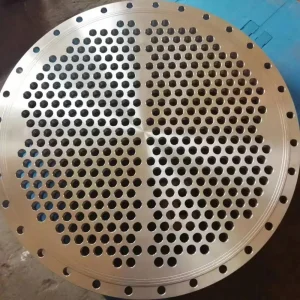
Browse our additional specialized forged solutions including ANSI/DIN slip-on plates, custom tube sheets, and heavy-duty blind flange components ready for bulk export.