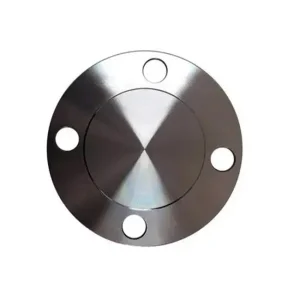
In modern fluid mechanics, municipal infrastructure, and high-pressure industrial processing, the choice of piping closure components dictates line integrity, operational safety, and life-cycle expenditure. Among the array of pipeline components, the Ductile Iron (DI) blind flange and its forged carbon/alloy steel counterparts represent critical baseline elements designed to terminate piping sections, isolate pressure vessel nozzles, and provide sealed access ports for maintenance and inspection.
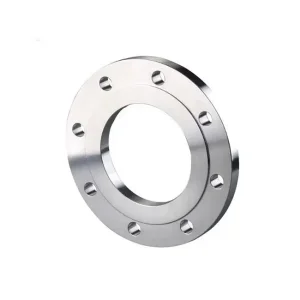
Unlike standard flow-through flanges (such as Weld Neck or Slip-On variants), a blind flange contains no center bore. It is engineered to withstand the complete static and dynamic axial hydraulic thrust generated by internal fluid pressures. When evaluating the best DI blind flange products across global supply chains, consulting engineers and procurement managers must analyze complex mechanical dynamics: matrix ductile microstructure, tensile strength ratings (ranging from EN-GJS-400-15 to EN-GJS-500-7 grades), yield point resistance, gasket seat stress retention, and anti-corrosive surface treatment protocols.
The global market for industrial flanges and blind closures has experienced significant structural transformation. Driven by accelerating urban water distribution upgrades, desalination project expansions across the Middle East and North Africa (MENA), and aggressive energy infrastructure maintenance across North America and Europe, the demand for high-integrity DI blind flanges and forged steel blind flanges continues to grow at a projected Compound Annual Growth Rate (CAGR) of 5.4%.
Municipal water authorities globally mandate Ductile Iron blind flanges under AWWA C207 and EN 1092-2 standards due to their zero-permeability performance, resistance to soil-borne corrosion, and long service life exceeding 50 years.
High-pressure process units require extreme pressure-containment blind flanges (ASME B16.5 Class 300 to Class 2500) capable of withstanding cyclic thermal loading and corrosive sour gas (H2S) environments compliant with NACE MR0175.
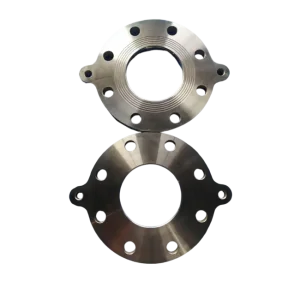
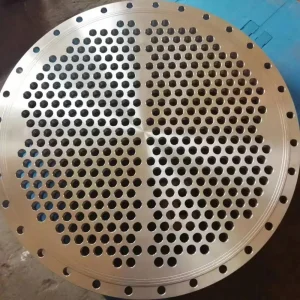
OEM equipment manufacturers rely on precision CNC-machined blind flanges and custom tube sheets to serve as manifold clean-out doors, heat exchanger closures, and structural end-caps in power generation facilities.
As global supply chains place greater emphasis on material traceability and carbon footprint auditing, procurement leads are bypassing intermediaries to partner directly with integrated forging and casting hubs. Enterprise operations located in Shanxi, China—widely recognized as the "Hometown of Forging"—utilize vertically integrated manufacturing loops, maintaining single-site control over raw billet selection, electric induction melting, closed-die forging, normalizing heat treatment, and precision multi-axis CNC finish machining.
The technical specification of blind flange products is undergoing a shift driven by advanced metallurgy, computational finite element modeling (FEA), smart sensing integrations, and stringent anti-corrosion barrier coatings. Understanding these trends enables piping engineers to specify products that eliminate premature joint failures and reduce un-planned downtime.
Modern ductile iron casting utilizes computer-controlled spectrographic analysis to maintain strict nodularity percentages exceeding 85% (Type I and II graphite per ASTM A247). This avoids micro-porosity and ensures consistent tensile yield strength across thick cross-sections up to 100mm.
Transitioning from basic black bitumen paint to electrostatic Fusion Bonded Epoxy (FBE), Rilsan Polyamide 11, and 3-Layer Polyethylene (3LPE). These coatings resist soil stress, marine spray, and aggressive acidic/alkaline media across pH 2 through 12.
Next-generation industrial applications integrate IIoT strain-gauge sensors directly into blind flange bodies. These smart blind flanges monitor bolt pre-load relaxation, internal pressure surges, and localized flange deformation in real-time.
| Parameter | Grey Cast Iron (Class 125) | Ductile Iron (EN-GJS-500-7 / AWWA) | Forged Carbon Steel (ASTM A105) |
|---|---|---|---|
| Microstructure | Flake Graphite Matrix | Spheroidal / Nodular Graphite | Wrought Fine-Grain Ferrite-Perlite |
| Tensile Strength (MPa) | 150 – 250 MPa | 400 – 500 MPa | 485 – 620 MPa |
| Yield Strength (MPa) | N/A (Brittle Fracture) | 250 – 320 MPa | 250 MPa Min. |
| Elongation (%) | < 0.8% | 7% – 15% | 22% Min. |
| Impact Energy (Charpy-V) | Low Resistance | 12 – 18 J at RT | 30 – 45 J at -20°C (A350 LF2) |
| Primary Application | Low-pressure drain lines | Municipal Water, Sewage, Medium Pressure | Oil & Gas, High-Temp Steam, Refining |
The mechanical behavior of blind flanges varies depending on fluid composition, pressure ratings, temperature fluctuations, and environmental exposure. Below is an engineering analysis of localized operational environments:
In seawater desalination plants across Qatar, the UAE, and Australia, high-pressure pump discharge headers require blind flanges resistant to chloride pitting and crevice corrosion. While Super Duplex stainless steel (UNS S32750) blind flanges are specified for direct seawater contact, epoxy-coated Ductile Iron blind flanges or rubber-lined A105 carbon steel blind flanges are widely deployed on secondary wash lines and brine reject loops, delivering significant cost savings without sacrificing pressure integrity.
Offshore platform mudlines and crude oil separation vessels require blind flanges compliant with ASME B16.5 Class 900 / 1500 and NACE MR0175 / ISO 15156 standards. Forged steel blind flanges (ASTM A182 F51 / F53 or heavy-section ASTM A105N) undergo 100% Ultrasonic Testing (UT) and Magnetic Particle Testing (MT) to ensure freedom from internal inclusions, hydrogen-induced cracking (HIC), and sulfide stress cracking (SSC).
In Northern European district heating networks, blind flanges installed at steam terminal points must endure thermal cycling between ambient temperatures and 350°C. Forged alloy steel blind flanges (ASTM A182 F11/F22) with Raised Face (RF) or Ring Type Joint (RTJ) profiles maintain gasket seating stress over extended thermal cycles, avoiding thermal fatigue leaks.
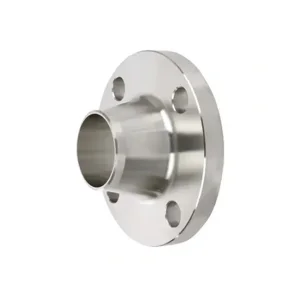
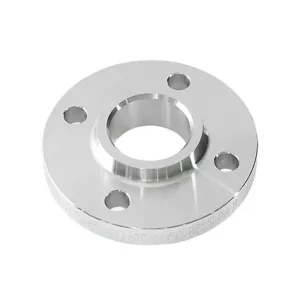
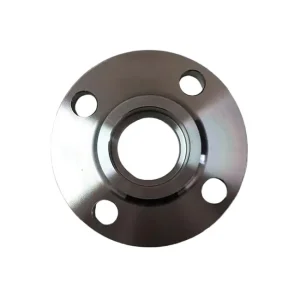
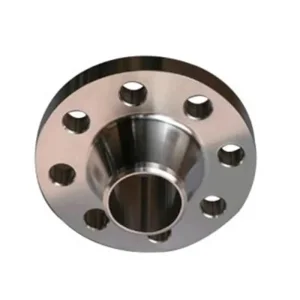
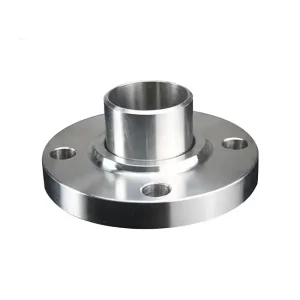
Shanxi Yuxin Casting & Forging Co., Ltd. (established 1992) operates a 10,000-ton annual capacity facility in Dingxiang County, Shanxi—the recognized heartland of China's forging industry. As an integrated producer operating under ISO 9001, PED 2014/68/EU, and AD 2000-Merkblatt W0 certifications, YUXIN delivers fully traceable DI blind flanges, forged carbon steel blind flanges, weld neck flanges, slip-on flanges, socket weld flanges, and custom tube sheets to more than 40 countries worldwide.
Every shipment is accompanied by EN 10204 3.1 Mill Test Certificates (with 3.2 third-party inspection available on request). Certificates detail melt heat numbers, ladle chemical analysis, mechanical tensile/yield test results, hardness values, and heat treatment charts.
Flange blanks undergo rigorous NDT protocols in accordance with ASME Section V standards: Ultrasonic Testing (UT) per ASTM A388 to detect internal voids, Liquid Penetrant (PT), Magnetic Particle Inspection (MT), and hydrostatic pressure testing up to 400 bar.
Flange sealing faces are turned on multi-axis CNC vertical lathes to guarantee surface roughness standards: Stock Finish (125-250 µin AARH/Ra), Smooth Finish (63-125 µin Ra), or Concentric/Spiral Serrated configurations per ASME B16.5 guidelines.
YUXIN manufactures blind flanges and companion flange fittings across the complete spectrum of international dimensions: