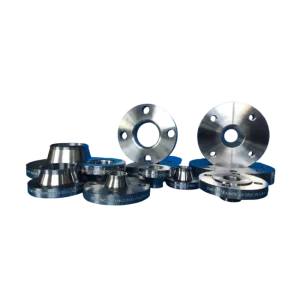
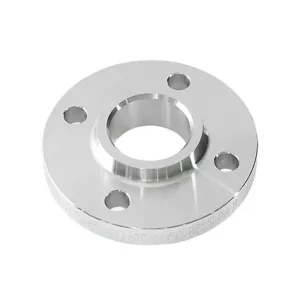
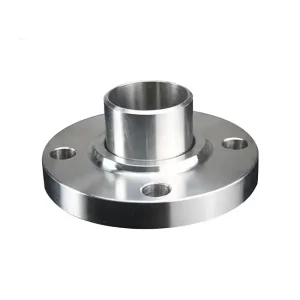
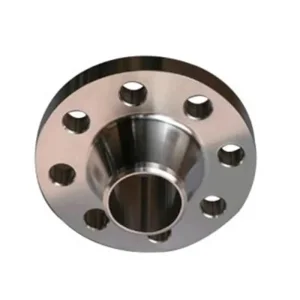
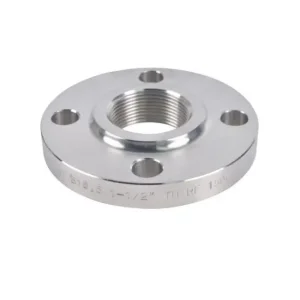
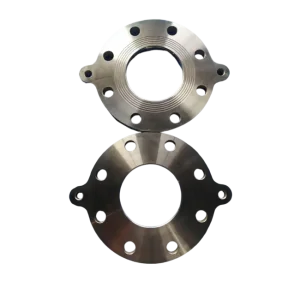
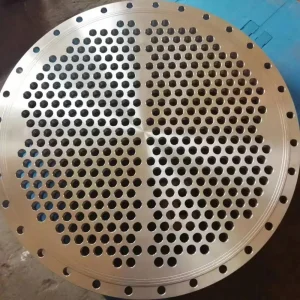
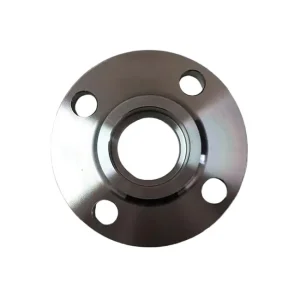
Explore engineered forged flanges manufactured strictly in accordance with ASME B16.5, ASME B16.47, EN 1092-1, and custom OEM engineering specifications.
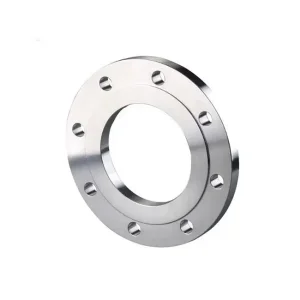
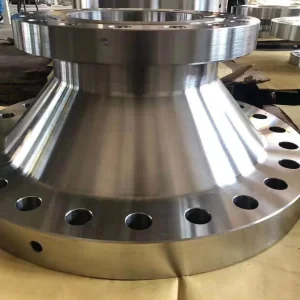
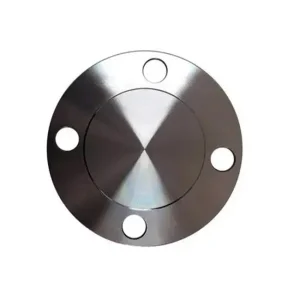
In critical fluid handling, petrochemical processing, and high-pressure steam distribution, selecting the Best Blind Hub Flange Suppliers & Product is crucial for mechanical isolation and long-term structural integrity. Unlike standard flat plate blind flanges, a Blind Hub Flange (also known as a hubbed blind flange) incorporates a gradually tapered forged neck hub that transitions stress efficiently from the flange face toward the outer perimeter.
Finite Element Analysis (FEA) proves that under cyclic pressure loading, standard flat blinds experience peak bending moments at the innermost bolt circle radius. A hubbed design elevates the section modulus, redistributing bending forces and reducing localized shear fatigue by up to 34%.
Forged components produced via closed-die ring rolling maintain uninterrupted grain flow matching the flange envelope contour. Grain boundaries are aligned along circumferential loading vectors, giving superior impact energy absorption (Charpy V-notch testing exceeding 42 J at -40°C for LF2 grades).
Available in Raised Face (RF), Ring Type Joint (RTJ), and Flat Face (FF) configurations. Machined with spiral or concentric serrations (125–250 µin AARH / Ra 3.2–6.3 µm) to achieve optimal gasket seat friction without tearing soft metal or spiral-wound gaskets.
At Shanxi Yuxin Casting & Forging Co., Ltd., we combine traditional metallurgical mastery with modern CNC machining automation. Operating directly out of Dingxiang County—renowned globally as the epicenter of Chinese heavy forging—our manufacturing route guarantees absolute compliance with international pressure equipment directives.
| Manufacturing Stage | Technical Parameters & Machinery | Quality Control & Verification Protocol |
|---|---|---|
| 1. Billet Cutting & Heating | Precision band-saw cutting of prime steel billets. Frequency-conversion induction heating furnaces calibrated to ±10°C. | Optical pyrometer temperature check to prevent thermal overheating or grain coarsening. |
| 2. Hydraulic Forging & Rolling | 2,500-Ton hydraulic forging press + 3.0-meter automated ring rolling machine. High deformation ratio (>4.5:1). | Dimensional checks for height, hub taper angle, and raw outer diameter allowances. |
| 3. Heat Treatment | Computer-controlled heat treatment line executing Normalizing (890°C–920°C), Tempering, and Solution Annealing. | Batch hardness testing (HBW), Charpy V-notch impact, and tensile testing per ASTMA370. |
| 4. High-Precision Machining | Multi-axis CNC vertical lathes and CNC drilling centers. Facing tolerances held within ±0.05 mm. | Surface roughness gage checks (Ra/AARH) and CMM coordinate measuring arm validation. |
| 5. Non-Destructive Testing (NDT) | 100% Ultrasonic Testing (UT) per ASTM A388 / EN 10228-3. Magnetic Particle Inspection (MPI) for hub radiuses. | Volumetric defect detection (no voids, cracks, or inclusions permitted in critical pressure walls). |
Global EPC contractors and valve/piping distributors increasingly rely on Chinese manufacturing hubs to secure procurement resilience, commercial competitiveness, and rapid scale. The Dingxiang region in Shanxi represents over 40% of China's exported forged flanges, delivering distinct structural benefits:
Direct proximity to major Shanxi steel mills guarantees raw billet availability in Carbon Steel (ASTM A105, Q235B), Low-Temp Alloys (A350 LF2), Stainless (A182 F304/F316L), and Duplex grades. Material costs are minimized while lead times are cut in half.
Shanxi Yuxin Casting & Forging Co., Ltd. produces 10,000 tons of forged flanges annually. From small-bore Class 150 1/2" blind hub flanges to massive 120" (DN3000) custom heavy ring forgings, our equipment scales seamlessly without bottlenecking delivery schedules.
YUXIN holds audited quality certificates including ISO 9001:2015, TÜV CERT, Pressure Equipment Directive (PED 2014/68/EU), AD 2000-Merkblatt W0, and Special Equipment License. Every shipment includes EN 10204 3.1 chemical & physical inspection certificates.
As energy infrastructure transitions toward higher pressure thresholds, hydrogen gas transmission, and offshore extreme environments, the demands placed on blind hub flange suppliers have shifted drastically. Key trends defining the sector include:
Hydrogen gas molecules are extremely small and susceptible to micro-leakage and hydrogen embrittlement. Modern blind hub flanges for clean energy transport require refined vacuum-degassed forged steel (low sulfur & phosphorus content) paired with precision micro-finished RTJ grooves.
In upstream offshore oil and gas fields, exposure to wet H2S requires materials tested for Sulfide Stress Cracking (SSC) and Hydrogen-Induced Cracking (HIC). Hubbed blind flanges undergo strict heat treatment cycles to ensure hardness remains strictly below 22 HRC.
Global procurement teams now demand digital heat tracking. YUXIN laser-engraved QR codes on the outer flange rim allow field engineers to scan and instantly pull raw material melt numbers, mechanical test results, and dimensional inspection reports on mobile devices.
Blind hub flanges are installed wherever pipeline dead-ends, pressure vessel nozzles, pump discharge terminals, or maintenance access ports require tight structural sealing under severe working conditions.
Class 900, 1500, and 2500 high-pressure blind hub flanges equipped with Ring Type Joint (RTJ) metal gaskets are standard equipment for wellhead tree isolation, manifold terminations, and refinery hydrocracker bypass lines.
High-temperature alloy blind hub flanges (ASTM A182 F11/F22) withstand severe thermal cycling in superheated main steam piping, feed-water heater isolation valves, and boiler blowdown headers.
Austenitic stainless steel (A182 F316L, F347) and Super Duplex blind hub flanges provide immune corrosion resistance against nitric acid, ammonia synthesis, and caustic chlorine piping loops.
To prevent project delays, material non-conformity, or field installation mismatches, international purchasing agents and project engineers should specify the following data parameters when issuing Requests for Quotation (RFQs):
| Specification Field | Standard Options & Alternatives | Engineering Recommendation |
|---|---|---|
| Dimensional Standard | ASME B16.5 (½"–24"), ASME B16.47 Ser. A/B (26"–60"), EN 1092-1 Type 05, DIN 2527, JIS B2220 | Specify ASME B16.5 for oilfield; EN 1092-1 for European projects. |
| Pressure Rating | Class 150, 300, 600, 900, 1500, 2500 / PN6, PN10, PN16, PN25, PN40, PN63, PN100 | Match mating pipe/valve pressure rating precisely. |
| Facing Type | Raised Face (RF), Ring Type Joint (RTJ), Flat Face (FF), Male & Female (M&F), Tongue & Groove | RTJ for Class ≥900 high-pressure hydro-carbon media. |
| Material Grade | ASTM A105 (Carbon Steel), A350 LF2 (Low Temp), A182 F304/F316L (Stainless), A182 F51/F53 (Duplex) | Specify NACE MR0175 compliance if sour H2S gas is present. |
| Surface Coating | Black Rust-Preventive Paint, Yellow Varnish, Cold/Hot-Dip Galvanized, Anti-Corrosion Epoxy | Hot-dip galvanizing or 3-layer epoxy for marine offshore environments. |
Direct technical insights from our engineering and metallurgical department addressing global buyer inquiries.
Review additional high-performance forged pipeline components directly from our factory export inventory.