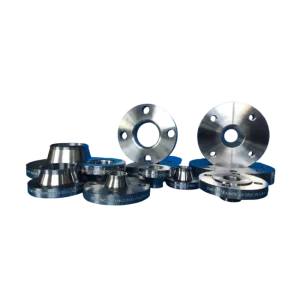
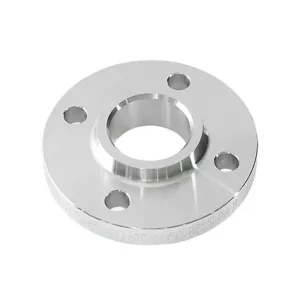
Select high-performance forged flanges engineered to ASME B16.5 and EN 1092-1 specifications for pressure-critical operations.
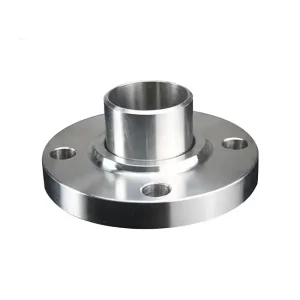
Data-driven performance metrics reflecting China's premier forging capabilities in Shanxi Dingxiang, delivering unmatched manufacturing throughput for global EPC projects.
In high-pressure piping systems across energy, petrochemical, and power generation sectors, specifying the Best ASME Class Product is fundamental to maintaining system integrity and operational safety. ASME (American Society of Mechanical Engineers) standards, specifically ASME B16.5 for pipe flanges and flanged fittings (NPS 1/2 through NPS 24) and ASME B16.47 for large-diameter steel flanges (NPS 26 through NPS 60), govern the dimensional tolerances, materials, pressure-temperature ratings, and testing protocols required for industrial piping components.
The designation "Class" (e.g., Class 150, Class 300, Class 600, Class 900, Class 1500, Class 2500) does not simply represent maximum working pressure in PSI; rather, it defines a comprehensive Pressure-Temperature Rating envelope. As fluid or gas temperatures escalate within a conduit, the allowable working pressure of the forging alloy diminishes due to thermal expansion, creep stress, and yield strength attenuation.
| ASME Class Rating | Nominal Hydrostatic Test Pressure (Psi) | Common Industrial Facing Types | Primary Sector Applications |
|---|---|---|---|
| Class 150 | 450 PSI | Flat Face (FF), Raised Face (RF) | Municipal Water, Low-Pressure Steam, HVAC Systems |
| Class 300 | 1125 PSI | Raised Face (RF), Smooth Finish | Petrochemical Refining, Chemical Process Headers |
| Class 600 | 2225 PSI | Raised Face (RF), Ring Type Joint (RTJ) | High-Pressure Gas Pipelines, Feeder Lines |
| Class 900 | 3350 PSI | Ring Type Joint (RTJ), Male & Female | Offshore Riser Manifolds, Gas Injection Units |
| Class 1500 | 5575 PSI | Ring Type Joint (RTJ) Heavy Duty | Subsea Production Trees, Supercritical Power Plants |
| Class 2500 | 9275 PSI | Specialized RTJ / Metal-to-Metal Seal | Extreme Sour Service Wellheads, High-Temp Hydrogen |
The structural success of an ASME Class flange connection depends heavily on selecting the correct flange facing finish and matching gasket material:
Choosing the right chemical matrix and heat treatment schedule ensures mechanical stability, stress-corrosion cracking resistance, and extended fatigue life under extreme working conditions.
ASTM A105 / Q235B: The industry workhorse for ambient and high-temperature service up to 425°C. Features normalized heat treatment to refine grain structures, maximizing yield stress (min 250 MPa) and impact toughness.
ASTM A350 LF2 (Class 1/2): Specifically micro-alloyed for low-temperature applications down to -46°C (-50°F), undergoing Charpy V-Notch impact testing for arctic oilfields and cryogenic gas headers.
ASTM A182 F11 / F22 / F91: Chromium-Molybdenum low-alloy steels engineered for severe creep resistance in power generation steam lines, hydrocrackers, and refinery coking units operating between 450°C and 650°C.
Enhanced with Vanadium and Niobium grain refiners to mitigate stress relaxation crack propagation under cyclic thermal shock.
ASTM A182 F304L / F316L: Low-carbon austenitic stainless steels providing exceptional resistance to intergranular corrosion. Crucial for pharmaceutical, food grade, and aggressive acid processing lines.
Duplex F51 (UNS S31803) / F53 (S32750): Dual-phase ferritic-austenitic matrix delivering ultra-high PREN (>40) for extreme pitting and crevice corrosion resistance in offshore marine and sour wells.
How the unique industrial aggregation of Dingxiang County in Shanxi Province delivers world-class manufacturing precision, shortened lead times, and structural cost optimization for global procurement leaders.
When global engineering firms source Best ASME Class Product & Products, China's Shanxi Dingxiang industrial cluster consistently stands out as the world's premier forging epicentre. Recognized globally as the “Hometown of Forging in China,” Shanxi Yuxin Casting & Forging Co., Ltd. leverages over 33 years of accumulated metallurgical expertise, combining heavy-duty hydraulic pressing infrastructure with modernized AI-driven CNC machining centers.
Dingxiang factories operate within minutes of major steel mills, maintaining direct supply partnerships for vacuum-degassed forged carbon and alloy ingot billets. This eliminates upstream supply disruptions and guarantees mill certificate compliance (EN 10204 3.1/3.2) from melt to final machining.
Equipped with 10,000-ton hydraulic forging presses, high-speed ring rolling mills, and automated electric heat-treatment furnaces (Normalizing, Tempering, Solution Annealing). Closed-loop temperature monitoring guarantees uniform grain size distribution across large flange cross-sections.
5-axis CNC machining centers running computer-optimized toolpaths deliver exacting face serrations, bolt hole pitch circle diameters (PCD), and bevel angles. Automated Coordinate Measuring Machines (CMM) ensure sub-millimeter compliance across batch orders.
Exploring how the global energy transition, LNG boom, hydrogen economy, and digital procurement standards are reshaping demand for ASME Class forged products.
The rapid global transition toward Liquefied Natural Gas (LNG) has escalated demand for ultra-low temperature ASTM A350 LF2 and austenitic stainless steel flanges (Class 300 to 1500). Cryogenic testing at -196°C ensures zero embrittlement failure in storage tanks and re-gasification facilities.
Hydrogen's small molecular structure demands high-integrity ASME Class 600+ RTJ flanges with specialized surface roughness to prevent hydrogen embrittlement and micro-leakage. Specialized alloy cladding and low-hardness forgings (<22 HRC per NACE MR0175) are leading industry adoption.
Floating Production Storage and Offloading (FPSO) units operate in corrosive, cyclic marine environments requiring Super Duplex F51/F53 and Nickel Alloy (Inconel 625) forged components designed to withstand severe dynamic wave loads and high-pressure sour gas manifolds.
Rigorous qualification guidelines and quality control measures required by international Tier-1 Engineering, Procurement, and Construction (EPC) buyers.
To secure vendor approval with top-tier operators like Aramco, Shell, BP, Technip, and Petrofac, an ASME Class manufacturer must demonstrate total material integrity. A single casting defect or forged burst can trigger catastrophic pipeline failures. Consequently, leading China suppliers adhere to strict non-destructive testing (NDT) standards:
Direct expert answers addressing key technical queries, standardization questions, and international sourcing concerns.
The core differences lie in pressure-temperature ratings, wall thickness, bolt circle dimensions, and weight. A Class 300 flange features a significantly thicker hub, larger bolt hole circles, and uses larger diameter studs than a Class 150 flange of the same nominal pipe size (NPS). For example, a 6" Class 150 RF flange has a maximum working pressure of ~285 PSI at 100°F (carbon steel), whereas a 6" Class 300 RF flange is rated for ~740 PSI at the same temperature.
While ASME and EN 1092-1 are distinct standards with different dimensional profiles, engineers often evaluate equivalent pressure classes: PN20 roughly corresponds to ASME Class 150; PN50 corresponds to ASME Class 300; PN100 corresponds to ASME Class 600; PN250 corresponds to ASME Class 1500; and PN400 corresponds to ASME Class 2500. However, flange bolt holes and facing dimensions are non-interchangeable; adapters or custom conversion flanges are required.
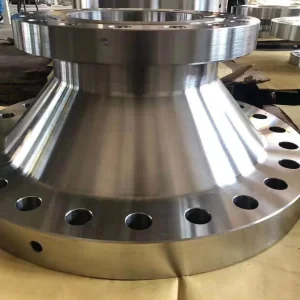
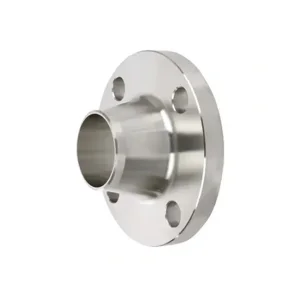
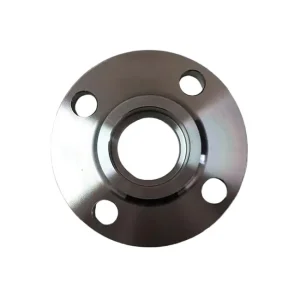
Weld Neck Flanges feature a long tapered hub that transitions wall thickness gradually down to the pipe end, providing structural reinforcement and stress distribution under high pressure, cyclic bending loads, and extreme thermal swings. Slip-On flanges are fillet welded inside and out, leaving the stress concentrated at the weld joint. Weld neck flanges are mandatory in severe utility service, hydrotests above Class 600, and radiographed pipe joints.
Reputable China suppliers must provide ISO 9001 quality system accreditation, Pressure Equipment Directive (PED 2014/68/EU) certification for European exports, AD 2000-Merkblatt W0 approval, and material test certificates issued per EN 10204 Type 3.1. For critical oilfield applications, third-party inspection (TPI) witness reports by SGS, TÜV, or Lloyd’s Register (EN 10204 Type 3.2) should be specified on the purchase order.
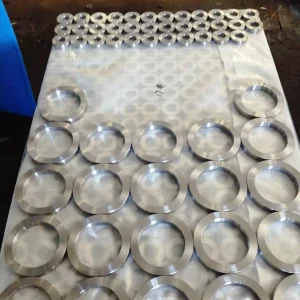
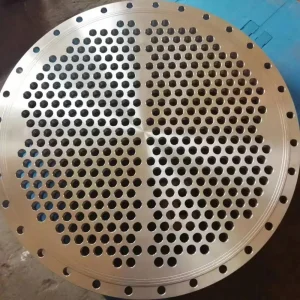
Yes. In addition to standard ASME B16.5 and B16.47 Series A/B flanges, our technical team engineered custom forged rings, oversized tube sheets, long weld necks (LWN), orifice flange sets, and expansion joint flanges up to 3,000 mm diameter directly from customer CAD drawings (DWG/STEP).
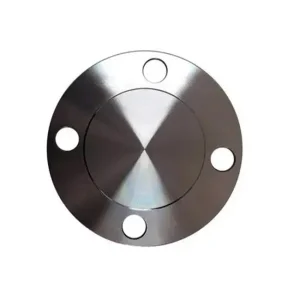
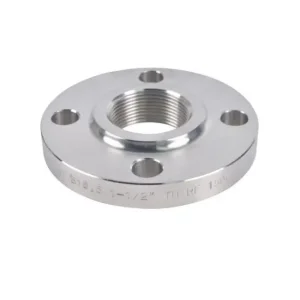
Explore additional precision CNC-machined blind flanges, stub ends, ring flanges, and threaded connectors for global export.