+86-350-6071768 [email protected] Dingxiang, Shanxi, China · Forging since 1992

10 Tips for Buying Stainless Steel Flanges

Time:2026-09-25 Author:Mason
0%

Buying Stainless Steel Flanges is not just a matter of choosing a size and placing an order. A flange may look simple on a catalog page, but its grade, pressure rating, dimensions, and finish all affect whether it suits the job. A small mismatch can delay installation or create problems at a connection. Details matter.

This guide introduces ten practical tips for making a more informed purchase. It covers how to confirm the required stainless steel grade, check flange type and facing, compare dimensions, and review pressure and temperature requirements. You will also learn why material test reports, traceability, and clear supplier documentation deserve attention. Where project specifications or industry standards apply, verify the exact requirements rather than relying on assumptions. Small marks matter.

It is tempting to focus on price alone. That shortcut can seem reasonable until a flange fails to match the pipe, gasket, or operating conditions. Compare quotations carefully, and ask suppliers to clarify anything missing from the product description. A reliable decision usually comes from checking several details together, not from trusting one label or a polished photograph. Even experienced buyers can overlook a specification when work is rushed. Take a moment to verify it. The tips ahead are designed to help you ask better questions, reduce avoidable purchasing errors, and select Stainless Steel Flanges that fit the application.
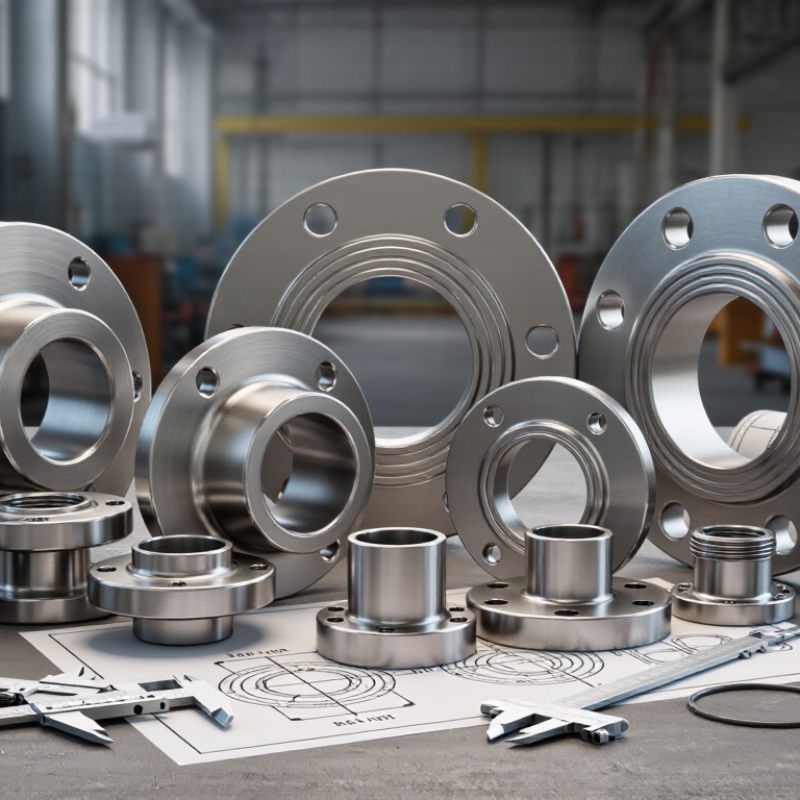
10 Tips for Buying Stainless Steel Flanges

Identify the Flange Type and Standard Your Project Requires

Before comparing price or material, confirm the flange type your piping layout needs. A welding-neck flange suits demanding service and repeated pressure changes, while a slip-on flange may work for less severe conditions. Socket-weld and threaded flanges fit particular small-bore arrangements. A blind flange closes a line for isolation or future access. Details matter.

Match the flange standard to the connected pipe, valves, and equipment. Common specifications include ASME, EN, and JIS standards, but their dimensions and pressure designations are not automatically interchangeable. Check the project drawings for the required standard, nominal size, pressure class, facing, and material grade. Then verify bolt-hole spacing and flange thickness against the mating part. A tape measure helps, but it cannot confirm every specification.

Look closely at the service conditions, too. Temperature, pressure, fluid, and corrosion exposure can affect both material selection and flange design. Read the product marking and request traceable documentation when the application requires it. If a drawing omits the facing or class, pause and clarify it rather than guessing. That small delay is frustrating, but a flange that almost fits is still the wrong flange.

Compare Stainless Steel Grades and Corrosion Resistance

Stainless steel grades can look similar on a flange, but their corrosion performance differs. Grade 304 often suits clean, indoor systems with mild exposure. For salt spray, coastal air, or chloride-bearing water, grade 316 is usually a stronger candidate because it contains molybdenum.

It is not immune to corrosion, though. Warm chlorides trapped beneath a gasket can still cause pitting or crevice attack.

Check the actual service conditions before comparing grades. Record the fluid, its concentration, operating temperature, cleaning chemicals, and any periods of stagnation. A flange exposed to occasional splash may face less risk than one continuously immersed in the same liquid. Small details matter.

Welded joints deserve attention, too: 304L and 316L have lower carbon content, which can reduce sensitization concerns after welding. Duplex stainless steels may offer higher strength and useful chloride resistance, but fabrication and temperature limits need careful review.

Ask for material certificates and confirm that the grade matches the purchase specification. If identification is uncertain, suitable material verification can help avoid costly mix-ups. A higher grade is not automatically the right choice; it may add cost without solving the real corrosion mechanism.

I would still treat any grade selection as provisional until the operating details are checked, especially where deposits or narrow gasket gaps can hold moisture.

Check Pressure Ratings, Dimensions, and Surface Finish

Pressure ratings need more than a quick glance at the number stamped on a flange. Check the applicable pressure class, material, and service temperature together; capacity can change with temperature. Compare the flange rating with the system’s design conditions, including possible pressure surges. A rating that looks adequate at room temperature may not suit a hot process. Check the governing specification, too, and confirm that connected components use compatible ratings. Small mismatches matter.

Dimensions deserve a physical check against the pipe and mating flange drawings. Measure the outside diameter, thickness, bolt-circle diameter, and bolt-hole size. Count the holes. Also verify the facing type, such as raised face or flat face, so the gasket seats correctly. I have seen buyers focus on the nominal pipe size and miss a bolt pattern difference. It is an easy mistake.

Surface finish affects sealing. Ask for the specified gasket-contact finish, rather than assuming a mirror polish is better. A clean, even face helps; deep scratches, dents, or corrosion can create leak paths. Inspect the sealing area under good light, and compare measured roughness with the project specification when required. If the finish is unclear, pause and ask for documentation. Don’t guess.

Evaluate Manufacturing Quality and Supplier Credentials

A stainless steel flange may look clean and well machined, yet appearance alone cannot confirm its grade or performance. Ask how the supplier controls material selection, forging, heat treatment, machining, and final inspection. Request material test reports linked to the specific heat or batch number. Check that the stated grade, dimensions, pressure class, and applicable standard match your purchase requirements.

Look for documented quality procedures and current certifications, then confirm their scope covers the products and processes you need. A certificate is useful, but it does not prove every shipment was handled correctly. Ask for inspection records, dimensional checks, and positive material identification results where appropriate. If welding or special processing is involved, request the relevant procedure and qualification records. Details matter.

Supplier visits can reveal practical habits: organized batch labels, calibrated gauges, and protected flange faces. If a visit is not possible, request clear photos or a remote walkthrough. Verify that records are traceable from incoming material to packing. Paperwork can be convincing, but gaps happen. Compare a sample report with the delivered marking and dimensions, and clarify who handles nonconforming parts before ordering. No supplier is flawless; a direct, specific answer is often more informative than a polished brochure.

Confirm Documentation, Delivery, and Total Purchase Cost

When comparing stainless steel flange quotes, the lowest unit price can be misleading. Ask for documentation that matches the exact grade, dimensions, pressure rating, and applicable product standard. A material test certificate should identify the heat number, so received flanges can be linked to their production records. Check that the certificate and purchase order describe the same material. Small differences matter.

Confirm what inspection records are included, such as dimensional checks or test reports, and ask who issues them. Request a written delivery schedule with dispatch date, transit estimate, packaging details, and shipment tracking. A crate arriving late can delay installation, even when the flanges themselves meet specification. I would not treat an estimated date as a firm commitment. It is easy to miss that distinction.

Compare the total purchase cost, not just the price per flange. Include freight, protective packaging, insurance, import charges where applicable, and any machining or inspection fees. Ask whether partial shipments cost extra, and clarify who pays if quantities or dimensions need correction. For example, a low quote may exclude special face protection needed for long-distance transport. Put assumptions in writing. Some details still get missed; reviewing the quote against the final packing list is a useful, if unglamorous, check.

10 Tips for Buying Stainless Steel Flanges - Confirm Documentation, Delivery, and Total Purchase Cost

Tip What to Confirm Useful Evidence or Details Why It Matters to Cost or Delivery
1 Specify the required material grade and product form. State the stainless grade, such as 304/304L or 316/316L, and the applicable material specification. For forged stainless flanges, ASTM A182/A182M is commonly specified; confirm the exact grade and edition required by the project. Clear material requirements reduce quotation assumptions, substitution risk, and delays caused by re-approval or rework.
2 Confirm flange dimensions, rating, and facing. List nominal pipe size, pressure class or rating, flange type, facing, bore, and the governing dimensional standard, such as ASME B16.5 where applicable. Dimensional mismatches can make flanges unusable at installation and add replacement, machining, and schedule costs.
3 Agree on the required inspection documents before ordering. Specify whether material test reports are required and identify the requested certificate type, such as EN 10204 Type 3.1 when applicable. Confirm required chemical and mechanical test information. Reports requested after production may be unavailable or require extra review, testing, or document-processing time.
4 Require heat-number traceability where the project needs it. Clarify how heat numbers must appear on the flanges and how they must link to the material test reports. State any marking or traceability rules in the purchase order. Traceability supports inspection and acceptance; unclear marking requirements can lead to rejected lots or costly sorting.
5 Define inspection, testing, and acceptance criteria. List any required visual or dimensional inspection, testing, inspection points, and acceptance standards. Identify who arranges inspection and whether notice is needed before shipment. Agreed inspection arrangements help avoid missed inspection windows, shipment holds, and unexpected third-party costs.
6 Get a realistic delivery schedule with milestones. Ask for confirmation of order acknowledgment, production or stock status, inspection timing, dispatch date, and estimated transit time. Distinguish dispatch from delivery to the destination. A milestone-based schedule makes it easier to plan installation and compare offers that use different lead-time assumptions.
7 Specify packaging, marking, and shipment protection. Agree on protection for flange faces, corrosion prevention where suitable, packing method, package markings, and any export or site-handling requirements. Suitable packing can reduce transit damage, repacking work, and delays while damaged or unidentified items are resolved.
8 Compare the complete landed purchase cost, not only the unit price. Request a breakdown of product price, packing, freight, insurance if applicable, duties, taxes, brokerage, and other charges. Confirm which costs are excluded. Depending on the shipment terms and destination, additional charges can materially change the final cost.
9 State the delivery term, named place, and applicable version. If using Incoterms, specify the rule, named place or port, and version, such as “FCA [named place], Incoterms 2020.” Confirm responsibilities for carriage, export clearance, and import clearance. Precise delivery terms help prevent misunderstandings about freight responsibility, risk transfer, and charges payable by each party.
10 Review payment terms, order changes, and short-shipment procedures. Confirm the payment schedule, currency, quote validity, cancellation or change terms, and the process for reporting shortages or damage. Put agreed specifications and documents in the purchase order. Written terms make the order easier to administer and help limit disputes, payment delays, and costs from specification changes.

FAQS

How do I choose the right flange type?

Match the flange to the piping layout and service conditions. Welding-neck flanges suit demanding service and repeated pressure changes. Blind flanges close lines for isolation or future access.

Can different flange standards be mixed?

Do not assume they fit together. Standards can differ in dimensions and pressure designations. Check the drawing, bolt-hole spacing, thickness, facing, and mating part.

What details should I confirm before ordering?

Verify nominal size, pressure class, material grade, and facing. A tape measure helps, but it cannot confirm every specification. Clarify missing details before purchase.

Is grade 304 suitable for every environment?

No. Grade 304 often suits clean indoor systems with mild exposure. Salt spray, coastal air, or chloride-bearing water may call for grade 316.

Does grade 316 prevent corrosion completely?

No. Warm chlorides trapped under a gasket can still cause pitting or crevice attack. Small gaps matter.

What service details affect stainless steel grade selection?

Record the fluid, concentration, temperature, cleaning chemicals, and stagnation periods. Deposits and narrow gasket gaps can hold moisture. I would still treat the choice as provisional.

Which documents should I request with an order?

Request material certificates that identify the heat number and match the purchase specification. Ask whether dimensional checks or test reports are included.

What should I check in a delivery quote?

Confirm dispatch dates, transit estimates, packaging, tracking, and inspection fees. Include freight, insurance, and other applicable charges. An estimate is not a firm commitment.

How can I avoid unexpected purchase costs?

Compare total cost, not only unit price. Check for extra charges for partial shipments, corrections, or protective face packaging. Review the quote against the packing list. Details get missed.

Conclusion

Buying Stainless Steel Flanges starts with matching the flange type and applicable standard to the needs of your project. Consider the operating conditions carefully when comparing stainless steel grades, since corrosion resistance can vary depending on the material and environment. Before ordering, verify that the pressure rating, dimensions, and surface finish are appropriate for the intended application and compatible with connected components.

A reliable purchase also depends on manufacturing quality and supplier credentials. Ask for relevant documentation to confirm material details and product specifications, and clarify delivery schedules before placing an order. Finally, compare the total purchase cost rather than focusing only on the unit price; shipping, handling, and other applicable charges can affect the overall value. A careful review of these factors helps you select flanges that meet project requirements and support dependable installation and service.

Mason

Mason

Mason is a seasoned marketing professional with a deep expertise in the company's offerings and a passion for driving brand awareness. With a strong background in digital marketing strategies, he has an innate ability to connect with diverse audiences and effectively communicate product benefits.......