Global buyers are reassessing every connection that carries pressure, heat, or maintenance risk. A Brass Threaded Flange may look small, yet its threads, sealing face, alloy, and machining accuracy can determine system reliability. Grand View Research reports continued growth in the global industrial valves market, driven by water treatment, energy, chemical processing, and manufacturing projects. These sectors demand traceable components, not attractive catalog photographs.
Trade data from the International Trade Centre also shows sustained international movement of copper and copper-alloy products. However, broad trade categories do not identify flange quality. That limitation matters. Buyers must examine material certificates, pressure ratings, thread standards, dimensional inspection, and corrosion performance. ASME B16.5 and relevant ASTM specifications provide useful reference points, but compliance claims still require verification from each manufacturer.
Quality expert W. Edwards Deming offered a practical warning: “Without data, you’re just another person with an opinion.” His principle fits this market closely. Reliable suppliers should provide inspection records, batch traceability, and clear testing procedures. In this guide, we compare leading Brass Threaded Flange manufacturers through those measurable details. We also consider production experience, export capability, lead times, and technical support. No ranking is flawless. Some suppliers publish impressive certifications but reveal little about process control. Others offer strong engineering support but limited regional inventory. That difference can affect a project long after purchase orders are signed.
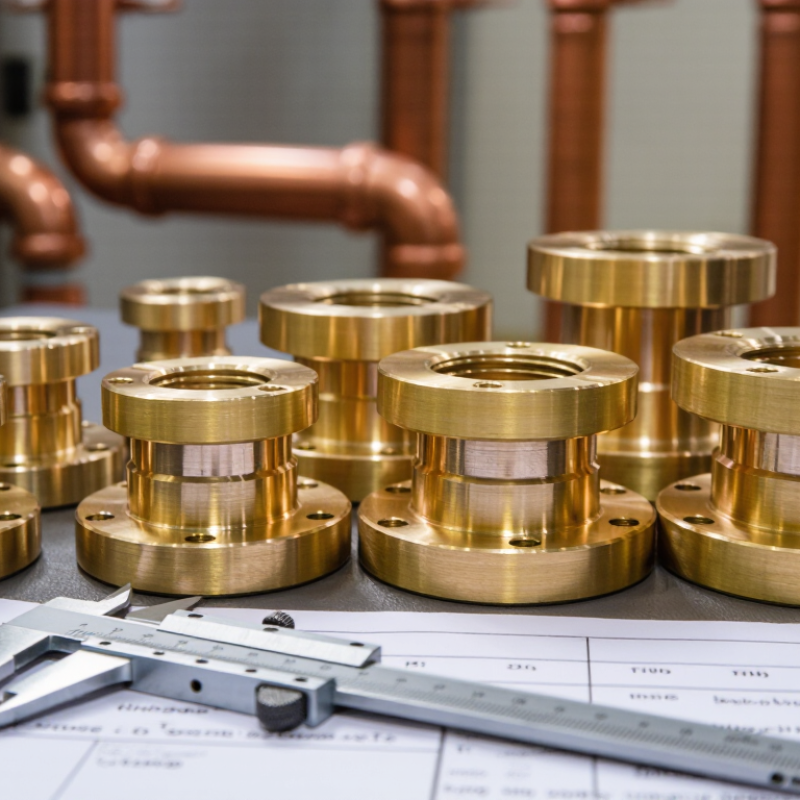
What Are Brass Threaded Flanges?
Brass threaded flanges are fittings used to connect threaded pipes, valves, pumps, or equipment. They have a central threaded bore and a flat bolt-hole pattern. The pipe screws directly into the flange, so welding equipment is usually unnecessary. This makes installation practical in maintenance areas, workshops, and compact mechanical rooms.
In real projects, brass is valued for corrosion resistance, good machinability, and stable performance in water, air, and many low-to-moderate pressure systems. The material also offers useful electrical conductivity. However, it is not suitable for every fluid or temperature. Chemical compatibility must be checked carefully. Thread standards matter too. NPT, BSP, and other profiles are not automatically interchangeable. They may look similar but seal differently.
A reliable purchasing process begins with the application details. Confirm pipe size, thread type, pressure rating, temperature range, flange dimensions, and brass composition. Ask for dimensional drawings, inspection records, and material documentation when the system is critical. A gasket and correctly tightened bolts are also essential for a dependable joint. Do not rely on appearance alone. A bright surface cannot prove internal quality. Even experienced buyers sometimes overlook thread tolerance or wall thickness. That small mistake can cause leakage, difficult assembly, or premature replacement. Experienced manufacturers should explain these limits clearly and provide consistent inspection results.
| Data Dimension | Technical Information | What Global Buyers Should Check | Applicable Reference or Note |
|---|---|---|---|
| Product definition | A brass threaded flange is a flanged pipe component with internal threads in the bore. It connects to an externally threaded pipe or fitting and provides a bolted face for joining, alignment, inspection, or equipment connection. | Confirm that the product is internally threaded and is not a slip-on, socket-weld, or plain blind flange. | Threaded flanges are commonly selected where welding is undesirable or where the piping system uses threaded connections. |
| Primary connection | Internal pipe threads are normally specified by a recognized thread standard, such as NPT for many North American applications or ISO 7-1 pipe threads for applications using tapered pipe threads in accordance with that standard. | Specify the exact thread designation, nominal size, pitch or threads per inch, taper, and male-thread compatibility. | ASME B1.20.1 covers NPT and related inch pipe threads. ISO 7-1 covers pressure-tight joints made on the threads of compatible pipe and fittings. |
| Flange dimensions | Important dimensions include nominal pipe size, outside diameter, bolt-circle diameter, number of bolt holes, bolt-hole diameter, flange thickness, bore diameter, and facing dimensions. | Request a dimensioned drawing and confirm whether dimensions follow an ASME, EN, JIS, or another national system. | ASME B16.5 provides dimensional and pressure-temperature requirements for pipe flanges and flanged fittings in covered sizes and classes. The selected material and product design must also be within the standard's scope. |
| Common nominal sizes | Threaded flanges are commonly manufactured in small and medium nominal pipe sizes; exact availability depends on the design standard, material, pressure class, and supplier tooling. | Do not compare nominal size with the actual bore. Verify the flange bore and the compatible outside diameter of the threaded pipe. | Size ranges are not universal. A supplier should confirm the available size schedule rather than treating a typical range as a guaranteed specification. |
| Pressure designation | Pressure may be stated using ASME pressure classes, PN designations, or a supplier-specific maximum working pressure. The allowable pressure is affected by temperature, material, thread engagement, bolt loading, gasket selection, and installation. | Obtain a pressure-temperature rating for the complete assembly, not only a nominal flange class. | Never assume that a steel-flange pressure rating automatically applies to a brass flange. The material and design rating must be verified for the actual product. |
| Typical brass materials |
|
Confirm the alloy designation, chemical composition, temper, applicable material certificate, and regulatory suitability for the destination market. | Material performance depends on the exact alloy and service environment. Alloy selection should be based on corrosion, temperature, pressure, and potable-water requirements. |
| Corrosion considerations | Brass generally offers useful corrosion resistance in many water and utility applications, but dezincification, stress-corrosion cracking, erosion, and galvanic corrosion can occur under unsuitable conditions. | Review water chemistry, chloride level, ammonia exposure, velocity, temperature, and contact with dissimilar metals. | For aggressive or marine environments, request documented compatibility information for the selected brass alloy rather than relying only on the word “brass.” |
| Facing and sealing | Common flange faces include raised-face, flat-face, and other faces defined by the selected dimensional standard. The flange face works with a gasket or a specified sealing arrangement. | Match face type, gasket material, surface finish, bolt pattern, and tightening procedure across both mating flanges. | Face details and surface requirements should be taken from the applicable flange standard and the equipment manufacturer's instructions. |
| Thread engagement | Threaded joints require sufficient, clean, undamaged engagement between compatible male and female threads. Excessive tightening can damage brass threads or distort the flange. | Check thread quality, engagement length, sealant compatibility, installation torque guidance, and whether the male component is tapered or parallel. | Thread sealant should be selected for the conveyed medium and temperature. Sealant must not prevent correct assembly or contaminate the system. |
| Temperature service | There is no single temperature rating for all brass threaded flanges. Mechanical strength, sealing performance, and pressure capacity can change with temperature. | Request the manufacturer's pressure-temperature table for the exact alloy, size, thread, and flange design. | Do not use a generic brass temperature limit when the product will carry steam, hot oil, refrigerant, chemicals, or other demanding media. |
| Manufacturing methods | Typical production methods include hot forging, machining from bar stock, CNC machining, and secondary finishing. Forged construction may be selected for demanding mechanical service, while machined construction supports precise small-batch production. | Ask about forging or bar-stock origin, machining tolerances, thread gauges, heat treatment where applicable, and traceability. | The suitable process depends on size, quantity, alloy, required mechanical properties, and applicable standard. |
| Surface finish | Brass flanges may be supplied machined, polished, brushed, or with another specified finish. The sealing face generally requires controlled flatness and surface condition. | Define the required finish separately for the flange face, threads, outside diameter, and non-sealing surfaces. | A visually polished surface does not by itself demonstrate dimensional accuracy or sealing performance. |
| Inspection and testing | Relevant checks can include material verification, dimensional inspection, thread gauging, visual inspection, surface condition, hardness where specified, and hydrostatic or leak testing when required by the application. | Agree on inspection scope, sampling plan, test pressure, acceptance criteria, inspection records, and certificate format before production. | Testing requirements depend on the purchasing specification, governing standard, service risk, and local regulations. |
| Potable-water suitability | Not every brass alloy or manufacturing process is suitable for drinking-water contact. Lead content, dezincification resistance, coatings, and national approval requirements may apply. | Request current compliance documentation for the destination market and the intended water-contact application. | Compliance is jurisdiction-specific. A general material certificate is not automatically a potable-water approval. |
| Packaging for export | Threads and flange faces should be protected against impact, contamination, moisture, and corrosion during storage and transport. | Specify thread protectors, individual wrapping, separators, corrosion-inhibiting packaging, carton or crate requirements, labeling, and quantity per package. | Packaging should preserve the sealing face and thread accuracy until installation at the destination site. |
| Key purchasing documents | Useful documents include a technical datasheet, dimensioned drawing, material certificate, pressure-temperature rating, thread standard confirmation, inspection report, packing list, and certificate of conformity where required. | Make document submission a contractual requirement for repeat orders or safety-critical applications. | Documentation should identify the actual alloy, size, standard, batch or heat number, inspection results, and product quantity. |
They connect threaded pipes, valves, pumps, and equipment. The pipe screws into the central bore, so welding is usually unnecessary.
They suit maintenance areas, workshops, and compact mechanical rooms. They often serve water, air, and low-to-moderate pressure systems.
Brass resists corrosion and machines easily. It also provides stable performance and useful electrical conductivity. Material limits still matter.
No. Thread profiles can look similar but seal differently. Confirm whether the design requires NPT, BSP, or another standard.
Check pipe size, thread type, pressure rating, temperature range, flange dimensions, and brass composition. Request drawings and material records for critical systems.
Inspect several samples from different production lots. Check thread cleanliness, burrs, flange-face flatness, bore size, and calibrated gauge results.
Useful records include alloy certificates, batch codes, dimensional reports, inspection results, and pressure-test details. Documents should match the actual production batch.
Use moisture-resistant wrapping and capped threads. Cartons should show part numbers, quantities, and gross weight. Small labels prevent large delays.
A bright surface cannot prove internal quality. Hidden issues may include shallow threads, incorrect alloy content, or excessive wall thickness.
Treat it as a control-plan problem, not only a supplier problem. Check calibration intervals, change notifications, rejected parts, and delivery clauses. Mistakes happen.
A Brass Threaded Flange is a durable pipe connection component designed to join threaded pipes, valves, and equipment without welding. This article explains its structure, sealing function, pressure and temperature considerations, and the role of brass alloys such as lead-free options where required. It also reviews important design specifications, including thread types, nominal sizes, pressure ratings, corrosion resistance, dimensional tolerances, and commonly requested industry standards. Understanding these details helps buyers select products that match their systems and operating conditions.
The article also outlines how reliable manufacturers produce and test Brass Threaded Flange products through material inspection, precision machining, thread verification, surface treatment, pressure testing, and final quality control. It provides practical guidance for evaluating global suppliers based on manufacturing capacity, technical documentation, consistency, communication, packaging, lead times, and after-sales support. Export documentation, certification requirements, traceability, customs preparation, and compliance with the destination market are also discussed, helping international buyers reduce procurement risks and build dependable supply relationships.

