Choosing China’s top Socket Weld Flanges requires more than comparing prices, catalogs, or polished factory photographs. The right choice depends on pressure class, material grade, bore accuracy, wall thickness, and the service medium. A flange that looks perfect on a screen may still create trouble during welding or hydrostatic testing. Small details matter. Very much.
J. L. R. Durkee, author of the Flange Design Manual, emphasized, “A flange is only as reliable as the weakest part of the joint.” This principle remains practical when evaluating Chinese manufacturers. Ask for material test certificates, dimensional inspection records, heat numbers, and evidence of quality control. Check whether the supplier understands ASME B16.5 requirements, rather than simply printing the standard on a brochure. Experience shows that traceability often separates a dependable producer from a reseller.
This guide explains how to assess China Socket Weld Flanges for industrial piping applications. It considers forging quality, machining tolerance, sealing-face finish, welding suitability, and delivery consistency. Factory audits can reveal useful details, such as clean storage areas, calibrated measuring tools, and clearly marked batches. Yet no inspection method is perfect. Even experienced buyers can overlook thread damage, incorrect bore dimensions, or mismatched stainless-steel grades. That is the uncomfortable part.
A strong decision combines technical verification, supplier communication, and realistic application data. Do not choose solely by the lowest quotation. Confirm the operating temperature, pressure, fluid compatibility, and installation conditions. The best supplier should answer precise questions clearly and provide documents without hesitation. Reliability is built before the flange reaches the jobsite.
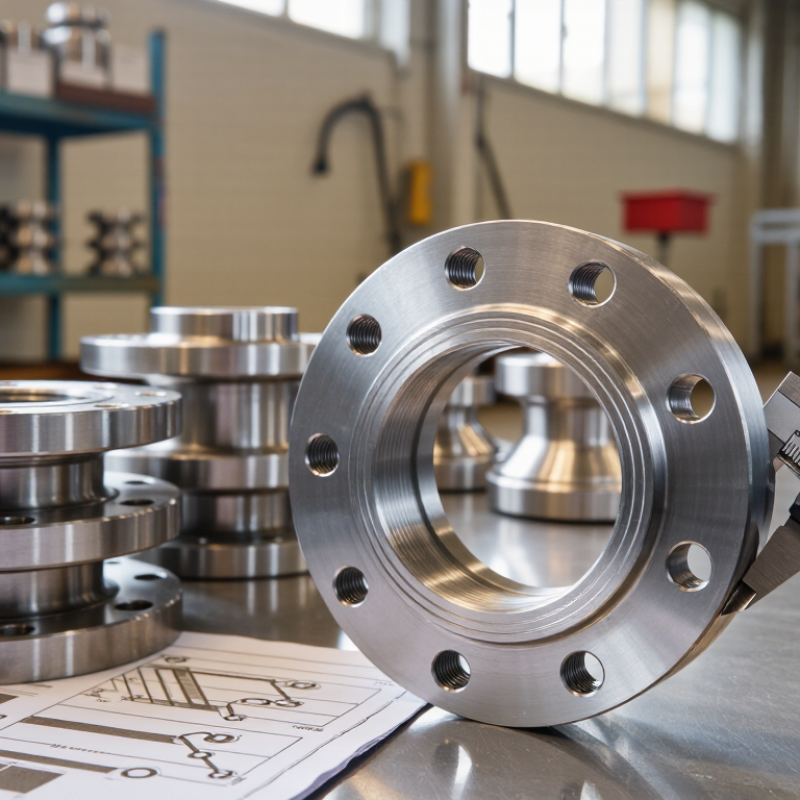
Socket weld flanges connect small-bore pipes by inserting the pipe into a machined socket. A fillet weld secures the joint externally. Raised-face designs suit many general process lines. Flat-face versions may protect softer gasket materials and matching equipment. Ring-type joint faces serve higher-pressure, higher-temperature duties, but require accurate machining and suitable metal rings.
Standards define more than flange shape. ASME B16.5 covers common sizes, pressure classes, dimensions, and facing details. ASME B16.47 applies to larger nominal diameters. EN 1092-1 may be required for European systems. Confirm the governing code before comparing quotations.
Material grades should match temperature, pressure, corrosion exposure, and fluid chemistry. Check the flange bore against the pipe schedule. A small mismatch can create poor weld access or unwanted turbulence.
Application requirements should guide supplier evaluation. Request heat numbers, material test certificates, dimensional reports, and pressure-test records. For critical service, ask about welding procedures, non-destructive examination, surface protection, and traceability from billet to shipment.
Factory audits can reveal weak inspection habits that certificates do not show. I have seen purchasing teams focus on price and overlook face damage during packing. That mistake is costly. A clean machined face, protective cover, clear marking, and moisture-resistant packaging matter. Perfect documentation is uncommon, so review every tolerance and exception instead of trusting a polished quotation.
How to Choose China Top Socket Weld Flanges?
A reliable socket weld flange starts with verified material grades. Request the mill test certificate before reviewing the price. Check the stated grade, heat number, chemical composition, tensile strength, and yield strength. ASTM A182 covers forged stainless steel and alloy steel flanges. Compare the certificate with the purchase specification. Positive material identification can catch mixed materials at the workshop.
Do not treat pressure class as a simple strength label. ASME B16.5 provides pressure-temperature ratings for socket weld flanges from NPS 1/2 through NPS 24. Class 150, 300, and 600 may look similar, but their allowable pressures change with temperature and material group. A Class 300 flange is not automatically safer in every service. Check the exact rating table. Small details matter.
Size verification should include nominal bore, outside diameter, bolt-hole spacing, and socket depth. Measure the mating pipe, not only the catalog drawing. Temperature limits also depend on alloy, gasket, bolts, corrosion, and thermal cycling. ISO 15156 is relevant for sour-service material selection. It should not replace project-specific engineering review. A certificate may be correct, yet the order can still fail through a wrong schedule or facing. That mistake is surprisingly common. Recheck it.
| Verification Dimension | Recommended Requirement or Data | What to Check Before Purchase |
|---|---|---|
| Applicable Product Standard | ASME B16.5 for pipe flanges and flanged fittings up to NPS 24; MSS SP-44 may apply to larger pipeline flanges. Socket-weld dimensions, facing, drilling, and tolerances must match the specified standard. | Confirm the standard edition, nominal pipe size, pressure class, flange facing, bolt-hole pattern, bore, and material specification on the drawing and inspection documents. |
| Carbon Steel Material | ASTM A105/A105M forged carbon steel; commonly used for water, oil, gas, and general industrial service within its applicable code limits. | Check heat number, chemical composition, tensile and yield strength, hardness, impact requirements, and whether normalized or heat-treated condition is required. |
| Austenitic Stainless Steel Materials | ASTM A182 F304/F304L for general corrosion resistance; ASTM A182 F316/F316L for improved resistance to chlorides and many chemical environments. “L” grades help reduce sensitization risk after welding. | Verify the exact grade, carbon limit for “L” material, solution annealing, corrosion environment, and compatibility with the connected pipe and weld procedure. |
| Alloy Steel Materials | ASTM A182 F11 and F22 are chromium-molybdenum forged alloy steels commonly selected for elevated-temperature and power-service applications. | Confirm heat treatment, hardness, post-weld heat treatment, impact testing, and compliance with the applicable high-temperature design code. |
| Pressure Classes | ASME B16.5 classes include 150, 300, 600, 900, 1500, and 2500. Class numbers are designations, not direct pressure values in bar or psi. | Select the class from the system design pressure, design temperature, material group, and code rating table. Never select a class from pressure alone. |
| Approximate Carbon-Steel Ratings at 38°C | Typical ASME B16.5 Group 1.1 values: Class 150 ≈ 19.6 bar; Class 300 ≈ 51.1 bar; Class 600 ≈ 102.1 bar; Class 900 ≈ 153.2 bar; Class 1500 ≈ 255.3 bar; Class 2500 ≈ 425.5 bar. | These are reference values at approximately 38°C for a representative carbon-steel material group. Use the complete ASME pressure-temperature table for the actual grade and temperature. |
| Approximate Austenitic Stainless Ratings at 38°C | Typical ASME B16.5 Group 2.2 values: Class 150 ≈ 16.3 bar; Class 300 ≈ 42.1 bar; Class 600 ≈ 84.1 bar; Class 900 ≈ 126.5 bar; Class 1500 ≈ 210.5 bar; Class 2500 ≈ 350.8 bar. | Do not assume stainless steel has the same pressure rating as carbon steel. Confirm the applicable material group and pressure-temperature table. |
| Nominal Pipe Size | ASME B16.5 covers NPS 1/2 through 24. Socket-weld flanges are most frequently used on smaller bore piping, where the pipe fits into the flange socket. | Match NPS and pipe schedule. Check socket bore depth, internal shoulder, outside diameter, flange thickness, and alignment with the mating flange. |
| Socket-Weld Connection Detail | The pipe is inserted into the flange socket and fillet-welded around the outside. A small internal expansion gap is normally required before welding, according to the applicable fabrication procedure. | Verify welding procedure qualification, root clearance, welder qualification, dimensional fit-up, weld inspection, and any post-weld heat-treatment requirements. |
| Facing Type | Common options include raised face (RF), flat face (FF), and ring-type joint (RTJ), subject to size and pressure class availability. | The gasket type, facing finish, facing dimensions, and mating flange must be compatible. RTJ flanges require the correct groove and ring number. |
| Temperature Limits | Temperature limits depend on material grade, pressure class, corrosion allowance, fluid, and design code. Carbon steel is generally unsuitable for very low-temperature service unless impact-qualified; stainless steels are often selected for cryogenic service when properly specified. | Use the ASME B16.5 pressure-temperature rating at the actual design temperature. Check minimum design metal temperature, impact testing, thermal cycling, oxidation, creep, and corrosion effects. |
| Dimensional and Surface Inspection | Inspection should cover outside diameter, bore, thickness, bolt-hole diameter and spacing, facing finish, flange flatness, socket dimensions, markings, and surface condition. | Request dimensional inspection records, material test reports, heat-treatment records, marking verification, and non-destructive examination results when required by the purchase specification. |
| Final Selection Checklist | A complete specification should state: standard, NPS, schedule, material grade, pressure class, facing, bore, temperature, fluid, corrosion requirements, inspection level, and quantity. | Approve the flange only after the drawing, material certificate, pressure-temperature rating, dimensions, weld requirements, and inspection documents agree with the piping design. |
Note: Pressure values shown are approximate reference values at about 38°C. Final allowable pressure and temperature must be determined from the applicable ASME pressure-temperature tables, material group, design code, and service conditions.
How to Choose China Top Socket Weld Flanges?
Choosing China top socket weld flanges starts with the manufacturer, not a glossy catalog. Ask how long they have produced forged flanges and which industries they regularly serve. A capable factory should explain forging temperatures, socket depth, bore dimensions, and pressure ratings clearly. Request recent production records and customer references for similar sizes. Vague answers matter. They can signal limited process control.
Check certifications against the exact product and production site. Common references include ASME B16.5, ASTM material requirements, and ISO 9001 quality systems. A certificate should show its scope, validity, issuing body, and applicable standards. Verify it independently when possible. For each flange, require a material test report with heat numbers, chemical composition, tensile results, and heat-treatment details. Third-party inspection can add confidence for critical piping. Paperwork is not performance.
Quality control should cover incoming steel, forging, machining, marking, and final packing. Ask for dimensional reports covering bolt holes, raised-face height, socket bore, and flange thickness. A practical supplier also performs visual checks, hardness testing, and PMI when specified. Experience shows small errors can cause alignment problems during welding. I once overlooked packaging quality; a clean flange still arrived with damaged faces. That mistake changed my checklist. Review nonconformance records, corrective actions, and production lead times before approving a supplier. Leave room for doubt.
A reliable socket weld flange usually begins with controlled forging, not decorative packaging. Compare the steel grade, forging temperature, heat treatment, and machining tolerances. Ask whether the supplier records each heat number from billet to finished flange. This traceability matters during installation and future inspection. Experienced manufacturers should explain socket depth, bore dimensions, raised-face accuracy, and applicable standards such as ASME B16.5 or EN 1092-1. Small dimensional errors can create serious fit-up problems.
Testing separates a capable factory from a promising quotation. Review material certificates, chemical analysis, tensile results, hardness readings, and dimensional reports. PMI testing can confirm alloy composition before shipment. Hydrostatic testing may apply to specific projects, but it is not automatically required for every flange. Ask for sample reports, inspection photographs, and calibration dates. I have seen attractive reports with unclear acceptance criteria. That deserves a second question.
Pricing should include material grade, pressure class, surface finish, inspection scope, packing, and delivery terms. The lowest offer is rarely the complete cost. Compare lead times for tooling, forging, machining, testing, and export preparation. Stock items may leave within days, while custom dimensions can require several weeks. Confirm production capacity in writing. A supplier promising everything immediately may be estimating too casually. Allow time for reinspection, because rushed acceptance can cost more than the original saving.
A reliable socket weld flange supplier should confirm customization before quoting. Share pipe size, pressure class, material grade, facing, bore, and service temperature. ASME B16.5 defines flange dimensions and pressure-temperature ratings, but project conditions still require engineering review. I always request a drawing approval. Small bore differences can affect fit-up and welding quality.
Documentation reveals process discipline. Request material test certificates, heat numbers, dimensional inspection records, and applicable EN 10204 3.1 certification. ASTM A182 covers forged stainless and alloy-steel flange materials. The ISO Survey reports more than 1.2 million ISO 9001 certificates worldwide, yet certification alone proves little. Check whether inspection records match each flange, not merely the supplier’s certificate. I have seen neat documents hide incomplete traceability. That remains a warning.
Packaging deserves specific instructions. Each flange should have protected sealing faces, moisture-resistant wrapping, clear labels, and separated batches. Wooden cases need suitable treatment for international transport. Ask for packing photos before shipment. After-sales support should define response time, replacement handling, technical clarification, and evidence requirements for claims. Keep communication in writing. Fast replies are useful, but practical resolution matters more. My checklist is not perfect; corrosion exposure, storage delays, or installation mistakes can still create disputes. A capable supplier will discuss these risks instead of promising zero problems.
Request the mill test certificate before comparing prices. Check the material grade, heat number, chemical composition, tensile strength, and yield strength. Paperwork is not performance. Use positive material identification when mixed materials are possible.
Match the pressure class with the operating temperature and material group. Class 150, 300, and 600 ratings can change significantly with temperature. Do not assume a higher class always suits every service. Check the exact pressure-temperature table.
Verify the nominal bore, outside diameter, bolt-hole spacing, socket depth, and flange thickness. Measure the mating pipe directly. Catalog drawings can miss project-specific details. A wrong schedule or facing may prevent proper fit-up.
Ask about forging experience, production records, and similar completed orders. The factory should explain forging temperatures, bore sizes, socket depth, and ratings clearly. Vague answers matter. Request recent customer references and nonconformance records.
Quality control should cover steel receipt, forging, machining, marking, and final packing. Request dimensional reports for bolt holes, raised-face height, socket bore, and thickness. Visual inspection, hardness testing, and material identification may also be useful. Small errors can create welding alignment problems.
Request material certificates, heat numbers, dimensional reports, and applicable inspection certificates. Records should match each flange, not only the supplier. Check the certificate scope, validity, issuing body, and referenced standards. Neat documents can still hide incomplete traceability.
Provide pipe size, pressure class, material grade, facing, bore, and service temperature. Request a drawing for approval before production. Small bore differences can affect fit-up and welding quality. Engineering review remains necessary for unusual conditions.
Sealing faces need protection, moisture-resistant wrapping, clear labels, and separated batches. Ask for packing photographs before shipment. After-sales terms should cover response time, replacements, technical questions, and claim evidence. My checklist is not perfect. Storage delays or installation mistakes can still cause disputes.
Choosing the right Socket Weld Flanges requires a systematic review of technical, quality, and service factors. Begin by identifying the appropriate flange type, applicable standards, connection method, and operating conditions. Verify the material grade, pressure class, size range, corrosion resistance, and temperature limits to ensure reliable performance in the intended piping system. These details should match the fluid characteristics, design pressure, and installation environment.
When evaluating Chinese manufacturers, consider their production experience, certifications, quality control procedures, and ability to provide consistent results. Compare forging and machining processes, dimensional inspections, material testing, pressure testing, pricing, and delivery schedules rather than focusing only on the lowest quotation. It is also important to confirm whether the supplier can support customized dimensions, marking, inspection reports, certificates, protective packaging, and clear after-sales communication. A complete evaluation helps buyers select Socket Weld Flanges that offer dependable safety, compatibility, traceability, and long-term value.