+86-350-6071768 [email protected] Dingxiang, Shanxi, China · Forging since 1992

How to Choose Carbon Steel Flange Specifications in 2026?

Time:2026-10-15 Author:Mason
0%

Choosing the right Carbon Steel Flange Specifications in 2026 requires more than comparing prices or nominal sizes. Flanges connect critical piping sections, and a small mismatch can cause leakage, vibration, or costly shutdowns. This guide explains how engineers and purchasing teams can evaluate pressure ratings, dimensions, materials, facing types, and applicable standards with greater confidence. Common references include ASME B16.5, ASME B16.47, EN 1092-1, ASTM A105, and ASTM A350 LF2. Each standard serves different equipment, pressure classes, temperature ranges, and regional requirements. The correct choice begins with the operating conditions, not the supplier’s catalog.

Details matter. A Class 300 flange may appear suitable, yet temperature can reduce its allowable pressure. A raised face can also require a different gasket and bolt arrangement. Consider the line size, design pressure, design temperature, fluid properties, corrosion exposure, welding method, and inspection requirements. Check them together. Do not rely on nominal pipe size alone. Experienced inspectors also verify heat numbers, material certificates, dimensional tolerances, and pressure-test records before installation. These documents help confirm traceability and reduce procurement risk.

No specification table can replace competent engineering judgment. Some recommendations remain too general because real projects involve unusual fluids, cyclic loading, low temperatures, or limited installation space. That limitation deserves attention. Readers should confirm the final selection with qualified engineers, the project code, and the flange manufacturer. In 2026, reliable decisions will combine current standards, practical field experience, documented testing, and honest review of uncertainty. Safety should lead the purchase. Cost follows.
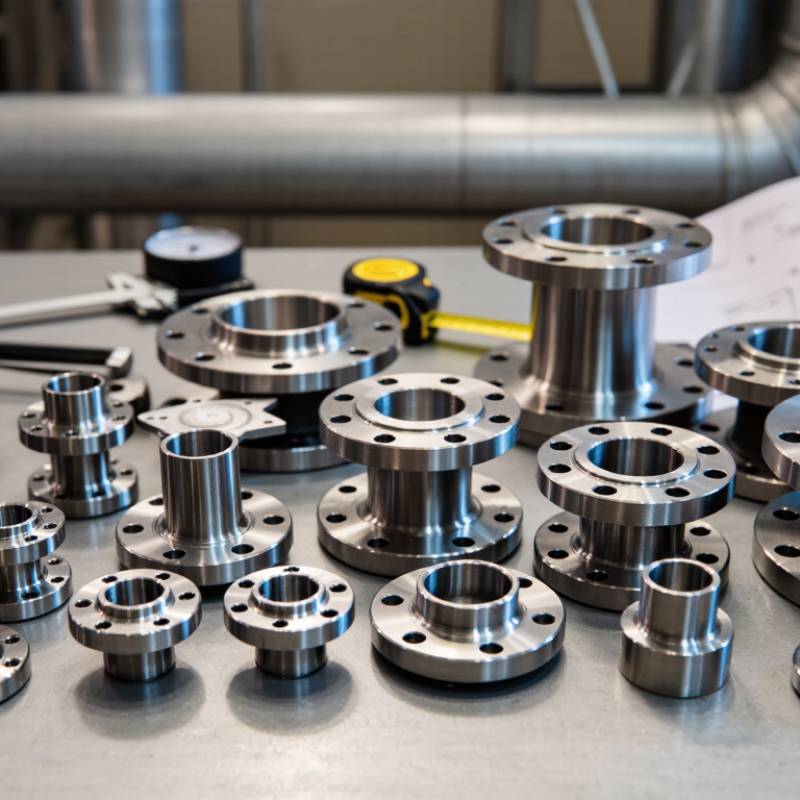
How to Choose Carbon Steel Flange Specifications in 2026?

Carbon Steel Flange Basics and Specification Terminology

How to Choose Carbon Steel Flange Specifications in 2026?

Carbon steel flange basics begin with the connection standard. ASME B16.5 covers many flanges from NPS 1/2 through NPS 24. ASME B16.47 addresses larger nominal sizes. In European projects, EN 1092-1 uses DN sizing and PN pressure ratings. DN and NPS are not interchangeable labels. Check the pipe outside diameter before ordering.

Pressure class describes design capability, not a simple pressure number. Class 150, 300, and 600 change with temperature and material group. A raised face suits many general piping systems. A flat face may protect softer equipment flanges. Ring-type joint faces support demanding high-pressure service. The gasket, bolt pattern, bore, and facing must match together. One wrong detail can stop field assembly.

Material terminology also matters. ASTM A105 commonly identifies forged carbon steel flanges, while A350 LF2 supports low-temperature service. Review chemistry, tensile strength, impact testing, and heat treatment records. The 2025 World Steel Association report recorded about 1.84 billion tonnes of crude steel production in 2024. That scale does not guarantee flange quality. Traceability still depends on heat numbers and inspection documents. I have seen neat specification tables hide mismatched bores. That mistake deserves a second review. Temperature, corrosion allowance, welding procedure, and local code requirements should remain visible before approval.

How to Choose Carbon Steel Flange Specifications in 2026?

Carbon Steel Flange Basics and Specification Terminology

The chart shows common PN nominal pressure designations used for flange selection under EN 1092-1. The PN number represents a nominal pressure class in bar, not a guaranteed operating pressure. The allowable pressure of a carbon steel flange depends on the flange standard, material grade, operating temperature, gasket, bolts, corrosion allowance, and applicable design code. Always verify the pressure-temperature rating and dimensional requirements before specifying the flange.

How Pressure Classes and Dimensions Affect Flange Selection

How to Choose Carbon Steel Flange Specifications in 2026?

Pressure class is not simply a pressure limit. Class 150, 300, and 600 ratings change with temperature, material group, and flange design. ASME B16.5 pressure-temperature tables show that allowable pressure decreases as operating temperature rises. A Class 300 flange may therefore outperform Class 150 at moderate temperatures, but it is not automatically suitable for every service. Check the selected carbon steel grade and gasket compatibility.

Dimensions also control installation reliability. ASME B16.5 dimensional tables list different outside diameters, bolt circles, bolt counts, and thicknesses for each class. For example, a 2-inch Class 150 flange commonly uses a 6-inch outside diameter and four bolts. The same nominal size in Class 300 commonly uses a 6.5-inch outside diameter and eight bolts. Small dimensional differences can stop a connection from aligning. They can also create uneven gasket compression.

Field experience suggests checking the mating flange before ordering. Pipe schedules, facing types, bore dimensions, and bolt lengths are easy to overlook. I have seen apparently correct selections fail during fit-up because the bore did not match the pipe wall. That shortcut is tempting, but not defensible. The 2024 World Steel Association report recorded about 1.89 billion tonnes of crude steel production in 2023, yet availability does not guarantee the correct certified grade. Review mill certificates, design temperature, corrosion allowance, and the governing standard. One detail may still be missing.

Choosing Flange Materials for Temperature and Corrosion Conditions

Choosing carbon steel flange specifications in 2026 starts with the service environment, not the catalog. Temperature changes strength, toughness, and gasket performance. At elevated temperatures, verify allowable stress through the applicable pressure standard. For cold service, confirm impact toughness at the minimum design temperature. A flange that fits perfectly can still fail in winter. This risk is often overlooked.

Tips: Record design temperature, pressure, fluid chemistry, and cycling frequency. Check chloride, moisture, sulfur, and acidic exposure. Select a compatible carbon steel grade and include a realistic corrosion allowance. Use pressure-temperature tables from the governing standard, such as ASME B16.5 or EN 1092-1. Do not treat paint as a complete corrosion solution. Inspect faces, bolts, and gasket seating before installation.

Field experience shows that flange failures often begin near gasket edges or bolt threads. Match the facing and gasket to the fluid and temperature range. For wet or corrosive systems, consider lining, isolation, or a corrosion-resistant alloy after engineering review. Welding procedures and heat treatment may affect final performance. Recheck the selection when process conditions change. My practical mistake was trusting nominal size too much. Material compatibility deserved equal attention. Ask a qualified engineer to verify uncertain cases against current codes and site data.

How to Choose Carbon Steel Flange Specifications in 2026? - Choosing Flange Materials for Temperature and Corrosion Conditions

Service Condition Recommended Carbon Steel Material Applicable Material Standard Typical Temperature Guidance Corrosion Considerations Preferred Flange Class or Rating Selection Notes
Ambient-temperature water, air, and general process piping ASTM A105/A105M forged carbon steel ASTM A105/A105M; ASME B16.5 or ASME B16.47 for dimensions Commonly selected for approximately −29 to 300 °C service, subject to the applicable pressure-temperature tables and design code Suitable for relatively non-corrosive fluids; provide coating, lining, corrosion allowance, or upgraded material for wet CO₂, chlorides, acids, or oxygenated water ASME Class 150 or Class 300 for many utility systems Confirm allowable pressure at the actual design temperature rather than using the room-temperature class value
Low-temperature hydrocarbon, gas, and outdoor piping ASTM A350 LF2 forged carbon steel ASTM A350/A350M LF2; ASME B16.5 or ASME B16.47 Suitable where impact toughness is required at low temperature; LF2 is commonly specified for design temperatures down to about −46 °C when the required testing and code conditions are met Material improves low-temperature toughness, but it does not by itself prevent corrosion; assess water, H₂S, CO₂, and chloride exposure separately Class 150–600, selected according to design pressure, temperature, and piping flexibility Review Charpy impact requirements, minimum design metal temperature, heat treatment, and supplementary testing
High-pressure transmission, pipeline, and gas-processing service ASTM A694 F42, F52, F60, or F65 forged carbon steel ASTM A694/A694M; ASME B16.5 or ASME B16.47 Temperature limits depend on grade, heat treatment, toughness, and the governing piping code; verify the material group and allowable stress at design temperature High strength does not equal high corrosion resistance; evaluate sour-service requirements, internal corrosion, erosion, and external atmospheric corrosion Class 300, 600, 900, or higher where required by the design pressure Match the flange grade to the pipe grade, welding procedure, bolt strength, gasket design, and pipeline specification
Moderate-temperature steam, hot oil, and refinery process lines ASTM A105/A105M forged carbon steel, where permitted by the code ASTM A105/A105M; ASME B16.5 pressure-temperature ratings Often used at elevated temperatures up to approximately 400 °C, subject to the specific material group, pressure class, oxidation limits, and code requirements Consider high-temperature oxidation, thermal cycling, wet steam, sulfide corrosion, and corrosion under insulation Class 300 or Class 600 is common; higher classes may be required for pressure or thermal conditions Check gasket temperature capability, bolt relaxation, flange rotation, and thermal expansion in addition to flange pressure rating
Sour gas or sour crude containing hydrogen sulfide A105 or A350 LF2 only when qualified for sour service; select controlled-hardness material as required ASTM A105/A350; NACE MR0175/ISO 15156 where applicable Use the approved operating temperature range for the selected grade, hardness, environment, and NACE compliance condition Risk of sulfide stress cracking, hydrogen-induced cracking, and stepwise cracking; hardness control and material qualification are critical Select Class 150–600 or higher based on design pressure and sour-service specification Do not select solely by tensile strength; verify hardness, heat treatment, chemistry, impact testing, and purchaser-specific NACE requirements
Seawater, brine, chloride-rich water, or acidic process fluid Carbon steel only with a qualified corrosion-control system; consider corrosion-resistant alloy or lined flange when required ASTM A105/A350 with project-specific lining, coating, cladding, or corrosion allowance Temperature selection is governed by the base material, lining or coating limit, gasket, and actual chemical environment Carbon steel is vulnerable to general corrosion, pitting, crevice corrosion, and galvanic attack in chloride environments Use the lowest practical class that satisfies pressure and leakage requirements; rating does not compensate for corrosion loss Obtain corrosion-rate data, define minimum wall thickness, and verify compatibility of bolts, gasket, coating, and flange facing
Large-diameter process or utility piping ASTM A105/A105M or an approved carbon-steel plate/forging grade according to the selected standard ASME B16.47 Series A or Series B; material requirements must be checked separately Use the pressure-temperature rating tables applicable to the selected material group and flange series Large exposed surfaces may require external coating, insulation protection, drainage, and a defined corrosion allowance ASME B16.47 generally covers NPS 26 through NPS 60; pressure classes commonly include 150, 300, 400, 600, 900, and 1500 depending on series and size Confirm bolt-circle diameter, outside diameter, bore, facing, series, and compatibility with the mating flange before ordering
European-design piping systems Carbon steel grade specified by the project and compatible with EN material requirements EN 1092-1; pressure designation PN 6, PN 10, PN 16, PN 25, PN 40, PN 63, PN 100, PN 160, or PN 250/PN 400 where applicable The allowable pressure decreases as temperature increases; use the EN material and temperature tables rather than treating PN as a constant pressure Specify coating, corrosion allowance, gasket material, and facing finish according to the fluid and service environment Select the required PN designation and flange type, such as plate flange, welding-neck flange, blind flange, or loose flange Do not mix ASME Class and EN PN components without checking dimensions, bolt patterns, facing compatibility, and pressure-temperature limits
Engineering note: Final flange selection must be verified against the governing piping code, design pressure, design temperature, minimum design metal temperature, fluid chemistry, corrosion allowance, gasket, bolts, flange facing, welding procedure, and applicable inspection requirements. ASME Class and EN PN values are not directly interchangeable.

Matching Flange Types to Piping Systems and Connection Methods

How to Choose Carbon Steel Flange Specifications in 2026?

Choosing a carbon steel flange starts with the piping system, not the flange catalog. Check pressure, temperature, fluid properties, pipe diameter, and corrosion conditions. Then confirm the required rating under the applicable piping standard. A flange that fits physically may still fail under thermal cycling or pressure surges.

Match the connection method to installation demands. Weld neck flanges suit high-pressure lines, frequent temperature changes, and strong alignment requirements. Slip-on flanges can support moderate-pressure services and simpler fabrication, but their welds need careful inspection. Socket weld flanges work well on smaller bore piping. Threaded flanges avoid welding, yet vibration and leakage risks require closer evaluation.

Some systems need flexibility. Lap joint flanges support repeated dismantling and alignment, especially with loose stub ends. Blind flanges safely close valves, vessel nozzles, or future branches. Gasket selection must match the medium, temperature, flange face, and bolt load. Raised-face, flat-face, and ring-type connections are not interchangeable in every application.

Small details matter. Verify bore dimensions, bolt-hole patterns, facing finish, and material certificates. Field conditions can change the best choice. Space limits may favor a compact connection, while maintenance access may demand extra clearance. No selection is perfect. A lower-cost flange can create higher inspection and maintenance costs later. Review calculations, drawings, and site feedback before approval.

Verifying Standards, Testing Requirements, and Supplier Documentation

How to Choose Carbon Steel Flange Specifications in 2026?

Specification starts with service conditions, not a catalog number. Match pressure-temperature ratings to ASME B16.5 for NPS 1/2–24, or ASME B16.47 for NPS 26–60. Confirm facing, bore, wall transition, bolt dimensions, and corrosion allowance. ASTM A105 identifies forged carbon steel, but it does not prove suitability for every low-temperature or sour-service application. Require the project material specification to define chemistry, tensile strength, yield strength, elongation, hardness, and impact testing where required.

Testing must follow the governing code and purchase order. Ask for heat numbers linking the flange, test report, and packing label. EN 10204 Type 3.1 documentation should identify the supplier’s test results; independent 3.2 certification may be justified for safety-critical service. Verify calibration certificates for hardness and dimensional equipment. Pressure testing usually belongs to the completed piping system, not a casual flange-only test. That distinction matters.

Supplier paperwork deserves a line-by-line review. The World Steel Association reported approximately 1.883 billion tonnes of crude steel production in 2024, highlighting the scale of global material movement. The IEA’s World Energy Investment 2024 report estimated global energy investment above 3 trillion dollars. Traceability is not optional. A certificate can still be wrong. Check revision dates, heat chemistry, standard editions, and authorized signatures. Record every deviation, including a harmless-looking bore mismatch. Perfect assumptions fail in the field.

FAQS

What information should be checked before ordering a carbon steel flange?

Confirm the connection standard, nominal size, pressure class, facing, bore, gasket, and bolt pattern. Check the pipe outside diameter. DN and NPS labels are not interchangeable. A catalog match can still be wrong.

How does pressure class affect flange selection?

Pressure class describes design capability, not one fixed pressure limit. Allowable pressure changes with temperature, material group, and flange design. Higher class is not automatically better. Use the applicable pressure-temperature table.

Why are flange dimensions important during installation?

Outside diameter, bolt-circle size, bolt count, and thickness vary by pressure class. A two-inch connection may use different bolt patterns across classes. Small differences can prevent alignment. Check the mating flange.

Which flange facing should be selected?

Raised faces suit many general piping systems. Flat faces can protect softer equipment flanges. Ring-type joint faces support demanding high-pressure service. The gasket must match the facing.

How should carbon steel flange material be selected?

Review the grade, chemical composition, tensile strength, impact testing, and heat-treatment records. Forged carbon steel grades may suit ordinary service. Low-temperature grades need verified impact toughness. Cold service matters.

What environmental conditions affect flange performance?

Record design temperature, pressure, fluid chemistry, and operating cycles. Check moisture, chlorides, sulfur, acidic exposure, and expected corrosion. Include a realistic corrosion allowance. Paint alone is not enough.

Why can a flange fail even when its size appears correct?

A mismatched bore may interfere with the pipe wall or create poor flow conditions. Incorrect bolt length can reduce tightening reliability. Uneven gasket compression may cause leakage. Check the bore and threads.

What documents help verify flange quality?

Review material certificates, heat numbers, inspection records, and applicable code requirements. Steel availability does not prove the correct certified grade. Traceability matters. I once trusted nominal size too much. That shortcut needs a second review.

Conclusion

Choosing Carbon Steel Flange Specifications in 2026 requires more than comparing size and price. This guide explains essential terminology, including nominal pipe size, pressure class, flange facing, bore, and dimensional standards. It shows how pressure ratings, operating temperature, fluid conditions, and piping dimensions influence the selection of weld neck, slip-on, blind, threaded, and socket weld flanges. Special attention is given to material grades and protective considerations for high-temperature service, moisture, chemicals, and corrosive environments.

The article also outlines how to match flange types with piping layouts and connection methods to support safe, reliable installation and maintenance. Before finalizing an order, buyers should verify applicable standards, pressure and temperature ratings, testing requirements, heat treatment records, material certificates, inspection reports, and traceability documents. A careful review of supplier documentation helps confirm that the selected Carbon Steel Flange Specifications meet project requirements, provide dependable service, and remain suitable for changing industrial conditions in 2026.

Mason

Mason

Mason is a seasoned marketing professional with a deep expertise in the company's offerings and a passion for driving brand awareness. With a strong background in digital marketing strategies, he has an innate ability to connect with diverse audiences and effectively communicate product benefits.......