Choosing the right Flange Packing Material is not a box-ticking exercise. It is a decision about the fluid, temperature, pressure, flange condition, and maintenance plan working together. A sheet that seals reliably on a cool water line may fail when exposed to hot oil or repeated thermal cycling. Even a small scratch across a flange face can change the result.
For this introduction, the following is an original illustrative quote, not a verified statement from a named industry expert: “A good packing choice starts with the service conditions, then checks whether the flange can support a dependable seal.” It reflects a practical point: material selection cannot compensate for poor alignment, damaged surfaces, or incorrect installation. The right answer is rarely found by comparing product names alone.
This guide explains how to weigh common options, including compressed non-asbestos sheet, graphite, PTFE, and elastomer-based materials. It will also consider chemical compatibility, operating limits, bolt loading, and the condition of the joint. Look closely at the details: a process-fluid specification, a temperature spike during startup, or an uneven flange face can all matter. And sometimes the available data is incomplete. That uncertainty deserves a closer check, not a confident guess. By matching material properties to real operating conditions, engineers and maintenance teams can make a more defensible selection and reduce the risk of leaks, rework, and premature failure.
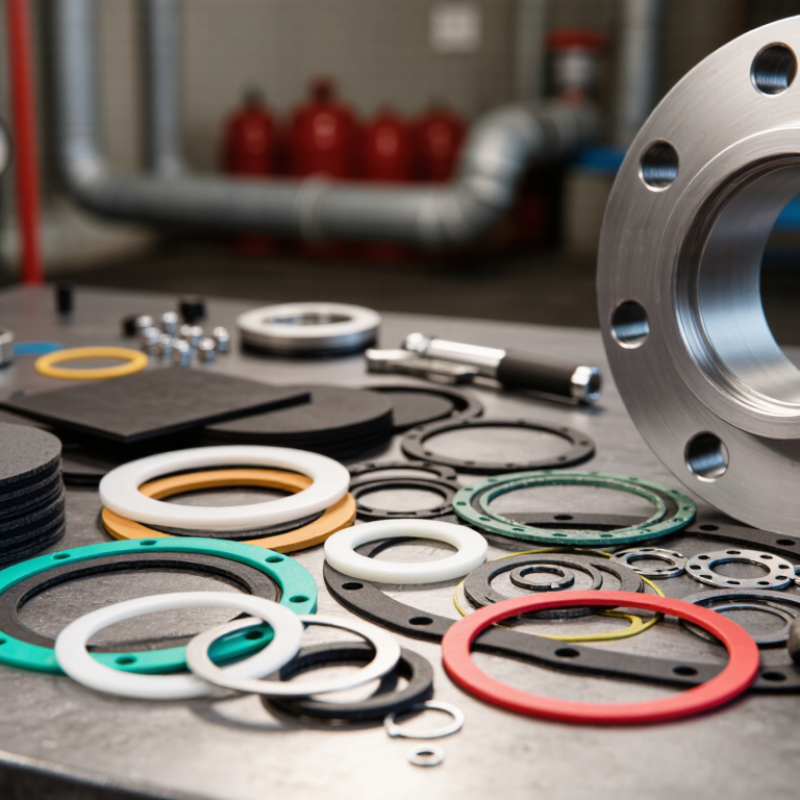
Identify the Flange Joint’s Operating Conditions
Before choosing a flange packing material, record what the joint actually experiences—not only its design limits. Note normal and peak pressure, operating temperature, and any rapid changes during startup or shutdown. A line that heats slowly behaves differently from one that cycles sharply. Small details matter. Check the fluid’s composition, concentration, and physical state, including traces of cleaning chemicals or abrasive particles. These can change how a sealing material performs over time.
Look at the joint itself, too. Is the flange face clean, flat, and properly aligned? Record its surface condition, the available bolt load, and whether vibration or pipe movement may loosen the seal. A strong material cannot compensate for uneven compression. Not just peak values. Ask operators and maintenance staff about leaks, retightening, and unusual temperature swings; their records may reveal conditions missing from the drawings. Real equipment is rarely that tidy. Where information is uncertain, verify it before specifying a material, and have a qualified engineer review the selection for the service conditions.
| Operating Condition | Typical Service | Material to Consider | Why It May Fit | Checks Before Selection |
|---|---|---|---|---|
| Moderate temperature, water or steam | Water lines, low-pressure steam, general utility piping | Compressed non-asbestos fiber (CNAF) | Available in grades formulated for common industrial fluids and moderate service conditions. | Confirm the specific grade’s temperature, pressure, and fluid-compatibility ratings; check flange surface condition and bolt loading. |
| Hot service in a non-oxidizing or controlled atmosphere | Steam, hot oil, and many hydrocarbon services | Flexible graphite sheet | Handles high temperatures in suitable service and can conform well to flange surfaces. | Check oxidation limits, reinforcement requirements, fluid compatibility, and the manufacturer’s pressure-temperature data. |
| Broad chemical compatibility needed | Many acids, alkalis, solvents, and process chemicals | Expanded PTFE (ePTFE) or PTFE sheet | PTFE is resistant to a wide range of chemicals and is often considered for corrosive services. | Verify compatibility with the exact chemical, concentration, and temperature. Consider creep, cold flow, flange loading, and pressure limits. |
| Oils, fuels, or hydrocarbon fluids at moderate temperatures | Lubricating oil, fuel, and selected hydrocarbon lines | Nitrile rubber (NBR) or an NBR-based gasket material | NBR can provide good resistance to many oils and fuels when used within its service range. | Check the exact fluid blend, temperature, additives, and pressure. NBR is not suitable for every chemical or high-temperature duty. |
| Water service, weather exposure, or some dilute chemicals | Cooling water, outdoor piping, and selected aqueous services | EPDM or an EPDM-based gasket material | EPDM is commonly used for water and weathering resistance and can suit some dilute aqueous chemicals. | Avoid assuming compatibility with petroleum oils or fuels. Confirm temperature, concentration, and pressure limits for the grade. |
| High pressure, temperature cycling, or demanding process duty | Process piping, steam systems, and services with changing loads | Spiral-wound gasket with a suitable winding and filler | The metal winding provides resilience; filler selection can be matched to the fluid and temperature range. | Match gasket construction to flange type and facing, pressure class, bolt load, and service fluid. Use the specified centering or inner ring where required. |
| Very high temperature or severe mechanical duty | Selected high-temperature process and equipment joints | Metal-jacketed or solid-metal gasket | Metal constructions can withstand demanding conditions when the flange design and installation provide the required seating stress. | Confirm flange finish, hardness, alignment, bolt load, and whether the joint can safely apply the seating stress needed for the gasket. |
Selection note: These are starting points, not universal limits. Final selection should account for maximum and minimum temperature, operating and design pressure, fluid composition, flange type and surface finish, bolt load, and start-up or cycling conditions. Use the gasket manufacturer’s data and applicable piping standards for the exact grade and joint.
PTFE often handles corrosive fluids and supports clean service. Check the exact chemical, concentration, and temperature before selection.
Flexible graphite can suit hotter applications, with screening limits near 450°C in oxidizing conditions. Oxygen exposure can reduce that margin.
No. It can creep under continuous compression. Pressure, heat, and bolt load may gradually weaken the seal.
It suits many water, oil, and moderate-temperature duties. It is practical to handle, but heat cycling may cause relaxation.
Metal windings and soft filler can manage temperature and pressure changes. Correct assembly remains essential. The design cannot fix poor tightening.
Record temperature peaks, pressure, fluid, cleaning chemicals, and cycling conditions. Startup temperatures matter. Small details can change compatibility.
Scratches, corrosion, and uneven alignment can prevent sealing. Inspect the faces carefully, like checking a damaged door frame before closing it.
Compressibility, recovery, fluid-exposure, leakage, and emission tests provide useful evidence. No single score predicts every joint.
No. Flange finish, oxygen, pressure, bolt load, and repeated cycling also matter. A data sheet is only a starting point.
Recheck material compatibility, compression, bolt stress, flange condition, and process changes. I would revisit older specifications, even if they still match the drawing.
Choosing the right Flange Packing Material begins with a clear understanding of the flange joint’s operating conditions. Evaluate temperature, pressure, fluid type, chemical exposure, vibration, movement, and the frequency of maintenance. These factors help determine whether a material such as compressed fiber, graphite, PTFE, rubber, or metal-based packing is suitable for the application. Each option offers different advantages in sealing performance, flexibility, chemical resistance, temperature tolerance, and durability.
The final selection should match the material’s properties to the service requirements while also considering compatibility with the flange surfaces, ease of installation, compression behavior, and expected service life. Proper storage, surface preparation, bolt tightening, and inspection are equally important for reliable performance. Before installation, verify that the chosen Flange Packing Material complies with applicable industry standards, equipment specifications, pressure and temperature limits, and relevant safety requirements. A careful, condition-based selection process can reduce leakage, prevent premature failure, and improve the overall reliability of the flange connection.

