Choosing the right Pipe Flange Gasket Material can prevent leaks, production delays, and costly maintenance. For global buyers, China offers a broad manufacturing base, from graphite and PTFE to rubber, aramid fiber, and spiral-wound designs. Each option responds differently to pressure, temperature, chemicals, flange surfaces, and installation practices.
This guide examines ten widely used materials supplied by Chinese manufacturers. It focuses on practical selection points, including sealing performance, dimensional consistency, temperature resistance, material certificates, and quality-control experience. A reliable supplier should explain test methods, provide clear specifications, and match the gasket with the intended service conditions. Ask for samples when the application is demanding.
Small details matter.
A gasket may appear suitable in a catalog but fail after thermal cycling or uneven bolt tightening. Experienced purchasing teams should review standards, inspection records, batch traceability, and technical support before placing large orders. Material compatibility must be confirmed with the actual medium, not guessed from a familiar product name.
No ranking is universal. Some materials perform well in clean water systems but struggle with aggressive chemicals. Others tolerate high temperatures yet require careful flange preparation. Even experienced buyers can overlook compression behavior or storage conditions. This overview offers a practical starting point, not a substitute for engineering validation. By comparing the top ten Pipe Flange Gasket Material choices carefully, international buyers can reduce uncertainty and build more dependable sourcing decisions.
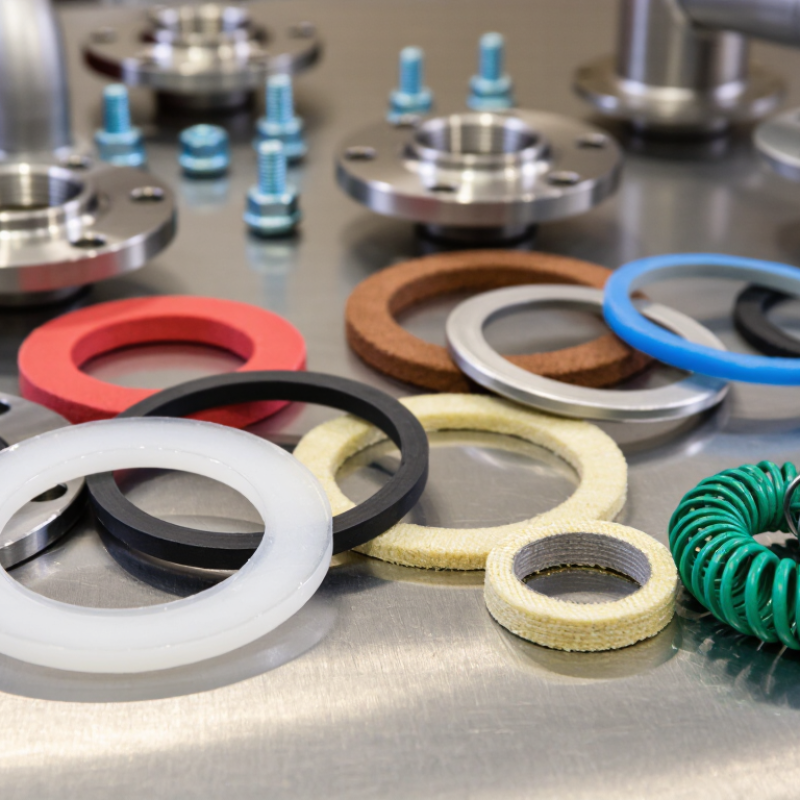
Pipe flange gasket materials are sealing barriers placed between two flanges. They prevent fluid, gas, or steam from escaping through microscopic surface gaps. Common choices include graphite, PTFE, aramid fiber, rubber, mica, ceramic, cork, copper, stainless steel, and nickel alloys.
Material selection matters because temperature, pressure, fluid chemistry, and flange movement interact. Graphite tolerates high heat, while PTFE handles many aggressive chemicals. Elastomers suit lower-temperature water systems but may swell in oils or solvents. ASME B16.20 and ASME B16.21 define important dimensional and construction requirements for metallic and nonmetallic gaskets. ASTM F37 also helps evaluate sealing performance through leakage testing. Grand View Research estimated the global industrial gasket market at about USD 13.3 billion in 2022, with projected growth near 5.1% annually through 2030. That growth reflects expanding maintenance needs, not merely new pipe construction.
In field inspections, I often see buyers choose by price alone. That shortcut is tempting. It can create premature leakage. A harder question is often missed: will the gasket remain stable after repeated heating, cooling, and bolt-load changes? I have also seen specifications copied without checking the actual fluid concentration. That needs reflection.
Tips: Match the gasket material with the fluid, temperature, pressure, and flange surface. Check the manufacturer’s test data, but verify it against ASME and ASTM requirements. Record bolt torque and flange condition during installation. A cheap gasket is expensive when access requires shutdown work.
When comparing China’s top ten gasket materials, start with service conditions, not price.
Record the medium, pressure, temperature, flange type, and bolt load. This prevents a common buying mistake: choosing a gasket from a catalog image alone.
Graphite suits high temperatures and steam, while PTFE offers strong chemical resistance. Expanded PTFE handles uneven flange surfaces more forgivingly. Compressed non-asbestos fiber works well for general water, oil, and air service. Aramid fiber can improve mechanical strength, but its limits still require verification.
Rubber materials need closer selection. EPDM is useful for hot water and some mild chemicals, while NBR generally suits oils and fuels.
Spiral-wound metal gaskets provide resilience under pressure and temperature changes. Ring-type metal joints demand accurate grooves, hardness control, and careful installation. Copper gaskets can seal certain heat-transfer and pressure applications, but they are not universal solutions. Flexible graphite and other metal-supported designs may perform differently despite similar labels.
Ask suppliers for material composition, dimensional tolerances, temperature ranges, pressure guidance, and test records. Check whether production follows recognized flange and gasket standards.
Request lot traceability and inspect samples before approving a shipment. In practical sourcing, compression, recovery, surface finish, and bolt tightening often matter as much as the material name.
A ranking can mislead. I have seen a chemically resistant gasket fail because the flange was misaligned. I have also underestimated installation training. Supplier claims need independent review, especially when data sheets leave gaps.
Key Properties of the Ten Leading Gasket Materials
Pipe flange selection depends on temperature, pressure, media, and bolt load. ASME PCC-1-2022 stresses controlled assembly because poor tightening can defeat a suitable gasket. ASTM F37/F37M evaluates leakage performance under compression. Its test results are commonly reported in micromoles per second. These figures help buyers compare sealing reliability.
Compressed non-asbestos fiber offers balanced strength for water, oil, and moderate heat. Graphite handles high temperatures and shows strong chemical resistance, but oxidation can limit service. PTFE provides excellent chemical resistance and low friction. Expanded PTFE adapts well to uneven flange faces. Aramid fiber improves toughness and blowout resistance. Rubber gaskets seal effectively at low pressure, especially with water systems, but temperature limits vary.
Spiral-wound gaskets combine metal windings with graphite or PTFE fillers. They tolerate thermal cycling when properly compressed. Metal-jacketed gaskets resist crushing and suit heat exchangers. Ring-type metal gaskets deliver dependable high-pressure sealing, although flange grooves require careful inspection. Mica withstands intense heat and resists flame exposure. Ceramic fiber also performs at extreme temperatures, but it may lack flexibility during installation.
EN 13555 test reports use parameters such as Qmin, Qsmin, and PQR to describe sealing and recovery behavior. Values differ with thickness, surface finish, and testing conditions. That detail matters. A material chart alone can mislead. In field inspections, damaged flange faces and uneven bolt loads remain frequent causes of leakage. This is where buyers should pause: laboratory performance is useful, but actual assembly quality still decides the result.
Key Properties of the Ten Leading Gasket Materials
The chart compares indicative maximum continuous service temperatures for ten widely used pipe flange gasket materials. Actual limits depend on pressure, chemical media, flange condition, gasket construction, and the specific material grade. PTFE provides excellent chemical resistance, graphite and mica perform well at elevated temperatures, while copper and compressed fiber materials are selected according to load, sealing behavior, and operating environment.
Gasket selection should follow the fluid, temperature, pressure, and flange condition. A low-cost choice can become expensive after one unnoticed leak. In site inspections, I have seen clean-looking flanges fail because the gasket was too soft or poorly compressed. Details matter.
PTFE suits corrosive chemicals and clean process lines, while expanded PTFE handles uneven flange faces better. Graphite performs well in high-temperature steam and exhaust systems.
Compressed non-asbestos fiber fits general water, air, and oil service. Aramid fiber offers stronger resistance in demanding industrial connections.
EPDM works for water, mild chemicals, and outdoor exposure. NBR is more suitable for petroleum oils and fuel lines. Neoprene handles weathering and moderate chemical contact.
Spiral-wound gaskets combine metal support with graphite or PTFE filler. Metal ring gaskets serve high-pressure, high-temperature pipelines with properly machined flanges.
Mica is useful around extreme heat, especially where oxidation resistance matters.
A practical buyer should check the flange rating, bolt load, and pipe alignment. The same material may perform differently in a smooth flange and a damaged one. Temperature charts also need caution, because pressure limits can change with heat. A gasket that fits the medium may still fail during startup. It still leaks. Request material certificates, dimensional reports, and batch traceability from the supplier. China-based production can support global projects, but inspection should remain independent. My own preference is simple: match the gasket to the whole system, not one specification.
China Top 10 Pipe Flange Gasket Materials for Global Buyers
How Global Buyers Can Source and Verify Gasket Quality
Reliable gasket sourcing starts with matching material to service conditions. Common options include graphite, PTFE, expanded PTFE, aramid fiber, compressed fiber, EPDM, NBR, copper, aluminum, and spiral-wound metal. Each material reacts differently to pressure, temperature, chemicals, and flange movement. Ask suppliers for complete specifications, including thickness, density, hardness, temperature range, and pressure limits. Look for traceability.
A dependable supplier should provide batch numbers, inspection records, dimensional reports, and material certificates. Verify the flange standard, inner diameter, outer diameter, bolt-hole pattern, and finished thickness against your drawings. Request production samples before placing a large order. Check the sealing surface for cuts, uneven edges, wrinkles, or contamination. Measure twice. Small details matter.
Quality verification should include independent testing when the application is critical. Useful checks may cover compression recovery, leakage resistance, tensile strength, and chemical compatibility. Confirm that test methods match recognized international standards. A clean certificate is not proof of consistent production. Compare the document with the actual batch and packaging labels. Keep photographs and inspection records for future claims. No supplier gets every detail right. Buyers should review failures honestly, because a gasket that looks perfect can still fail after installation. That uncomfortable lesson often improves the next purchase.
| No. | Gasket Material | Typical Construction | Common Service Temperature Range* | Suitable Media and Applications | Main Advantages | Key Limitations | Common Standards or Specifications | Quality Verification Points for Buyers | Sourcing Guidance |
|---|---|---|---|---|---|---|---|---|---|
| 1 | Flexible Graphite | Expanded graphite foil, graphite sheet, or graphite filler used in spiral-wound and metal-reinforced gaskets | Approximately -200°C to 460°C in oxidizing service; up to about 870°C in non-oxidizing service when properly designed | Steam, hot water, hydrocarbons, many oils, and high-temperature industrial piping | Excellent temperature resistance, good chemical compatibility, low leakage when correctly compressed, and strong recovery | Oxidizes at elevated temperature in air; unsuitable for some strong oxidizing chemicals; requires correct handling | ASME B16.20, ASME B16.21, EN 1514, ASTM F2168, ASTM F104 for applicable sheet classifications | Check graphite purity, density, ash content, thickness tolerance, compressibility, recovery, and leakage test results | Request the graphite grade, facing or winding details, material certificates, batch traceability, and packaging that prevents contamination and moisture damage |
| 2 | PTFE | Virgin, filled, expanded, or modified PTFE sheet and machined flange gaskets | Approximately -200°C to 260°C, depending on grade, pressure, and application | Strong acids, strong alkalis, solvents, corrosive chemicals, food-processing lines, and clean services | Very broad chemical resistance, low friction, non-contaminating surface, and good resistance to moisture | Cold flow and creep under sustained compression; limited temperature capability compared with graphite and metal gaskets | ASME B16.21, EN 1514-1, ASTM F104, FDA 21 CFR 177.1550 where applicable | Verify resin type, filler content, density, thickness, dimensional tolerance, creep-relaxation data, and chemical compatibility | Specify virgin or filled PTFE, service temperature, pressure, media concentration, flange type, and regulatory requirements before ordering |
| 3 | Expanded PTFE | Multidirectional expanded PTFE tape, sheet, or cut gasket with a highly conformable structure | Approximately -200°C to 260°C | Corrosive chemicals, irregular or damaged flange faces, glass-lined equipment, low-pressure piping, and general chemical service | Excellent flange conformity, strong chemical resistance, easy installation, and low risk of flange damage | Lower mechanical strength than metal-reinforced designs; not suitable for every high-pressure or high-temperature application | ASME B16.21, EN 1514-1, ASTM F104, and applicable chemical-service specifications | Check density, tensile strength, compressibility, recovery, thickness consistency, and evidence of dimensional stability | Confirm whether the product is suitable for raised-face, flat-face, glass-lined, or narrow sealing surfaces and verify pressure limits |
| 4 | Compressed Non-Asbestos Fiber with NBR Binder | Aramid, mineral, or synthetic fibers bonded with nitrile rubber and calendered into sheet material | Approximately -40°C to 150°C, with the exact limit dependent on the binder and fluid | Water, air, oils, fuels, light hydrocarbons, and general utility piping | Economical, easy to cut, good sealing on ordinary flange surfaces, and widely available in standard sheet formats | Not intended for very high temperatures, strong oxidizers, or aggressive chemicals; performance depends strongly on binder quality | ASME B16.21, EN 1514-1, ASTM F104, and relevant non-asbestos compressed-sheet classifications | Verify asbestos-free declaration, binder type, density, tensile strength, compressibility, recovery, and oil or fuel resistance | Ask for the material safety data sheet, batch test report, thickness tolerance, and confirmation that no asbestos fibers are present |
| 5 | EPDM Rubber | Ethylene propylene diene monomer rubber molded or cut into full-face, ring, or insert gaskets | Approximately -50°C to 150°C | Hot water, steam at moderate conditions, dilute acids, dilute alkalis, ozone, and outdoor water systems | Excellent resistance to weathering, ozone, water, and many polar chemicals; remains flexible over a wide temperature range | Poor compatibility with petroleum oils, fuels, mineral oils, and many hydrocarbon fluids | EN 1514-1, ASTM F104, ASTM D2000, and potable-water approvals where applicable | Check polymer designation, hardness, tensile strength, elongation, compression set, aging performance, and dimensional accuracy | Confirm the fluid is not oil- or fuel-based; request potable-water or sanitary certification when required by the destination market |
| 6 | NBR Rubber | Nitrile butadiene rubber molded or cut into flange, insert, or O-ring-style sealing profiles | Approximately -30°C to 110°C, with short-term limits varying by compound | Petroleum oils, diesel, fuels, hydraulic fluids, and many mineral-oil-based services | Good resistance to oils and fuels, economical production, and useful flexibility at moderate temperatures | Limited resistance to ozone, weathering, aromatic solvents, strong oxidizers, and high-temperature steam | EN 1514-1, ASTM F104, ASTM D2000, and application-specific rubber compound specifications | Verify acrylonitrile content or compound grade, hardness, tensile strength, elongation, compression set, and fluid-immersion results | Specify fuel or oil type, operating temperature, pressure, hardness, and flange dimensions; avoid using general-purpose NBR for steam service |
| 7 | Spiral-Wound Stainless Steel and Graphite | Alternating layers of formed metal strip and graphite filler, usually with an inner and/or outer guide ring | Approximately -200°C to 460°C for graphite-filled designs in oxidizing service; pressure and metal grade are also decisive | Steam, hydrocarbons, refinery piping, boilers, heat exchangers, and high-pressure process lines | High pressure capability, good recovery, reliable sealing under thermal cycling, and broad industrial use | Requires correct winding density, flange alignment, compression, and centering; not ideal for severely damaged flange faces | ASME B16.20, EN 1514-2, API 601, and applicable ASTM material specifications | Check winding material grade, filler type, winding pitch, inner and outer ring dimensions, weld quality, compression, and marking | Specify pressure class, flange standard, winding metal, filler, ring material, gasket thickness, and whether an inner ring is required |
| 8 | Metal-Jacketed Graphite or Ceramic | Soft filler enclosed by a formed metal jacket, available in single- or double-jacketed configurations | Approximately -200°C to 540°C, depending on jacket metal, filler, and operating conditions | Heat exchangers, boilers, large-diameter flanges, exhaust systems, and applications requiring dimensional stability | Good mechanical protection for the filler, high-temperature capability, and suitability for heat-exchanger designs | Requires adequate flange load; metal jacket may not compensate for large flange irregularities or excessive movement | ASME B16.20, EN 1514-6, and applicable metal and filler material specifications | Inspect jacket material, weld or seam integrity, filler continuity, dimensions, flatness, and evidence of leak testing | Provide heat-exchanger groove details, jacket metal grade, filler type, tolerances, and expected thermal cycling conditions |
| 9 | Metal Ring-Type Joint Gasket | Solid metal ring with oval, octagonal, or BX-style cross-section installed in machined flange grooves | Approximately -200°C to 650°C or higher, depending on metal alloy and service environment | High-pressure oil and gas, petrochemical, high-temperature steam, and critical process equipment | Very high pressure and temperature capability, fire resistance, and reliable performance with correctly machined grooves | High flange and installation requirements; sealing surfaces can be damaged by reuse, scratches, or incorrect hardness | API 6A, ASME B16.20, ASME B16.5, ASME B16.47, and applicable ASTM metal specifications | Verify alloy grade, hardness, ring number, ovality or octagonal geometry, surface finish, dimensional tolerances, and PMI results | Never reuse a ring gasket; match the ring number and material to the flange groove, pressure rating, temperature, and corrosive environment |
| 10 | Copper or Copper-Alloy Gasket | Annealed solid copper, corrugated copper, or copper-alloy gasket formed to the required flange profile | Approximately -200°C to 400°C in many services; application limits depend on alloy and atmosphere | Heat exchangers, high-vacuum systems, combustion equipment, and selected high-temperature applications | Excellent thermal conductivity, good ductility when annealed, and reliable sealing on properly prepared surfaces | Can be attacked by some chemicals, may promote galvanic corrosion, and often requires high seating stress | ASME B16.20, ASTM B152, ASTM B cobre-alloy specifications, and equipment-specific requirements | Check alloy composition, temper or annealing condition, hardness, thickness, flatness, dimensional tolerances, and surface cleanliness | Confirm galvanic compatibility with flange materials and specify whether the gasket must be annealed before installation |
Start with service conditions, not price. Record the medium, pressure, temperature, flange type, and bolt load. Catalog pictures are not enough.
Graphite suits high temperatures and steam. PTFE resists many chemicals. Compressed fiber handles general water, oil, and air service.
Expanded PTFE suits uneven flange faces. It can tolerate minor surface irregularities better than standard PTFE. It is not a cure for serious damage.
EPDM often suits hot water and mild chemicals. NBR generally suits oils and fuels. Always verify temperature limits and chemical compatibility.
Spiral-wound gaskets handle pressure and temperature changes when compressed correctly. Ring-type metal joints need accurate grooves, correct hardness, and careful installation.
Request composition details, dimensions, tolerances, temperature ranges, pressure guidance, and test records. Ask for batch numbers and material certificates. Traceability matters.
Compare the inner diameter, outer diameter, thickness, and bolt-hole pattern with your drawings. Inspect for cuts, wrinkles, contamination, and uneven edges. Measure twice.
No. Compression, recovery, surface finish, and bolt tightening strongly affect sealing. A good gasket can fail on a misaligned flange. That lesson is easy to underestimate.
Yes, especially when leakage has serious consequences. Check compression recovery, leakage resistance, strength, and chemical compatibility. Match the test method to the application.
Do not rank materials by reputation alone. A chemically resistant gasket may still fail after poor installation. Supplier claims need independent review, even when certificates look complete.
Choosing the right Pipe Flange Gasket Material is essential for creating safe, durable, and leak-resistant connections in industrial piping systems. This article introduces the ten leading gasket materials commonly considered by global buyers and explains how their performance differs in areas such as temperature resistance, pressure handling, chemical compatibility, flexibility, sealing reliability, and service life. It also shows why material selection matters when pipes transport water, oil, gas, steam, corrosive chemicals, or other demanding media.
The guide compares the key properties of each material and connects them to practical applications, helping buyers match gasket performance with specific pipe systems and operating conditions. It also outlines a careful sourcing and verification process, including reviewing technical specifications, checking dimensional accuracy, confirming material composition, requesting test documentation, and evaluating production consistency. By combining application requirements with quality verification, international buyers can reduce leakage risks, improve maintenance efficiency, and select reliable gasket solutions for different industrial environments.
