+86-350-6071768 [email protected] Dingxiang, Shanxi, China · Forging since 1992

China Best Stainless Pipe Flanges Manufacturer?

Time:2026-09-18 Author:Mason
0%

Choosing the China Best Stainless Pipe Flanges Manufacturer requires more than comparing prices or polished factory photographs. The real test begins with traceable materials, accurate dimensions, and consistent production controls. A reliable supplier should explain whether flanges follow ASTM A182, ASME B16.5, ASME B16.47, or EN 1092-1 requirements. It should also provide heat numbers, material test reports, and inspection records without hesitation.

John C. Lippold, a recognized stainless-steel welding specialist, has emphasized, “Stainless steel performance depends on metallurgy, fabrication, and service conditions.” That principle matters here. A flange may look bright and smooth under warehouse lighting, yet fail expectations after heat, chlorides, vibration, or repeated assembly. Buyers need more than certificates. They need evidence from cutting, forging, machining, marking, and final inspection.

Experience reveals small details. Bolt holes should align without forced adjustment. Raised faces should remain protected during transport. Sealing surfaces must be measured, not simply described as “fine.” Positive material identification can prevent an expensive grade mistake. However, no manufacturer is perfect. Some suppliers communicate well but lack technical depth. Others produce strong parts but offer weak documentation. That difference deserves careful reflection.

The best manufacturer combines engineering knowledge, dependable quality systems, responsive communication, and proven export experience. Factory audits, sample testing, and clear acceptance criteria can reduce uncertainty. This guide examines those factors closely, helping project engineers, distributors, and purchasing teams identify a trustworthy China Stainless Pipe Flanges partner. The answer is rarely the cheapest quotation. It is the supplier that can repeatedly prove its claims.
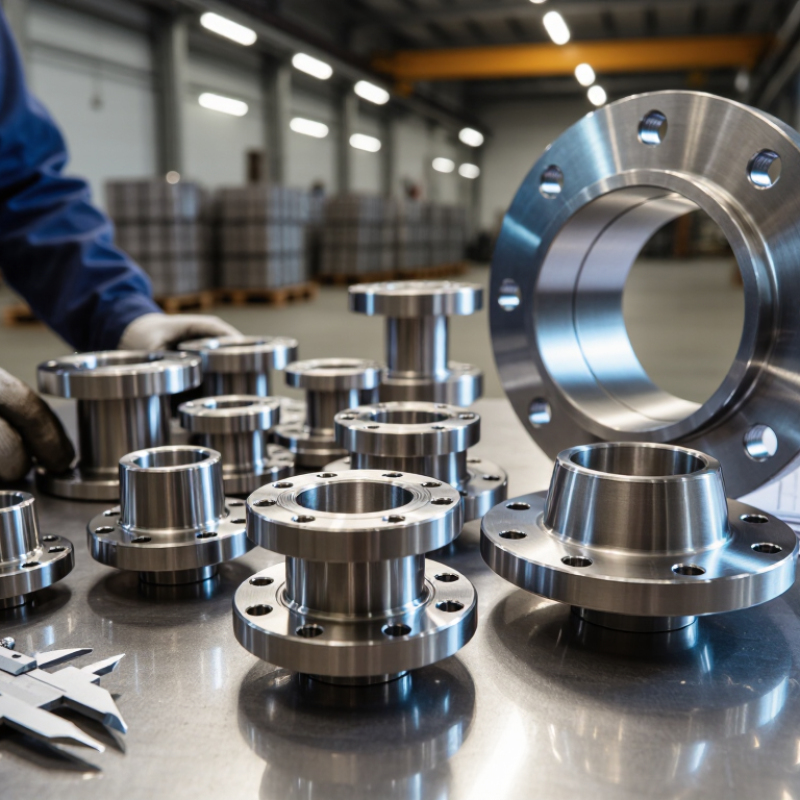
China Best Stainless Pipe Flanges Manufacturer?

What Defines a Reliable Stainless Pipe Flange Manufacturer in China?

China Best Stainless Pipe Flanges Manufacturer?

A reliable stainless pipe flange manufacturer in China proves quality through repeatable processes, not attractive catalogs. Experienced teams understand how heat, pressure, and corrosion affect flange performance. They select suitable stainless grades for seawater, chemicals, food lines, or high-temperature service. Small details matter. Machining tolerances, bolt-hole alignment, sealing-face finish, and flange thickness must match the approved drawing. A minor mismatch can create leakage during installation.

Traceability separates serious manufacturers from ordinary suppliers. Each batch should carry a heat number linked to mill certificates, inspection records, and production dates. Material verification, dimensional checks, hardness testing, and pressure testing provide practical evidence. Independent inspection can add confidence for critical projects. Factory certifications help, but current records and controlled procedures matter more than framed documents. A polished website proves little.

A dependable manufacturer also communicates clearly before production begins. Engineers should confirm standards, pressure classes, facing types, tolerances, packaging, and delivery requirements. Samples should receive careful review, especially when custom dimensions are involved. In my experience, rushed quotations often hide missing technical details. No factory is flawless. The stronger ones admit limitations, investigate nonconformities, and improve their process. Buyers should inspect manufacturing capacity, welding controls, surface protection, and export packaging before placing a large order. Photos of marked flanges, calibrated tools, and finished surfaces can reveal more than generic promises.

How China Manufactures Stainless Pipe Flanges to Industry Standards

China’s stainless pipe flange manufacturing begins with controlled raw materials, not simple metal forming. World Stainless reported 58.4 million tonnes of global crude stainless steel production in 2023. China produced about 36.2 million tonnes, creating a large industrial base for forged components. ASTM A182 grades, such as 304, 316, and 316L, are commonly selected for corrosion resistance and pressure service.

The process usually includes cutting, heating, die forging, heat treatment, machining, and inspection. Forging improves grain flow around the flange body. Heat treatment then restores the required mechanical structure. Manufacturers check dimensions against ASME B16.5 or related piping standards. They also verify chemical composition with spectrometers. Hardness, tensile strength, and hydrostatic performance may require independent testing.

Small details matter. A clean sealing face prevents leakage. Correct bolt-hole alignment reduces installation stress. PMI testing can identify mixed materials before shipment. ISO 9001-based quality systems help control records, inspections, and corrective actions. However, certification alone proves little if process evidence is weak. Some factories still rely too heavily on visual checks. That is a gap worth questioning. Buyers should request mill certificates, heat numbers, dimensional reports, and traceable test results. Nondestructive examination, including dye penetrant testing, can reveal surface cracks after machining. The best production line is not merely fast. It is repeatable, documented, and willing to reject imperfect parts.

China Best Stainless Pipe Flanges Manufacturer? - How China Manufactures Stainless Pipe Flanges to Industry Standards

Manufacturing Dimension Industry Standard or Reference Typical Technical Data How Compliance Is Verified
Flange design standard ASME B16.5 Commonly used for flanges from NPS 1/2 through NPS 24, with pressure classes including 150, 300, 400, 600, 900, 1500, and 2500. Outside diameter, bolt-circle diameter, bolt-hole quantity, flange thickness, and bore are checked against the applicable standard tables.
Large-diameter flange standard ASME B16.47 Applicable to large-diameter flanges generally ranging from NPS 26 through NPS 60, using Series A or Series B configurations. Dimensional inspection is performed according to the selected series, nominal pipe size, pressure class, and facing type.
European flange standard EN 1092-1 Common pressure designations include PN 6, PN 10, PN 16, PN 25, PN 40, PN 63, PN 100, PN 160, PN 250, and PN 400. Flange dimensions, bolt-hole patterns, facing details, and pressure designation are verified against the selected EN type and DN size.
Primary stainless steel materials ASTM A182 / ASME SA182 Frequently specified grades include F304, F304L, F316, and F316L forged stainless steels. Heat numbers are matched with material test certificates, and chemical composition is checked against the specified grade.
Low-carbon stainless grades ASTM A182 F304L and F316L The “L” grades are commonly selected for welded piping systems because their lower carbon content helps reduce the risk of sensitization during welding. Carbon content and other alloying elements are verified through a certified chemical analysis or positive material identification test.
Raw material condition Forged stainless steel billet or bar Forged starting material is used to produce the required grain flow and structural integrity for pressure-containing flange applications. Material traceability, forging records, heat numbers, and required mechanical test results are reviewed before machining.
Forging process Controlled hot forging Material is heated within a controlled forging temperature range, formed in dies or by equivalent forging methods, and then cooled according to the material specification. Forging process records, visual inspection, dimensional inspection, and heat-treatment documentation are maintained for each production batch.
Heat treatment Material-specific requirements under ASTM A182 / ASME SA182 Solution annealing is commonly applied to austenitic stainless steel grades such as 304L and 316L to restore corrosion resistance and metallurgical uniformity. Furnace temperature records, soaking information, cooling method, and hardness results are checked where required by the purchase specification.
Flange facing ASME B16.5 or EN 1092-1 Common configurations include raised face, flat face, ring-type joint, tongue-and-groove, and male-and-female facings, depending on the piping system. Facing type, sealing surface profile, face diameter, and surface condition are inspected using calibrated gauges and surface-finish instruments.
Raised-face surface finish ASME B16.5 reference requirements A commonly specified serrated finish is approximately 125–250 microinches arithmetic average roughness, equivalent to about 3.2–6.3 micrometres Ra. Surface roughness is measured with a calibrated profilometer or an approved comparison gauge.
Dimensional accuracy Applicable flange dimensional standard Critical dimensions include outside diameter, inside diameter, thickness, bolt-circle diameter, bolt-hole diameter, number of holes, and face alignment. Coordinate measuring equipment, vernier calipers, micrometers, height gauges, and certified flange templates are used for inspection.
Material identification ASTM A182 and customer specification Positive material identification is commonly performed using portable X-ray fluorescence equipment for alloy verification. PMI results are compared with the required chemical composition, while heat-number markings preserve material traceability.
Mechanical properties ASTM A182 / ASME SA182 Tensile strength, yield strength, elongation, and hardness requirements depend on the selected stainless steel grade and applicable edition of the standard. Testing is conducted using recognized mechanical-test methods, with results recorded on the material test certificate.
Non-destructive examination Purchase specification or project requirement Liquid penetrant testing is commonly used to detect surface-breaking discontinuities on stainless steel flange surfaces. Ultrasonic testing may be specified for certain forgings. Inspection is performed by qualified personnel using documented procedures and acceptance criteria stated in the order or governing standard.
Surface treatment Stainless steel fabrication practice Typical finishing operations include machining, deburring, cleaning, pickling, and passivation when specified for corrosion-sensitive applications. Finished surfaces are checked for burrs, scale, contamination, machining marks, and uniformity of the specified treatment.
Marking and traceability Applicable standard and purchase order Markings may include material grade, nominal size, pressure class or PN rating, flange type, standard designation, and heat number. Marking content is compared with inspection documents, drawings, and material certificates before packing.
Packaging for export Project or purchaser requirements Flange faces are protected against impact, moisture, and contamination using suitable covers, separators, and secure export packaging. Final packaging inspection confirms product quantity, identification, protection of sealing faces, and document completeness.

Which Stainless Steel Grades and Flange Types Are Available?

Choosing the best stainless pipe flange manufacturer starts with understanding available materials and designs. No single grade is universally best.

In practical projects, 304 stainless steel suits general water, food, and indoor process lines. It offers good corrosion resistance and easy fabrication. 316 and 316L perform better around saltwater, chlorides, and chemical exposure. The low-carbon 316L option helps reduce corrosion after welding. For higher temperatures, 321 stainless steel may provide better stability. Some demanding systems also specify 904L, but its higher cost requires careful justification.

Flange selection matters equally. Weld neck flanges support high-pressure, high-temperature piping. Slip-on flanges simplify installation and often reduce fabrication time. Blind flanges close pipe ends during testing or maintenance. Socket weld, threaded, and lap joint flanges suit different connection methods and service conditions. Common standards include ASME B16.5 and EN 1092-1, but dimensions and pressure ratings must match the project specification. I have seen avoidable errors caused by choosing a familiar grade instead of checking chloride levels, temperature, and welding conditions.

Tips: Confirm the stainless grade with material certificates and positive material identification. Check the flange face, schedule, pressure class, gasket, and bolt material together. Do not rely on appearance alone. A polished surface can still hide the wrong alloy. Ask for dimensional inspection records and corrosion-related test data when the service is severe. Rechecking these details may feel slow, but it prevents costly replacement later.

How to Evaluate Quality, Certifications, and Production Capacity

Choosing China’s best stainless pipe flange manufacturer requires more than comparing prices. Start with material traceability. Each flange should match the purchase order, drawing, and applicable standard, such as ASTM A182 or EN 1092-1. Ask for heat numbers, chemical analysis, tensile results, and dimensional inspection records. A stamped mark on the flange is not enough.

Certification scope matters. Verify ISO 9001 validity through the issuing body, rather than accepting a scanned certificate. Request EN 10204 3.1 material certificates and review pressure-testing procedures. For critical service, examine PMI records, hardness readings, and non-destructive testing reports. ASME B16.5 provides dimensional and pressure-temperature requirements, but compliance still depends on controlled manufacturing. ISO’s 2023 Survey reported more than 1.2 million valid ISO 9001 certificates worldwide, so certification alone cannot prove factory competence.

Production capacity should be measured on the shop floor. Check forging equipment, heat-treatment furnaces, CNC machining centers, and final inspection stations. Ask for monthly output by flange type, not one impressive annual figure. The International Stainless Steel Forum reported global stainless crude steel production of about 58.4 million tonnes in 2023, showing a large and competitive supply base. Yet capacity does not guarantee consistency. During a factory visit, inspect stacked raw materials, readable heat numbers, and calibrated gauges. I would also request recent sample reports and a small trial order. A perfect presentation can still hide weak process control. That is the part buyers often underestimate.

What Should Buyers Consider When Choosing a Chinese Manufacturer?

Choosing a Chinese stainless pipe flange manufacturer requires more than comparing quoted prices.

Buyers should verify material standards, pressure ratings, dimensions, and traceability before discussing volume. Request mill certificates, heat numbers, inspection records, and clear tolerances for every relevant grade.

A serious supplier should explain how stainless steel is melted, forged, machined, pickled, and tested.

Ask for sample reports, not promises. Small details matter.

During factory audits, inspect storage areas, calibration labels, welding controls, and packaging methods. Rust stains near finished flanges deserve questions.

Experience becomes visible in the questions a manufacturer asks.

They should confirm pipe schedules, facing types, bolt patterns, service temperature, and operating media.

Technical staff must identify risks such as galvanic corrosion, flange distortion, or incorrect gasket seating.

Independent inspection can verify dimensions, hardness, surface condition, and marking accuracy before shipment. It adds cost, but one rejected container costs more.

Do not treat a fast reply as technical competence.

I would also compare trial orders with production batches. Some suppliers perform well on samples, then change subcontractors or inspection routines.

Reliability depends on documented controls and honest communication.

Check production capacity, lead-time history, corrective-action records, and export packing photographs.

Contracts should define material grade, testing, acceptance criteria, and remedies for nonconforming goods.

Payment terms deserve equal attention. A low price may hide thin machining allowances or weak traceability.

That is easy to miss. Buyers should leave room for uncertainty, because certificates can contain clerical errors and factory claims need verification.

A manufacturer earns trust through repeatable evidence, not polished language.

FAQS

What makes a stainless pipe flange manufacturer reliable?

Reliable manufacturers use repeatable processes, controlled inspections, and clear technical communication. They verify machining, bolt-hole alignment, face finish, and flange thickness. A polished catalog proves little.

How does material traceability support flange quality?

Each batch should have a heat number linked to mill certificates and inspection records. Production dates, hardness results, and pressure tests should remain traceable. Missing records deserve careful questions.

Which stainless steel grade suits general water or food lines?

Grade 304 usually suits general water, food, and indoor process piping. It offers practical corrosion resistance and easy fabrication. Service conditions still require confirmation.

When is 316 or 316L stainless steel a better choice?

Grades 316 and 316L perform better around saltwater, chlorides, and chemical exposure. The low-carbon 316L grade can reduce welding-related corrosion risks. Check chloride levels before deciding.

How should I choose a flange type?

Weld neck flanges suit demanding pressure and temperature conditions. Slip-on flanges can simplify installation. Blind flanges close pipe ends during testing or maintenance.

Which standards and details must match the project?

Confirm the applicable standard, pressure class, flange face, dimensions, and tolerances. ASME B16.5 and EN 1092-1 are common references. The gasket, bolts, and pipe schedule must also match.

What inspections should buyers request before shipment?

Request dimensional checks, material verification, hardness testing, and pressure-test records. Critical projects may benefit from independent inspection. Ask for photos showing markings, calibrated tools, and finished faces.

What warning signs suggest a supplier needs closer review?

Rushed quotations may hide missing technical information. Generic photos cannot confirm manufacturing capacity or welding controls. A stronger supplier admits limitations and investigates nonconformities.

Why do small flange errors matter during installation?

Incorrect hole alignment or face dimensions can prevent proper assembly. Poor sealing-face finish may cause leakage under pressure. Small mismatch, big trouble. Rechecking feels slow, but replacement costs more.

Conclusion

Choosing the best Stainless Pipe Flanges manufacturer in China requires more than comparing prices. A reliable supplier should demonstrate strong engineering capabilities, consistent raw material control, modern production equipment, and strict quality inspection procedures. Manufacturers should be able to produce flanges according to recognized industry standards while offering suitable stainless steel grades, pressure ratings, dimensions, and flange types for different piping applications. Clear technical communication and the ability to support customized designs are also important advantages.

Buyers should evaluate certifications, traceability systems, testing methods, production capacity, lead times, and export experience before making a decision. A dependable manufacturer can provide complete documentation, stable product quality, reasonable delivery schedules, and responsive after-sales support. By reviewing samples, inspection reports, manufacturing processes, and customer service capabilities, buyers can reduce purchasing risks and establish a long-term partnership with a Chinese supplier that delivers reliable Stainless Pipe Flanges for demanding industrial projects.

Mason

Mason

Mason is a seasoned marketing professional with a deep expertise in the company's offerings and a passion for driving brand awareness. With a strong background in digital marketing strategies, he has an innate ability to connect with diverse audiences and effectively communicate product benefits.......