Selecting the right Stainless Lap Joint Flange supplier in 2026 requires more than comparing catalog prices. It demands evidence.
The World Stainless Association reported approximately 58.4 million tonnes of global stainless crude steel production in 2023. That volume reflects strong industrial demand, but it does not guarantee consistent flange quality. Market reports also show differing forecasts for stainless steel and industrial piping components. Their definitions and regional coverage vary. Buyers should check the methodology.
A supplier’s real capability appears in small details. Look for heat numbers, material certificates, PMI records, dimensional reports, and controlled facing finishes. ASTM A182 covers many forged stainless flange materials, while ASME B16.5 defines important dimensions and pressure classes. These standards help, but they do not replace supplier audits or independent verification.
Corrosion expert Mars G. Fontana wrote, “Corrosion is the deterioration of a material, usually a metal, by chemical or electrochemical reaction with its environment.” His statement explains why alloy selection and gasket compatibility matter around every bolted joint. A polished flange can still fail beside chloride-rich water, stagnant process fluid, or repeated thermal cycling.
The strongest 2026 suppliers combine traceability, machining accuracy, documented testing, and practical application support. Experience matters here. One overlooked detail can become a leaking connection.
This guide compares leading Stainless Lap Joint Flange suppliers through product range, certifications, manufacturing capacity, delivery reliability, and technical responsiveness. Rankings remain imperfect. Regional service, project complexity, and verification requirements can change the result. That limitation deserves attention.
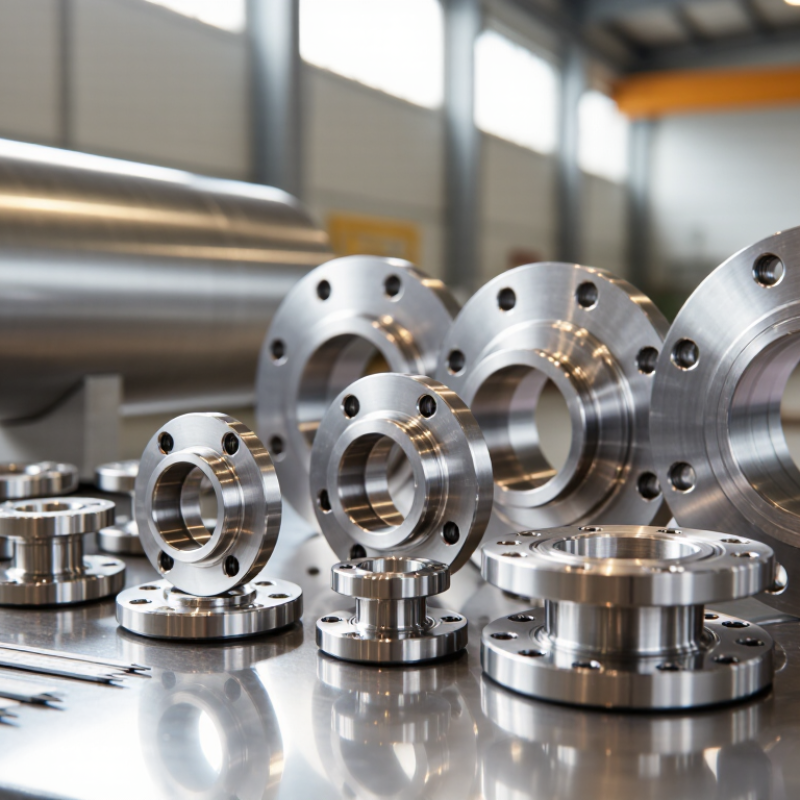
Stainless Lap Joint Flanges: Design, Materials, and 2026 Standards
Stainless lap joint flanges use a loose backing ring and a separate stub end. This design simplifies alignment during installation. The stub end contacts the process fluid, while the ring carries bolt loads. It also reduces rotation problems in large piping systems.
Material selection should match temperature, pressure, and corrosion exposure. Common choices include 304L and 316L stainless steel. Duplex grades may suit chloride-rich or high-strength applications. The stub end and backing ring need compatible dimensions. Otherwise, sealing stress can become uneven. A smooth sealing face matters. Small scratches may create leakage paths.
For 2026 projects, suppliers should confirm the latest applicable editions of ASME B16.5, ASME B16.47, ASTM A182, and relevant EN standards. These documents govern dimensions, pressure ratings, materials, and testing requirements. Do not rely on a catalog image alone. Request material test reports, heat numbers, PMI records, and dimensional inspection results. Verify wall thickness, bore size, lap radius, and bolt-hole spacing before shipment. A supplier may provide excellent steel but still miss the required facing detail. That mistake is easy to overlook. I would also question vague claims about “standard” compliance. The exact edition and test scope should be stated clearly. Field experience shows that careful document review often prevents more problems than emergency repairs.
Technical sourcing benchmark for stainless steel lap joint flange assemblies, materials, standards, and supplier qualification
| Evaluation Dimension | Verified Technical Data | Typical Options or Requirements | Relevant Standard or Reference | 2026 Purchasing Checkpoint |
|---|---|---|---|---|
| Assembly Design | A lap joint flange assembly normally consists of a loose backing flange and a separate stub end. The stub end provides the sealing face and the fluid-contact surface. | Loose backing ring Stub end Rotatable bolt holes | ASME B16.5; ASME B16.47; EN 1092-1 | Confirm that the backing flange, stub end, gasket, and bolting are specified as one compatible assembly. |
| Nominal Size Range | ASME B16.5 covers nominal pipe sizes from NPS 1/2 through NPS 24. Larger flanges are commonly designed under ASME B16.47, which covers NPS 26 through NPS 60. | NPS 1/2–24 NPS 26–60 DN designation | ASME B16.5 and ASME B16.47 | Match nominal size, outside diameter, bolt-circle diameter, number of holes, and bore to the connected pipe system. |
| Pressure Class | Common ASME flange classes include Class 150, 300, 400, 600, 900, 1500, and 2500. The allowable pressure is temperature-dependent and material-dependent. | Class 150 Class 300 Class 600 Class 900+ | ASME B16.5 pressure-temperature ratings | Do not select a class from nominal pressure alone; verify design temperature, material group, flange facing, and applicable piping code. |
| Facing and Sealing | Common flange facings include raised face, flat face, and ring-type joint. The selected gasket must match the facing finish, pressure class, temperature, and process media. | Raised Face Flat Face Ring-Type Joint Spiral-Wound Gasket | ASME B16.5; ASME B16.20; ASME B16.21 | Request facing finish records and confirm gasket dimensions before final approval. |
| 304 / 304L Stainless Steel | 304 and 304L are austenitic stainless steels. 304L has reduced carbon content and is commonly selected to reduce sensitization risk after welding. | UNS S30400 UNS S30403 General process service | ASTM A182 for forged flanges; ASTM A403 for wrought piping components | Specify the exact grade and product form rather than using only the generic term “stainless steel.” |
| 316 / 316L Stainless Steel | 316 and 316L contain molybdenum and generally provide improved resistance to chlorides and many chemical environments compared with 304 grades. | UNS S31600 UNS S31603 Marine service Chemical service | ASTM A182; ASTM A403 | Check chloride concentration, temperature, crevice exposure, and corrosion allowance; 316L is not universally corrosion-proof. |
| Duplex Stainless Steel | Duplex grades such as 2205 combine austenitic and ferritic phases and are used where higher strength and improved chloride stress-corrosion resistance are required. | UNS S31803 UNS S32205 Higher strength | ASTM A182; ASTM A923 for selected duplex verification testing | Require heat treatment, ferrite control, impact testing, and corrosion or phase-balance documentation when specified by the project. |
| High-Alloy Stainless Steel | 904L and similar high-alloy grades may be selected for severe corrosive environments, but suitability depends on the complete chemical and temperature profile. | UNS N08904 High nickel content Acid service review | ASTM A182 or project-specific material specification | Require corrosion-service validation rather than treating a higher alloy number as an automatic design approval. |
| Stub End Compatibility | The stub end bore, outside diameter, lap thickness, and welding configuration must match the pipe and the selected backing flange. | Short pattern Long pattern Butt-weld connection | ASME B16.9; ASME B16.5; applicable piping specification | Verify pipe schedule, bore, wall thickness, weld-end preparation, and corrosion allowance before ordering. |
| Dimensional Control | Critical dimensions include outside diameter, bolt-circle diameter, bolt-hole diameter, number of holes, flange thickness, bore, and facing dimensions. | Dimensional report Interchangeability Hole alignment | ASME B16.5 or ASME B16.47; EN 1092-1 where applicable | Request a drawing or inspection report with tolerances tied to the specified standard and size range. |
| Material Traceability | Material certificates should identify heat number, chemical composition, mechanical properties, heat treatment, product form, and applicable standard. | Heat number Chemical analysis Mechanical test results | EN 10204 Type 3.1; ASTM A182; project quality plan | Require traceability from raw material through machining, marking, inspection, and final packing. |
| Inspection and Testing | Typical inspection may include visual examination, dimensional inspection, positive material identification, hardness testing, and non-destructive examination when specified. | VT PMI Hardness UT / PT | Project inspection and test plan; applicable ASTM and ASME requirements | Define hold points, sampling level, NDE method, acceptance criteria, and independent inspection requirements before production. |
| Surface Finish | Sealing performance depends on the flange facing condition, including finish, flatness, scratches, dents, and corrosion damage. | Controlled facing finish Flatness inspection Protective caps | ASME B16.5 facing requirements; gasket manufacturer requirements | Specify the required facing finish and require protection against impact and contamination during transport. |
| Bolting Selection | Bolting must be compatible with the pressure class, temperature, flange material, gasket, and corrosion environment. | Stud bolts Nuts Temperature-rated alloy | ASME B16.5; ASTM A193; ASTM A194; project bolting specification | Verify bolt length, thread form, coating, strength class, lubrication, and galvanic compatibility. |
| Applicable International Standards | ASME and EN systems use different dimensional and pressure designations. Components should not be mixed without confirming dimensional compatibility. | ASME B16.5 ASME B16.47 EN 1092-1 ISO 7005-1 | Use the standard stated in the purchase specification and approved drawings. | For 2026 projects, confirm the current edition or project-mandated edition of every referenced standard before procurement. |
| Supplier Qualification | A technically suitable supplier should demonstrate documented manufacturing control, material traceability, dimensional capability, inspection resources, and consistent export packaging. | Quality system Inspection plan Traceability Export packing | ISO 9001-based quality system; project quality requirements | Evaluate production capacity, sample documentation, nonconformance history, lead time, and ability to meet the exact standard—not only quoted price. |
| Recommended Purchase Documents | A complete order package should define size, class or PN rating, flange type, facing, material grade, bore, standard, inspection level, marking, coating or passivation, and packaging. | Approved drawing MTR 3.1 Inspection report Packing list | Purchase specification and approved inspection and test plan | Make all deviations subject to written approval before manufacturing or shipment. |
Technical note: Pressure-temperature ratings, corrosion resistance, gasket selection, and service suitability must be confirmed against the governing piping code, design conditions, material certificates, and project specifications. Standards and editions should be verified for the specific 2026 procurement package.
It uses a loose backing ring and a separate stub end. The stub end touches the process fluid. The ring carries bolt loads.
The loose ring allows easier bolt-hole alignment. This helps on large piping systems. It can also reduce flange rotation.
304L and 316L stainless steel are common choices. Duplex grades may suit chloride-rich or high-strength service.
Match the material with temperature, pressure, and corrosion exposure. Confirm compatibility between the stub end and backing ring.
Check wall thickness, bore size, lap radius, and bolt-hole spacing. Uneven dimensions can create sealing stress problems.
Yes. Small scratches on the sealing face may form leakage paths. A smooth surface matters greatly.
Request material test reports, heat numbers, material identification records, and dimensional inspection results. Confirm the latest applicable standards and editions.
Review monthly output, equipment, machining capacity, and heat-treatment controls. Measure lead time from drawing approval, not quotation date.
Standard sizes may ship within 10 to 20 working days. Custom drilling can require six weeks. Add a small schedule buffer.
Check certification scope, expiry dates, traceability, storage conditions, packing, and moisture protection. A polished catalog proves very little.
This guide explains how a Stainless Lap Joint Flange is designed for flexible, reliable piping connections, with emphasis on material selection, dimensional control, and the 2026 application of relevant industry standards. It reviews ASME B16.5 pressure classes from 150 through 2500, including practical size and pressure benchmarks, and outlines how ASTM A182 F304 and F316 grades are evaluated through chemical analysis, mechanical testing, inspection, and traceability documentation.
The article also presents a structured 2026 supplier shortlist based on manufacturing capacity, lead times, quality certifications, and production consistency, without promoting any specific brand. A practical comparison framework covers minimum order quantities, ISO 9001 systems, EN 10204 3.1 inspection certificates, technical support, delivery reliability, and total lifecycle cost. Buyers can use these criteria to balance price, compliance, material performance, and long-term supply security when selecting stainless lap joint flange solutions.

